




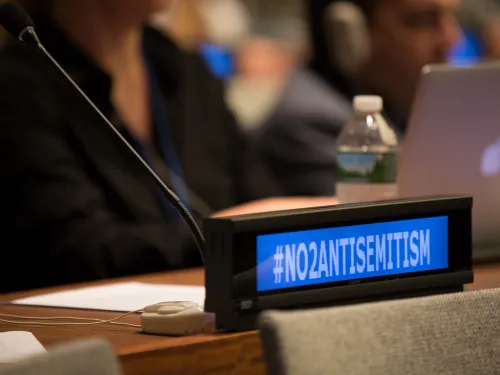




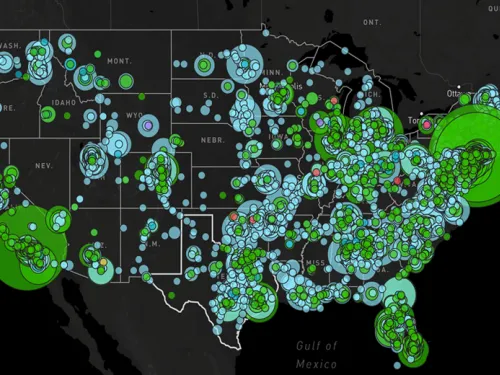

ADL’s Campus Antisemitism Report Card assesses how colleges and universities are responding to antisemitism and supporting Jewish life. Report Card 3.0 evaluates 150 schools using 32 criteria across three areas: 'Publicly Disclosed Administrative Actions,' 'Jewish Life on Campus' and 'Campus Conduct and Climate Concerns.'
Browse case studies of schools that implemented recommended measures aligned with the criteria and improved over time. The case studies reflect both objective information and qualitative analysis and judgment; reasonable people may disagree with how factors are interpreted or weighted.
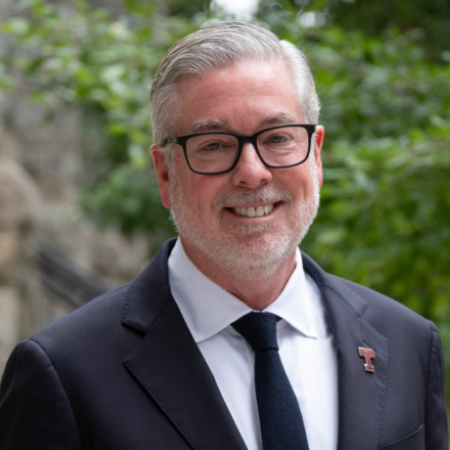
“Antisemitism is abhorrent. It has no place at Temple and acts of hatred and discrimination against any person or persons are not tolerated at this university.”
– President John Fry
Temple University
Philadelphia, Pennsylvania
2026 Grade: A ⬆
Trend
Improved from a C grade in 2025 as a result of policy and infrastructure reforms.
Temple University is a large public University with a diverse student body, located in a major city where public demonstrations and political protest are a visible part of the civic landscape. Like many institutions in urban environments, Temple has had to navigate how broader social and political tensions can spill onto campus.
Well before October 7, 2023, Temple began examining whether its existing policies, reporting mechanisms, and response structures were sufficient to address antisemitism on campus. Beginning in 2022, University leadership took steps to strengthen institutional capacity in this area – laying groundwork that would later enable a more coordinated and sustained response as antisemitic incidents and attitudes increased nationally.
That early recognition is a key reason Temple has been able to move beyond reactive incident management toward durable policy, oversight and prevention frameworks.
The Starting Point: The Blue-Ribbon Commission
Temple’s current framework for addressing antisemitism began in 2022 with the creation of the Blue-Ribbon Commission on Antisemitism and University Responses. Convened by University leadership and composed of scholars, Jewish communal leaders, and campus stakeholders, the Commission was tasked with examining how antisemitism was manifesting on campus and whether existing University structures were equipped to respond effectively.
Importantly, the Commission was not symbolic. Its mandate focused on producing concrete, actionable recommendations – and those recommendations became the blueprint for Temple’s subsequent reforms. The Commission continues to enjoy institutional support, and its work remains a reference point for University decision-making in this area.
From Recommendation to Infrastructure
The Commission’s work led directly to several structural changes that now anchor Temple’s approach. These include the creation of a full-time Special Advisor on Antisemitism, expanded antisemitism education for all members of the campus community, and the launch of the Interfaith Inclusion Center, which serves as a hub for dialogue, religious life, and community-building across campus.
Rather than existing as standalone initiatives, these elements are integrated into Temple’s broader equity, compliance, and student-support frameworks – helping ensure continuity beyond individual incidents or university leadership transitions.
Codifying Expectations: Policy and Oversight
Building on this foundation, Temple moved to formalize expectations through policy reform. In 2025, the University updated both its Student Conduct Code and its Policy on Preventing and Addressing Discrimination and Harassment (PADH) to explicitly name antisemitism and anti-Israeli discrimination as prohibited conduct, and to address masked harassment. These changes were publicly announced by the University president and reflect recommendations from the Anti-Defamation League.
To support accountability, Temple maintains multiple reporting pathways for students, faculty, staff, and community members, including a 24/7 ethics and compliance helpline, public safety reporting, student conduct processes, and human resources channels. A standing Title VI committee, led by a Title VI coordinator and meeting regularly, reviews incident data in the aggregate to identify patterns and assess whether conditions may rise to a hostile environment.
Shifting from Response to Prevention
Temple has paired policy clarity with sustained education and prevention efforts. Since Fall 2025, all students, faculty, and staff are required to complete training addressing discrimination based on religion, ethnicity, national origin, and shared ancestry, with antisemitism – including bias related to Zionism – explicitly included. Additional training is required for student leaders and resident advisors, recognizing their important role in shaping campus climate.
Leadership communication reinforces these efforts. The University has consistently and publicly condemned antisemitism, including through presidential statements following October 7, 2023, and subsequent incidents, emphasizing safety, accountability, and the boundaries between protected expression and harassment.
Jewish Life, Visibility and Belonging
Temple’s approach extends beyond prevention and enforcement to supporting a visible and vibrant Jewish presence on campus. Students have access to Hillel, Chabad, Jewish student organizations across undergraduate and professional schools, Jewish Greek life, Jewish studies and academic partnerships with Israeli institutions. Jewish holidays are formally recognized through calendar guidance and academic accommodations.
In 2025, Temple opened Kosher Corner, a permanent kosher dining option in a major dining hall. Leadership presence at Jewish events – including Shabbat dinners and holiday celebrations – further signals that the University’s commitment is not limited to safety, but includes fostering Jewish belonging and participation in campus life.
Why Temple’s Approach to Addressing Antisemitism Matters
Temple’s progress reflects a shift from isolated interventions to a cohesive, institution-wide strategy grounded in early assessment, structural investment, and follow-through. Its improved ADL Report Card grade reflects not a single policy change, but a sustained commitment to building systems that endure.

“Antisemitism was on the rise even before October 7...Since October 7, the increase has been truly terrifying in both the American and global contexts. I have listened to heartbreaking stories from students, faculty, parents, and alums. NYU unequivocally condemns antisemitism and other forms of hate, and we are committed to maintaining a campus environment where all can study and learn in an atmosphere of respect and live free from the fear of bigotry.”
– President Linda Mills
New York University
New York City, New York
2026 Grade: A ⬆
Trend
Improved from having a B grade in 2025 and a C grade in 2024 as a result of policy and infrastructure reforms.
New York University (NYU) is a large, global private University embedded in one of the world’s most politically active cities. With campuses and academic partnerships spanning multiple continents, NYU has long understood that clarity, consistency, and institutional coordination are essential to maintaining an inclusive campus climate across diverse settings.
NYU’s approach to antisemitism reflects that institutional mindset. Rather than responding episodically to incidents, the University has focused on building durable frameworks that combine clear policy articulation, centralized oversight, mandatory education, and sustained investment in Jewish life and scholarship.
At the same time, NYU demonstrated clear and immediate leadership in the aftermath of October 7, 2023, responding decisively and consistently at a moment when many campuses were caught off guard or hesitant to address the seriousness of the antisemitism that followed. This approach has resulted in an increasingly strong performance on ADL’s Campus Antisemitism Report Card over multiple years.
The Foundation: Policy Clarity as an Institutional Anchor
A defining feature of NYU’s approach is the clarity of its policies. Antisemitism and Zionism are explicitly addressed within NYU’s Non-Discrimination and Anti-Harassment (NDAH) Policy and related conduct guidance, with detailed examples illustrating how antisemitic and anti-Zionist conduct may constitute prohibited harassment or discrimination – particularly where Zionism functions as a proxy for Jewish identity.
NYU was among the first universities in the country to provide this level of specificity, incorporating federal civil rights guidance directly into campus policy interpretation. By clearly articulating expectations, NYU established a shared institutional understanding that has helped reduce ambiguity for students, faculty, administrators and investigators alike.
Centralization and Oversight: From Intake to Institutional Review
Building on this policy foundation, NYU invested early in centralized reporting and oversight mechanisms. The University’s Bias Response Line serves as a single-entry point for reports of discrimination and harassment, routing cases to the appropriate investigatory office while ensuring consistent intake, written follow-up, and coordination across units. All reports are tracked through a centralized system, enabling trend analysis and institutional review rather than fragmented case handling.
Oversight is led by NYU’s Title VI Office, making NYU the first institution in New York State to appoint a dedicated Title VI Coordinator. The Coordinator conducts real-time monitoring of incidents and produces regular institutional reviews, including an annual Title VI report and a multi-year retrospective analysis presented to the Board of Trustees. These reviews assess whether patterns may indicate a hostile environment and help ensure parity in responses across protected characteristics.
Education, Prevention and Leadership Signaling
NYU has paired policy and oversight with mandatory education. All students complete required non-discrimination and anti-harassment (NDAH) training that explicitly includes antisemitism and anti-Zionism content aligned with University policy. Employees receive parallel training addressing antisemitism alongside other forms of discrimination. These requirements are reinforced by extensive voluntary programming, including the Jewish Ally Zone training and a growing suite of academic courses focused on antisemitism.
Leadership communication plays a reinforcing role. Following significant incidents, NYU leadership has consistently issued timely public statements condemning antisemitism, clarifying policy boundaries, and reaffirming institutional values. The University also maintains clear rules governing demonstrations – including prohibitions on encampments and disruptions of academic or campus events – while continuing to protect lawful expression.
Jewish Life, Scholarship and Global Engagement
NYU’s institutional commitments are matched by deep investment in Jewish life. The Bronfman Center for Jewish Student Life – an official University department with dedicated staffing – serves as the hub of Jewish religious, cultural and social life on campus. Students engage through Hillel, Chabad, denominational and cultural organizations, Jewish and Israel-focused student groups, Jewish Greek life and extensive Jewish studies offerings across schools and disciplines. Kosher dining is continuously available, and Jewish holidays are actively supported through formal accommodations and campus-wide communications.
NYU has also made a distinctive investment in scholarship through the establishment of the Center for the Study of Antisemitism, a globally recognized research hub advancing academic understanding of antisemitism while informing policy and practice. The Center complements NYU’s longstanding strengths in Hebrew and Judaic Studies and reinforces the University’s role as a leader in this field.
Globally, NYU’s commitment extends through NYU Tel Aviv – the most significant presence of any U.S. research university in Israel. NYU has expanded exchange opportunities, scholarships, and academic partnerships with Israeli institutions, including during periods of regional instability, and has provided direct support to students and partner universities during crises.
Why NYU's Approach to Addressing Antisemitism Matters
NYU’s strong performance reflects a model grounded in clarity, centralization, and sustained leadership engagement. By aligning policy, reporting, education, and Jewish life within a coherent institutional framework, NYU demonstrates how large, complex universities can address antisemitism with both rigor and continuity – not as a series of reactions, but as an embedded institutional priority.

“On October 7th, we were all horrified and sickened upon learning of the terrorism and brutality of Hamas. In the days since, the massacre in Israel placed a national spotlight on the reactions of college presidents and their campuses.”
– President Michael Crow
Arizona State University
Tempe, Arizona
2026 Grade: A ⬆
Trend
Has an A grade for the second year running, marking sustained progress following a C grade in 2024.
Arizona State University (ASU) is one of the largest public universities in the United States, serving a highly diverse student population. ASU’s approach to addressing antisemitism is shaped by that scale and by a longstanding emphasis on partnership, accessibility, and public engagement. Rather than relying on a single policy lever, ASU has focused on building coordinated systems for reporting, enforcement, education and community support – while using its national profile to convene broader conversations about combating hate.
Education, Leadership Engagement and Institutional Culture
Education and leadership engagement are central to ASU’s approach. While required training addresses harassment prevention and reporting obligations, ASU has invested heavily in broader educational efforts that address antisemitism and religious bias as part of inclusive community-building. Faculty, staff and students also participate in ongoing voluntary programming designed to reinforce expectations, build awareness and support respectful engagement.
Senior leaders have played an active role in these efforts, participating in national and regional initiatives focused on antisemitism and campus climate. This visible engagement signals that antisemitism is not treated as a peripheral concern, but as an institutional responsibility tied to leadership and culture.
From Campus Action to National Convening
What distinguishes ASU’s approach is how it extends beyond campus boundaries. ASU has used its national profile to convene broader conversations about antisemitism and hate, positioning the University not only as a participant but as a leader in this space.
In April 2025, ASU partnered with the ADL Desert Region to host an all-day conference entitled Rising Above Together: ADL® Desert Region Conference on Antisemitism and Hate, bringing together campus leaders, scholars, and community members to address antisemitism at local, national, and global levels. ASU’s decision to host the conference again in February 2026 – and bring together civic leaders, educators, law enforcement, students, interfaith partners and more – reflects a commitment to continuity rather than one-off programming.
Jewish Life as a Visible and Supported Presence
ASU supports a large and active Jewish campus community, with opportunities for engagement across religious, cultural, social, and academic life. Students participate through Hillel, Chabad, Jewish student organizations, Jewish Greek life, pro-Israel groups and Jewish studies programs. Furthermore, Jewish holidays are formally recognized, kosher dining is consistently available, and rabbis and Jewish educators maintain a presence on campus.
The Jewish Faculty and Staff Association also contributes directly by bringing together professionals from across the University to support the Jewish experience at ASU, offering observations and recommendations, and educating and advising administrators, faculty, staff and students on issues affecting the Jewish community. The Council of Religious Advisors further strengthens these efforts through direct engagement and support for students, helping ensure that religious inclusion remains an active and visible component of campus culture.
Academic and Global Engagement
ASU’s commitment is also reflected in its academic and global partnerships. The University maintains extensive collaborations with Israeli institutions, supporting student exchanges, joint research, and scholarly initiatives. Jewish Studies at ASU also supports scholarly engagement through partnerships and academic programming, including Israel Institute–supported fellows, visiting scholars from Israeli institutions, and promoting conferences such as Jews and Jewishness in the Dance World.
These partnerships reinforce ASU’s approach to antisemitism as both an academic and civic issue – one that benefits from scholarship, dialogue, and sustained engagement.
Why ASU's Approach to Addressing Antisemitism Matters
ASU’s consistently strong performance reflects a model built around scale, accessibility, and leadership visibility. By connecting education, Jewish life, and public convening into a coherent institutional strategy, ASU demonstrates how large universities can address antisemitism not through fragmented initiatives, but through sustained, coordinated action that is both internal and outward-facing.
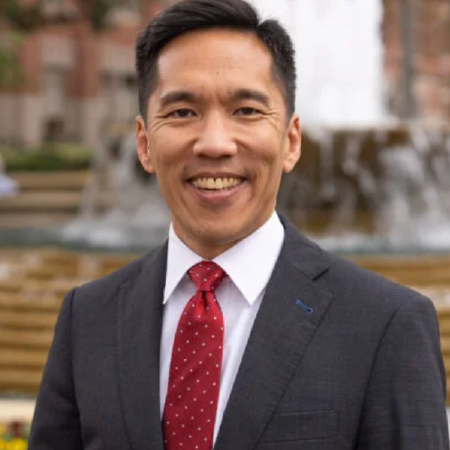
“Antisemitism is morally wrong, full stop.”
– President Beong-Soo Kim
University of Southern California
Los Angeles, California
2026 Grade: A ⬆
Trend
Improved from having a C grade in both 2025 and 2024 as a result of policy and infrastructure reforms.
University of Southern California (USC) is a large private research university located in Los Angeles with a diverse campus community. USC’s approach to addressing antisemitism is shaped by sustained leadership attention, coordinated institutional structures, and consistent engagement with the Jewish community.
Some elements of USC’s current approach were established prior to October 7, 2023, providing an initial foundation for assessment and engagement. Over the past academic year, however, the University has significantly expanded and formalized this work – strengthening coordination, deepening leadership involvement, and introducing additional structures to respond to evolving campus conditions and increased antisemitism nationwide. This combination of early groundwork and recent institutional action has enabled USC to respond with greater clarity, consistency, and momentum.
The Starting Point: Advisory Infrastructure and Early Assessment
USC’s approach is rooted in the establishment of the Presidential Advisory Committee on Jewish Life (JLAC) in January 2022 - well before the October 7 attacks. Chaired by the Dean of Religious and Spiritual Life, JLAC brings together Jewish students, faculty, senior administrators, and leaders from the Los Angeles Jewish community.
In August 2022, then-President Carol Folt formally accepted a comprehensive set of JLAC recommendations addressing antisemitism, University communications, policy clarity, education and training, and the Jewish student experience. JLAC continues to meet monthly during the academic year and serves as a standing forum for assessment, feedback, and policy guidance.
Building on this advisory foundation, USC further strengthened leadership accountability in 2025 with the appointment of its first Special Counsel to the President on Jewish Life, a senior advisor role designed to guide strategy, partnerships, and high-impact decisions affecting the Jewish community.
From Guidance to Infrastructure: Policy, Reporting and Oversight
USC has translated advisory input into clear institutional structures. The University’s Notice of Non-Discrimination expressly references antisemitism and directs evaluators to consider federal guidance, including the IHRA Working Definition of Antisemitism, when assessing discrimination based on shared ancestry or ethnic characteristics.
Reporting and response are centralized through USC’s Report & Response system - the University’s “front door” for concerns of any type. Reports are triaged by the Office of Professionalism and Ethics and routed to the appropriate investigative office.
USC has invested heavily in centralized data and coordination. All discrimination and harassment reports are tracked through a unified digital case-management platform, enabling cross-office visibility, trend analysis, and consistent response. In addition to federally required hate crime reporting, USC publishes the USC Responds report, which provides data on identity-based bias incidents, including those involving religion or shared ancestry.
Monitoring Climate and Coordinated Response
Following October 7, 2023, USC activated additional coordination mechanisms to monitor campus climate in real time. OCRC convenes a standing Intake, Assessment, and Triage Team (IATT) that meets weekly to review reports related to the Israel-Gaza conflict, assess patterns, evaluate whether a hostile environment may exist, and determine appropriate responses.
The IATT brings together representatives from student life, threat assessment, public safety, counseling and mental health, religious and spiritual life, and the Office of the General Counsel. This structure allows USC to move beyond isolated case handling and assess broader impacts on culture and climate under the totality of the circumstances.
Education, Training and Leadership Signaling
Education is a central pillar of USC’s approach. All students are required to complete multiple modules addressing discrimination, harassment, retaliation, and freedom of expression. These modules explicitly include antisemitism and the IHRA Working Definition. Faculty, staff, and student workers complete biennial harassment prevention training that includes antisemitism-specific content developed with input from JLAC.
USC also invests in professional development for administrators, including participation in the Academic Engagement Network’s Signature Seminar Series and specialized Title VI training through the Hillel Campus Climate Initiative.
Leadership signaling reinforces these efforts. The President maintains direct engagement with Jewish students, faculty, and staff, regularly attending community gatherings on campus to hear concerns firsthand and reinforce institutional commitment.
Jewish Life, Scholarship, and Global Engagement
USC supports one of the most extensive Jewish campus ecosystems in the country. Students engage through Hillel, Chabad, Jewish student organizations, Jewish Greek life, and a wide array of Jewish studies majors, minors, and courses offered in partnership with Hebrew Union College-Jewish Institute of Religion.
Jewish holidays are formally recognized through University policy, provost guidance, and academic accommodations. Rabbis and Jewish educators maintain a visible campus presence, and religious services are readily accessible.
Academically, USC’s commitment is anchored by globally significant institutions, including the USC Shoah Foundation and the Casden Institute for the Study of the Jewish Role in American Life. USC also maintains robust partnerships with Israeli institutions such as Hebrew University of Jerusalem, Reichman University, Tel Aviv University, and others, spanning study abroad, research collaboration, and scholarly exchange.
Why USC's Approach to Addressing Antisemitism Matters
USC’s strong performance reflects an approach grounded in early assessment, advisory leadership, centralized coordination, and visible presidential engagement, with notable strengthening and expansion over the past academic year. By building on existing foundations and reinforcing them through clearer policy application, data-driven oversight, expanded education, and deep investment in Jewish life, USC demonstrates how universities can address antisemitism as a sustained institutional responsibility rather than a series of reactions.
More information on model policies and actions to address antisemitism can be found in ADL’s Best Practices Guide.