

On a recent morning before the Anti-Defamation League’s Oren Segal was scheduled to make a presentation in Las Vegas, news emerged of far-right violence in the German town of Hanau. Seven people, many of them immigrants, were dead in what authorities described as a racially motivated shooting carried out by an extremist obsessed with American conspiracy theories.
When a Las Vegas resident remarked to Segal that the timing of his visit was meaningful given what had happened in Germany, Segal offered a stark reply about the state of extremist violence in the U.S. and around the globe.

Oren Segal
“Anytime I’m anywhere, there’s always something that’s connected recently,” he said.
Segal is vice president of the ADL’s Center on Extremism, which tracks terrorist and extremist activity worldwide and works with authorities to stamp it out.
During his visit to Las Vegas, he sat down with the Sun to discuss the recent rise of white supremacist groups, what he and his team are doing about extremism and how residents can combat the problem. The discussion partly focused on the case of Conor Climo, a self-described white supremacist who recently pleaded guilty to a federal weapons charge after being arrested last year for planning violent attacks against the ADL, a Las Vegas synagogue and a downtown Las Vegas bar that catered to the LGBT community. He also described an increase in the posting of racist fliers, including on college campuses in Las Vegas and Reno.
Edited excerpts of the conversation follow:
What are some of the common threads or tropes you’re finding among the people who are committing these attacks?
Some of them are blatant in the sense that the Christchurch (New Zealand mosque) shooter references Anders Breivik in Norway and the El Paso shooter references Christchurch, and the Halle (German synagogue) shooter mentioned similar things.
So there’s this continuum of extremists who are using the activities of those before them as a way to signal back to the communities in which all of them are glorified or sainted.
But in addition to that, there’s use of pop culture references — sort of online trolling, gaming vernacular that seems to appear.
So when somebody carries out a mass shooting, they talk about “high scores.” In Halle, they described it as a fail because they didn’t hit the high score, which was the Christchurch shooter’s score.
And Nevada is, if not a hotspot, then definitely a touchpoint among white supremacists, correct? Aren’t there a significant number of people involved here?
There are. There was a case recently, the arrest and guilty plea of Conor Climo, which demonstrates in particular this online subculture where here’s an individual — who we were tracking, by the way — who is connected to those who share the ideology. Whether it’s for irony purposes or humor purposes or whether they’re hardcore believers, there’s this orbit or network of like-minded people.
And that’s the blueprint now. Extremists are preparing their social media strategies as they’re preparing their weapons. That’s as important. Because it’s not just carrying out the attack, it’s streaming it live so people see it. It’s leaving the manifesto so you can inspire the next generation.
And then we have real-world activity … like posting fliers. We just did a report where white supremacist propaganda, we documented 2,713 incidents in 2019, which was a 120% increase from the year before. People think, “You’re not going to die from a flier; you’re not going to get a paper cut and bleed to death.” But that is an entry point for people.
What kind of red flags prompt you to reach out to authorities?
The investigators and analysts in the Center on Extremism are basically operating in the spaces where extremists operate. So we’re on these platforms, looking for signs of support for violence, we’re trying to map networks, and we’re trying to understand the scope of these networks.
We have to go with our instincts, our understanding of the networks. When somebody is mentioning specific communities at the time they’re glorifying violence and trying to find others to rally around it, that’s a flag. And that’s kind of what happened with Climo in some of the online spaces we were seeing, so that was a natural for us to send to law enforcement.
What kind of response are you getting from law enforcement?
I’d say it’s excellent, and I’d say in the past few years a good relationship has become even stronger. Because I think there’s a recognition in this country now that the threat of extremism is something from within and not only from outside. The FBI director just said domestic extremism is on the same footing as ISIS and al-Qaida. And our data has shown that that’s been true for a long time.
What’s driving this extremism?
When you look at some of the common tropes used, they’re discussions about demographic changes in the country, and that white people are going to be the minority. There’s a pushback on diversity and multiculturalism and PC culture. There’s also communities around the country that ultimately want to provide, and offer opportunities for success, and not everybody has that. And that includes white men. You don’t have to be a minority to feel alienated.
So what happens when this confluence of things comes together is you look to explain it away and blame it on somebody else. It seems like human nature. And what is appealing about some of these narratives is, yeah, if it wasn’t for the immigrants and the Muslims coming in, we’d have more opportunity. Or if the Jews weren’t controlling government, then we wouldn’t be in this situation.
What can people do to address the problem?
The first is, when you come across hateful vandalism — graffiti, a flyer, etc. — report it to law enforcement and to the ADL, because data actually talks. You don’t know how to resource to the threat unless you can convince people there’s a problem in the community, and the data does that talking.
The second, and maybe this is more for parents than others, is critical thinking, especially in terms of what we see online. I have kids, and they’re on various online spaces that appeal to kids, and when I go to work, my investigators and analysts are doing their work in the exact same spaces. It’s all you need to know about the state of extremism.
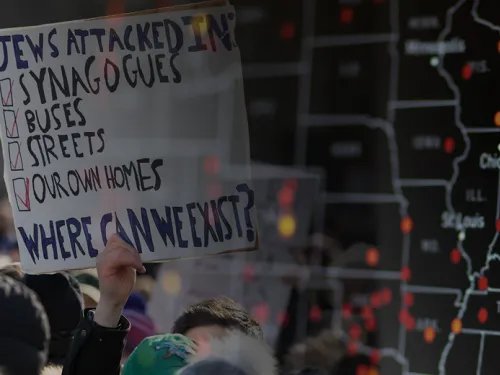
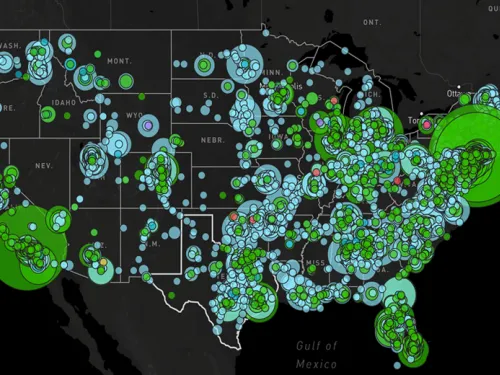
And the third thing is that people can use their voice. I always say we’ve documented 10,000-plus extremist and hate incidents on our heat map over the past couple of years, and each one of those is also a reminder that there are 10,000 opportunities for communities to come together and reject that hatred.
It matters. Leaders need to lead. People need to know that this hatred will not be normalized and that you can be an ally for those communities that are targeted as well.
Source: Las Vegas Sun
URL: https://lasvegassun.com/news/2020/mar/01/extremism-expert-says-communities-must-take-every/