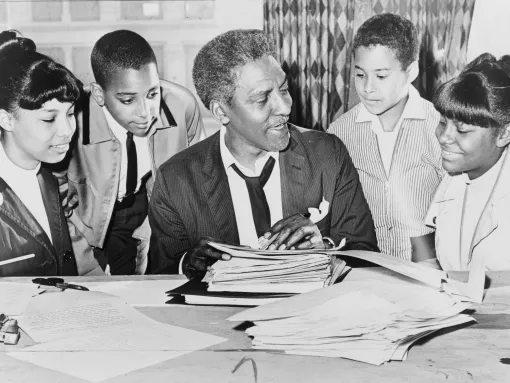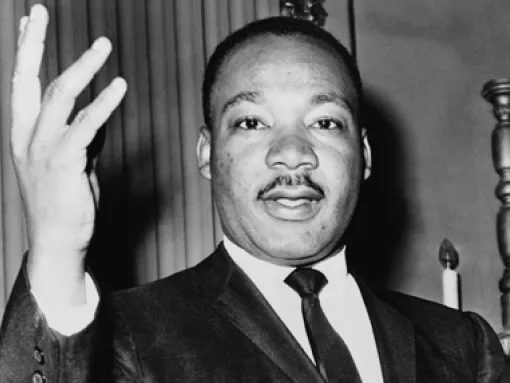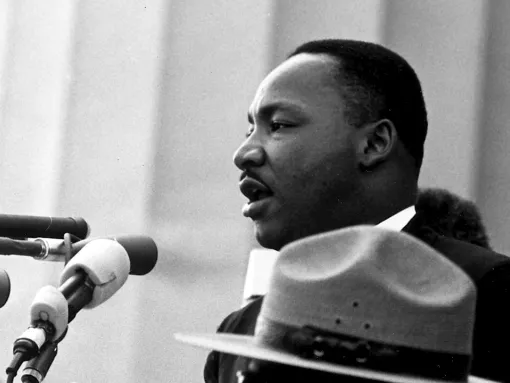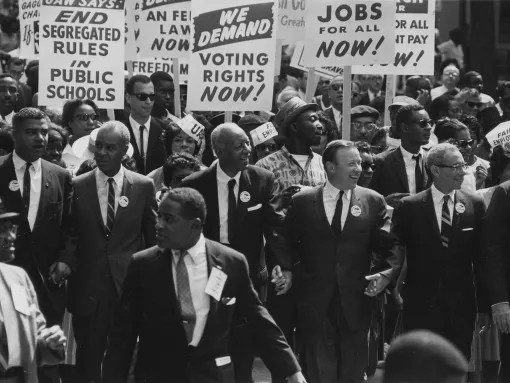






Martin Luther King, Jr. Day is Monday, January 16, and many educators will take the opportunity to teach about King and his enormous contributions to our society. As educators, how we approach the teaching of this holiday makes an impact on how students understand the larger context of the Civil Rights Movement and whether they make a connection between the past struggles to the current day and their own lives. Here are some thoughts about teaching the topic in a meaningful way…
Martin Luther King, Jr. and Civil Rights: Relevancy for Today
Lesson Plan
GRADE LEVEL: Elementary School, Middle School, High School
COMMON CORE STANDARDS: Reading, Writing, Speaking and Listening, History/Social Studies In commemoration of Martin Luther King, Jr. Day, this curriculum for grades 3–12 provides grade-specific lessons, resources and extension activities to provide your students opportunities to examine civil rights in the United States past and present. The lessons provide an opportunity for students to delve deeper into Martin Luther King Jr…
Winter Holidays: December Dilemma or Teaching Opportunity?
Tools and Strategies
For Educators | For Parents, Families, and Caregivers Winter is a festive time of year because so many holidays are celebrated by people from different religions, cultures and races. We spend time with family and friends, connect with our faith or culture, give and receive gifts and enjoy special foods and treats. However, this time of year—especially in schools and whether it's in-person, online or hybrid—can be a time where some children can feel uncomfortable, excluded, insulted…
GRADE LEVEL: Elementary School, Middle School COMMON CORE STANDARDS: Writing, Speaking & Listening SEL STANDARDS*: Self Awareness, Self-Management, Social Awareness, Relationship Skills, Responsible Decision-Making Bullying is a major problem in our schools. When it targets aspects of a person’s identity, it is called identity-based bullying, and may include bias about appearance, race, culture, gender and gender expression, language, religion, socioeconomic status,…
October is National Bullying Prevention Month
National Bullying Prevention Month is an opportunity to reflect on the classroom and school culture and assess the extent to which bullying is part of that culture. It is a time to examine best practices when it comes to creating respectful school environments that foster inclusion and respect. The large body of research on effective responses to name-calling and bullying concurs that schools and other educational institutions can best…
GRADE LEVEL: Elementary School
COMMON CORE STANDARDS: Reading, Writing, Language Using Poetry to Teach about Identity
Reading and writing poetry can provide an opening for young people to explore the various aspects of their identity, including their name, race and ethnicity, physical characteristics and more.
April is National Poetry Month, a good opportunity to explore poetry with your students. Because poetry does not require strict sentence structure or the usual grammar rules…
Asian American Pacific Islander (AAPI) Heritage Month Resources
Tools and Strategies
Teach and commemorate the culture, traditions and history of Asian American and Pacific Islander people in the United States in school, communities and at home.
Use these resources to honor women around the world, explore women’s achievements and struggles throughout history, and acknowledge women’s contributions to our society.
The Resilience of Antisemitism: The Lies of The Protocols of The Elders of Zion
Lesson Plan
GRADE LEVEL: High School
COMMON CORE STANDARDS: Reading, Writing, Speaking and Listening, Language Since its contrivance at the turn of the twentieth century by the Russian secret police, The Protocols of the Learned Elders of Zion (or The Protocols of the Elders of Zion) has taken root in bigoted and uneducated minds around the world. The booklet’s twenty-four sections spell out the alleged confidential plans of a Jewish conclave seeking to attain world domination. They represent…
On a daily basis—in the lunchroom, at the grocery store, in school hallways, in our political rhetoric and even at home—people hear and sometimes use words and phrases that demean, ridicule, offend or show ignorance about people from different groups and backgrounds. Regardless of whether the comments are deliberately malicious, said because the person lacks knowledge, or thought to be "a joke," such words are harmful and not only impact those on the receiving end but also everyone…
Comment to the Meta Oversight Board Regarding Use Of The Slogan "From the river - to the sea"
Backgrounder
To: Oversight Board From: ADL (Anti-Defamation League) Re: Comment to Oversight Board regarding use of the slogan "From the river - to the sea" The Anti-Defamation League (ADL) is the leading anti-hate organization in the world. Founded in 1913, its timeless mission is “to stop the defamation of the Jewish people and to secure justice and fair treatment to all.” Today, ADL continues to fight all forms of antisemitism and bias, using innovation and…
Backgrounder: How Can Online Anonymity Affect Hate?
Backgrounder
Role of online anonymity related to harassment, hate, misinformation, toxicity. Benefits and harms of banning anonymity, court cases, international approaches.
International Holocaust Remembrance Day: A Backgrounder
Backgrounder
Learn about International Holocaust Remembrance Day, a date that marks the liberation of Auschwitz-Birkenau and is meant to honor the victims of Nazism.
The Civil Rights Movement of the 1950’s and 1960’s came about out of the need and desire for equality and freedom for African Americans and other people of color. Nearly one hundred years after slavery was abolished, there was widespread segregation, discrimination, disenfranchisement and racially motivated violence that permeated all personal and structural aspects of life for black people. “Jim Crow” laws at the local and state levels barred African Americans from…
Americans with disabilities are a group of approximately 40.7 million people that today lead independent, self-affirming lives and who define themselves according to their personhood—their ideas, beliefs, hopes and dreams—above and beyond their disability. Since the mid 1900s, people with disabilities have pushed for the recognition of disability as an aspect of identity that influences the experiences of an individual, not as the sole-defining feature of a person. People with…
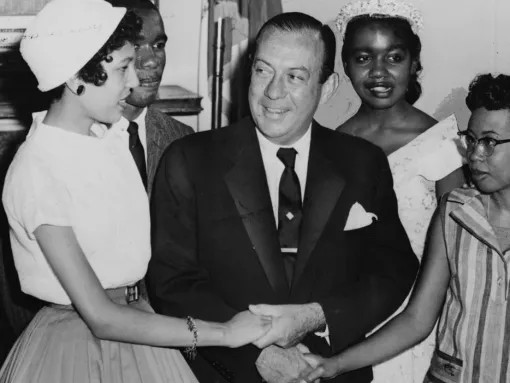
Minnijean Brown, Elizabeth Eckford, Carlotta Walls, Mayor Wagner, Thelma Mothershed, Gloria Ray, Terrance Roberts, Ernest Green, Melba Pattilo, Jefferson Thomas.
On September 23, 1957 in Little Rock, Arkansas, these nine African-American students quietly slipped into Central High School through the side door with the assistance of the city’s police, while an angry white mob numbering 1,000 swarmed the front of the school to await their arrival. Upon learning of their entry, the…
More than sixty-five years after Brown v. Board of Education, the promise of equal access to quality education remains unfulfilled. School expulsions and suspensions are among the best predictors of who will drop out of high school and African American students are three more likely to be suspended or expelled than their white peers.
In January 2014, the Department of Education and Department of Justice issued watershed guidance on school discipline with the intent to …
The Civil Rights Act of 1964 was signed into law by President Lyndon Johnson on July 2, 1964. The Act prohibited discrimination in public places, provided for the integration of schools and other public facilities and made employment discrimination illegal based on race, color, religion, sex or national origin. The document was the most sweeping civil rights legislation since Reconstruction. As we commemorate the anniversary of the Civil Rights Act, we have an opportunity to teach and learn…