When Hate Goes Viral: Bias and Antisemitism on Social Media
Tools and Strategies
It’s critical that parents, caregivers and educators learn more about social media and how to support young people in their understanding of its power and limitations.
Questions Universities Should Ask When Vetting Campus Antisemitism Trainings
Tools and Strategies
ProgramsUniversities increasingly rely on trainings for students, staff, faculty and administrators to address antisemitism and related forms of bias on campus. Whether a program is developed internally or delivered by an external provider, institutions benefit from taking a thoughtful, structured approach to reviewing content, pedagogy, and alignment with institutional values. The questions below are designed to support universities in evaluating whether a training is factually accurate,…
Short Dialogues with AI Reduce Belief in Antisemitic Conspiracy Theories
Report
A groundbreaking study supported by ADL found that fact-based dialogues with a trained AI chatbot durably reduced antisemitic conspiracy beliefs and increased favorability toward Jews.
Portrait of Antisemitic Experiences in the U.S., 2024-2025
Report
This joint ADL-Jewish Federations research shows the normalization of antisemitism and its effects on American Jews’ mental health and feelings of safety.
Status Report: Antisemitism in America after Boulder
Report
A new ADL survey found that a substantial number of Americans justify or excuse violence against Jews while most still reject antisemitism and want action taken against it.
Campus Antisemitism One Year After the Hamas Terrorist Attacks
Report
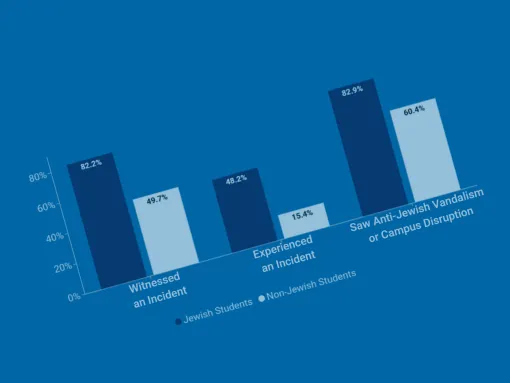
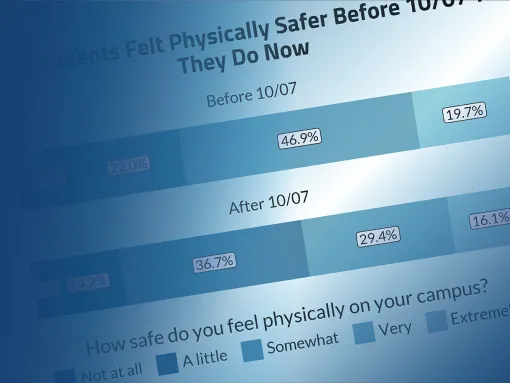
Most Jewish students face antisemitism; over 25% of Jewish students said they had observed anti-Jewish activity from faculty. Rates of self-censorship of Jewish identity and views of Israel remain high.
Antisemitism in Schools and Support for Holocaust Education
Report
Majority of Jewish parents surveyed report antisemitism in K-12 schools; and despite high public support for Holocaust and antisemitism education, less than 1/3 get it.
Jewish and Israeli Americans Face Discrimination in the Job Market
Report
An ADL study shows that Jewish and Israeli Americans are subject to discrimination in the US labor market because of their identity, not their qualifications.
The CAR Interventions to Counter Antisemitism: Quarterly Insights series includes insights from the most promising interventions studied by CAR and the team’s partners.
Attitudes Toward Jews and Israel on California Campuses: Results from a New Survey
Report
Sponsored by CAR, Dr. Jeffrey Kopstein, Ana Schugurensky and Dr. Rachel Shenhav-Goldberg investigated anti-Jewish and anti-Israel attitudes on four UC campuses.
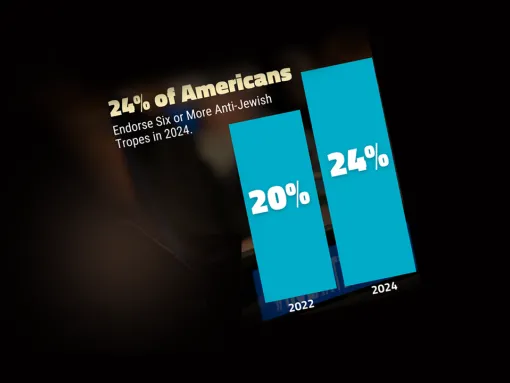
ADL Center for Antisemitism Research's new study - fielded in Jan. 2024 - reveals 24% of Americans harbor extensive antisemitic prejudice, up from 20% in 2022.
Americans Increasingly Aware of and Concerned about Antisemitism
Report
Awareness and concern about antisemitism grew in 2023 due to the Hamas attacks and a rise in antisemitic incidents, as evidenced by a poll of 1,484 US adults.
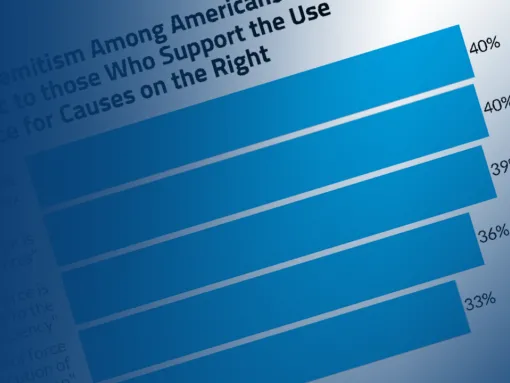
ADL and CPOST found that trends that raised the greatest risk of antidemocratic violence in recent years are particularly associated with antisemitism.
The Antisemitic Environment: How Social and Media Exposures Predict Antisemitic Beliefs
Report
An analysis of how friends, family, religious institutions, talk radio, pop culture, politicians and social media predict anti-Jewish and anti-Israel attitudes.
Antisemitic Attitudes in America: Topline Findings
Report
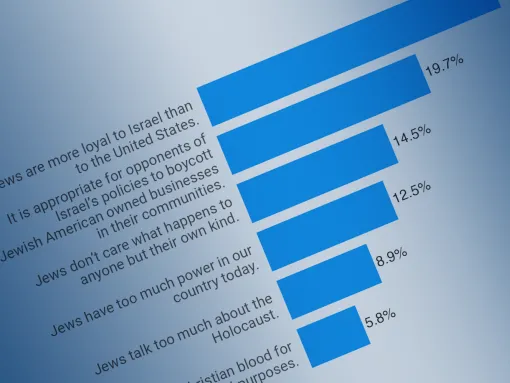
In our topline findings, data shows widespread belief in antisemitic conspiracy theories & tropes nearly doubled since 2019 & the highest levels in 30 years.
Who Leads the Pride: Fostering Student Leadership with Don't Feed the Lion
Article
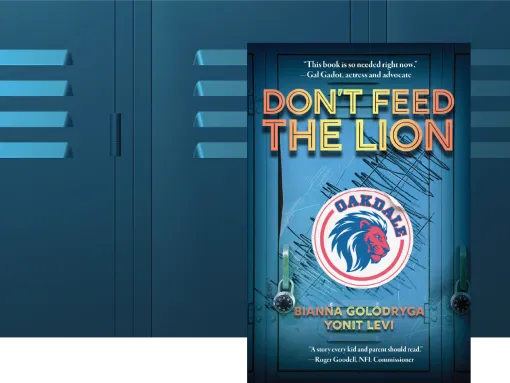
Don’t Feed the Lion: IntroductionDon’t Feed the Lion by Bianna Golodryga and Yonit Levi explores the story of antisemitism growing at Oakdale Middle School. The story begins with Theo Kaplan, a 13-year-old Chicago middle schooler and soccer captain. Theo’s world is turned upside down when his professional soccer idol, Wes Mitchell, makes an antisemitic comment that goes viral. The situation escalates when Theo discovers a swastika…