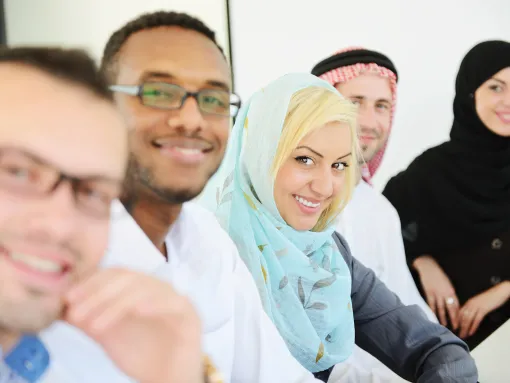
Uses these resources to explore and commemorate the rich history and culture of people who are Arab American as well as analyze the bias and discrimination faced by them.
Extreme Measures: How to Help Young People Counter Extremist Recruitment
Tools and Strategies
A Toolkit for Educators, Parents and Families Are you concerned about the white supremacist propaganda that young people are seeing online and the ways that extremists may be trying to recruit them?
The purpose of this toolkit is to help educators, parents and families support young people in understanding and resisting domestic extremist recruitment efforts. Our approach is to provide educational information and put tools into the hands of the adults in young people’s lives.
…
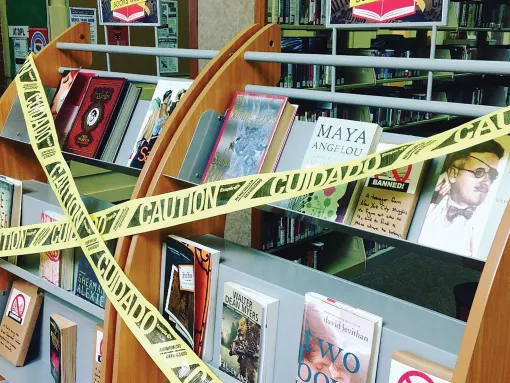
Why are Children’s and Young Adult Books Challenged and Banned?
Lesson Plan
GRADE LEVEL: Middle School
COMMON CORE STANDARDS: Reading, Speaking and Listening, Language
SEL STANDARDS*: Self-Awareness, Social Awareness, Relationship Skills, Responsible Decision-Making What are Reasons and Explanations for Challenging and Banning Books?
Challenging and banning books goes back centuries. In recent times, children’s and young adult books have been challenged and banned. The reasons and explanations are many and varied and include profanity, “values,…
Table Talk: Family Conversations about Current EventsOnline games have revolutionized the way we connect, compete and experience the world, captivating millions of adults and young people in thrilling virtual adventures that know no boundaries. In fact, the global player base for video games was estimated to reach 3.6 billion people in 2025 and predicted to reach 3.9 billion by 2028. In particular, teenagers are using video games at higher and…
Short Online Experience to Learn about this Core Topic For Educators | Middle School, High School
About the Mini-Lesson
Only a small portion of an iceberg can be seen above the waterline. Similarly, understanding someone's identity is limited by what we see on the surface. This mini lesson explores the concept of identity and the importance of going "below the waterline" to challenge and avoid stereotypes and identity-based bias.
ADL's mini-lessons are short, interactive, online…
Short Online Experience to Learn about this Core Topic For Educators and Middle and High School Students About the Mini-LessonThe Pyramid of Hate is a powerful framework for understanding how bias escalates—from biased attitudes and stereotypes to discrimination, violence, and even genocide. Through the lens of antisemitism, this mini-lesson helps middle and high school students and educators explore how prejudice grows and intensifies over time, and provides practical strategies to…
GRADE LEVEL: Elementary School
COMMON CORE STANDARDS: Reading, Writing, Speaking and Listening, Language
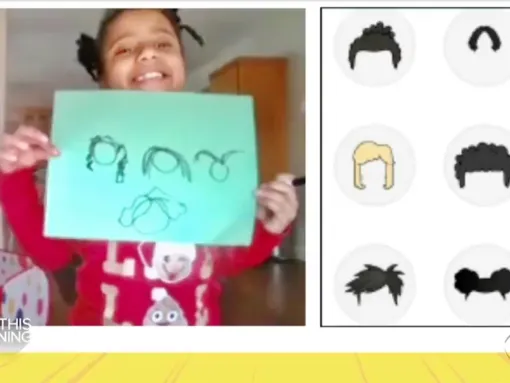
SEL STANDARDS*: Self-Awareness, Social Awareness, Relationship Skills, Responsible Decision-Making 7-Year-Old Morgan Bugg Advocates for More Diversity in Avatars
In April 2021, seven-year-old Morgan Bugg of Tennessee was using an educational gaming app called Freckle, which is used by more than 900,000 teachers in the U.S. This app gives students a chance to win coins while…
Civics Lesson
GRADE LEVEL: High School How is Dialogue Different than Debate?
Technology is enabling students to be increasingly aware of news and current events. Along with this increased awareness, we see more and more students becoming actively engaged in conversations around hot-button topics. While students often talk in digital spaces about current events that concern them, they also continue the conversation in person. When disagreements happen in those conversations, what…
Civics Lesson
GRADE LEVEL: High School What Needs to Change to Increase Voter Turnout?
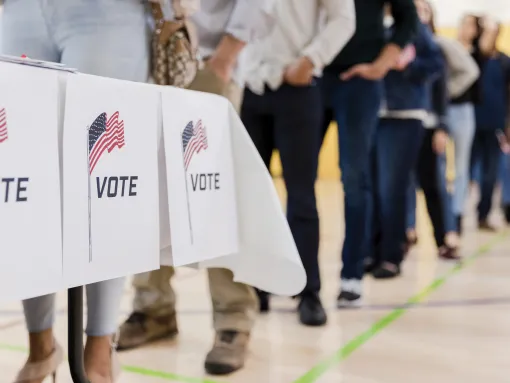
After every election, regardless of the outcome, people wonder how many people showed up at the polls to vote. The number is never as high as people would like, especially during midterm elections. In the 2016 Presidential election, 60.1% of the population eligible to vote showed up to the polls. During the midterm elections in 2018, only 50.3% of those eligible voted. While thousands of dollars…
Civics Lesson
GRADE LEVEL: High School How Were Youth Involved in the Civil Rights Movement?
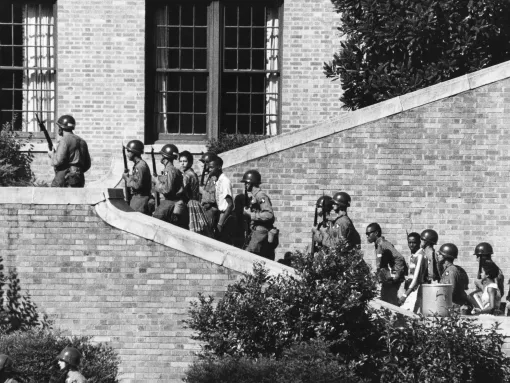
Throughout history, young people have stepped up and into leadership roles during different civil rights and social movements. This was never more evident than in the Civil Rights Movement, where young people were on the frontlines of the Montgomery bus boycotts, Freedom Rides and sit-ins. Given that student activism is on the rise again across the U.S., understanding how those young voices…
Civics Lesson
GRADE LEVEL: High School What is My Role in Creating and Participating in a Brave Space for Myself and Others?Educators want a welcoming classroom where every student feels appreciated, supported and able to express their ideas. While creating a safe space has been the focus for a long time, we are now calling on educators and students to create “brave spaces.” These are spaces where everyone feels that they can contribute, that they will be heard and they…
A Guide for Responding to School-Based Bias Incidents
Tools and Strategies
Is your school experiencing a bias or hate incident?Whether it be a racist “joke,” slur, stereotype or some other form of implicit or explicit bias, school community members must be committed to addressing bias-related incidents in schools. Educators and school administrators play vital roles in creating an environment where all students can learn and thrive. Cultivating an equitable and inclusive school community requires ensuring that historically marginalized students are…
Civics Lesson
GRADE LEVEL: High School What is Bias? What is Implicit Bias?In What Ways Could Bias Have an Impact on Your Civic Participation? The U.S. Constitution embodies ideals of equal opportunity and fair treatment for all and is reinforced by laws like the Civil Rights Act and Title IX. Yet, marginalized people who have experienced discrimination and unfair treatment historically, continue to do so in the present day. The stories in the news and social media seem to…
Civics Lesson
GRADE LEVEL: High School Which Form of Government Has the Most Power?
What are the Differences in Power Between Each Form of Government?
Which Form of Government Has the Most Power to Address Equity and Social Justice Issues?
Aside from the separation of powers at the federal level, the U.S. Constitution also describes the power relationships between state and federal governments, how that power will be distributed, and the relationships between the…
Civics Lesson
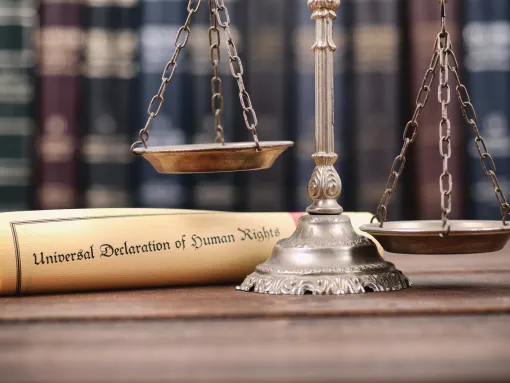
GRADE LEVEL: High School What are Human Rights?
What is the Universal Declaration of Human Rights?
In 1946, in the immediate aftermath of World War II, with hopes of preventing future atrocities, an international committee with varied legal and cultural backgrounds began to draft the Universal Declaration of Human Rights (UDHR). The UDHR was proclaimed by the new United Nations General Assembly in 1948. This document contains 30 Articles that set a standard…
Empowering Young People in the Aftermath of Hate (In English and Español)
Tools and Strategies
What Educators and Family Members Can DoToday, local, national or international tragedies happen so frequently that they can feel almost commonplace. When a hate crime, mass shooting, act of terrorism or other terrible and hate-inspired event occurs, one of the first questions many people ask is, what should we tell the children? How can we explain to them what has happened? Despite our best efforts to protect youth from the details of hate-motivated events, we can never assume that they are…
Civics Lesson
GRADE LEVEL: High School What is a Government?
What are Different Forms of Government?
What is My Relationship to Government?
Governments, and the act of governing, have been part of human society for thousands of years. Governments have shifted and changed in the way they represent, operate and control, but one thing remains the same: they are created to organize groups of people and provide structure and accountability. Understanding the concept of…
Civics Lesson
GRADE LEVEL: High School How Do I Write a Bill?
When a change in the law is desired, whether at the community, state, or national level, people need to understand the processes of making that desired change, a bill, into a law. Submitting a bill for consideration by the legislature involves writing, revising and sharing bills with a focus on passing them in a Senate hearing.
About the Lesson Plan
In this lesson, students will brainstorm to identify changes they…