Table Talk: Family Conversations about Current EventsYou may have heard about “swatting” because it's been in the news recently. What exactly is swatting? Why do people do it? Because young people are exposed to swatting online, on both mainstream websites and the “dark web” (i.e., hidden websites) and because some swatting incidents begin in online gaming or other digital platforms, it is an important topic to discuss with young people. Swatting is &ldquo…
Empoderar a los niños y jóvenes tras un evento de odio
Tools and Strategies
What Educators and Family Members Can DoToday, local, national or international tragedies happen so frequently that they can feel almost commonplace. When a hate crime, mass shooting, act of terrorism or other terrible and hate-inspired event occurs, one of the first questions many people ask is, what should we tell the children? How can we explain to them what has happened? Despite our best efforts to protect youth from the details of hate-motivated events, we can never assume that they are…
A Guide for Responding to School-Based Bias Incidents
Tools and Strategies
Is your school experiencing a bias or hate incident?Whether it be a racist “joke,” slur, stereotype or some other form of implicit or explicit bias, school community members must be committed to addressing bias-related incidents in schools. Educators and school administrators play vital roles in creating an environment where all students can learn and thrive. Cultivating an equitable and inclusive school community requires ensuring that historically marginalized students are…
Empowering Young People in the Aftermath of Hate (In English and Español)
Tools and Strategies
What Educators and Family Members Can DoToday, local, national or international tragedies happen so frequently that they can feel almost commonplace. When a hate crime, mass shooting, act of terrorism or other terrible and hate-inspired event occurs, one of the first questions many people ask is, what should we tell the children? How can we explain to them what has happened? Despite our best efforts to protect youth from the details of hate-motivated events, we can never assume that they are…
National Hispanic Heritage Month: Ideas for Educators
Tools and Strategies
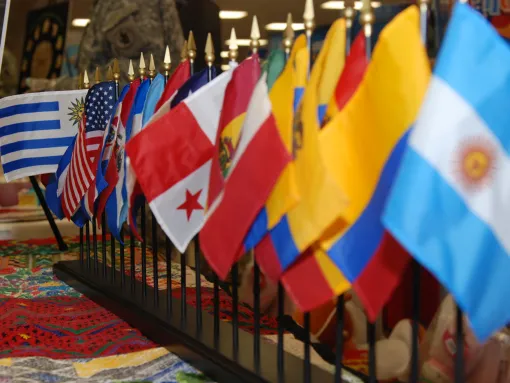
National Hispanic Heritage Month honors the achievements, contributions, culture, and history of Hispanic and Latin American people. The month-long celebration begins on September 15 commemorating the anniversary of independence for five Latin American countries: Costa Rica, El Salvador, Guatemala, Honduras, and Nicaragua. In addition, Mexico and Chile celebrate their independence days on September 16 and September 18, respectively. The 2025 theme for National Hispanic Heritage Month…
November is Native American Heritage Month, which was first declared by President George H.W. Bush in 1990. The month provides an opportunity to commemorate the rich and diverse cultures, traditions and histories and acknowledge the important contributions of Native American/Indigenous people. It is also an important time to educate the general public, as well as young people in schools, about the bias, discrimination and unique challenges faced by Native American/Indigenous people…
Finding the Balance: Countering Extremism and Combating Stereotypes
Tools and Strategies
Young people are exposed to discussions of extremism every day through social media, news and overheard conversations between adults. As an educators, the topic can be challenging to teach because the situation is always changing and evolving and worse--classroom conversations can themselves lead to stereotyping, bias and bigotry when discussing perpetrators, targets and victims. The following resources will help you teach about extremism while ensuring that the…
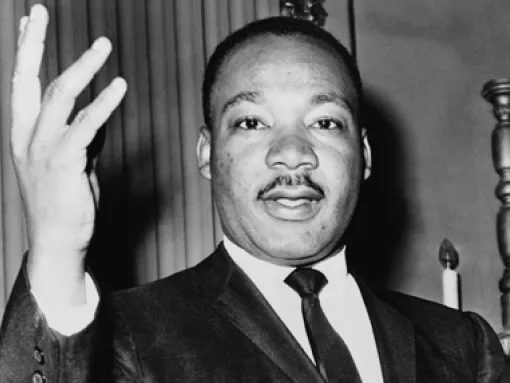
Martin Luther King, Jr. Day is Monday, January 16, and many educators will take the opportunity to teach about King and his enormous contributions to our society. As educators, how we approach the teaching of this holiday makes an impact on how students understand the larger context of the Civil Rights Movement and whether they make a connection between the past struggles to the current day and their own lives. Here are some thoughts about teaching the topic in a meaningful way…
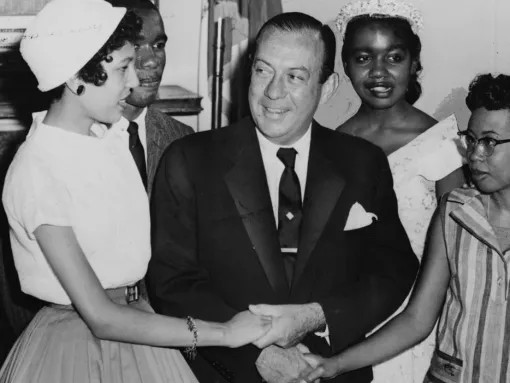
Minnijean Brown, Elizabeth Eckford, Carlotta Walls, Mayor Wagner, Thelma Mothershed, Gloria Ray, Terrance Roberts, Ernest Green, Melba Pattilo, Jefferson Thomas.
On September 23, 1957 in Little Rock, Arkansas, these nine African-American students quietly slipped into Central High School through the side door with the assistance of the city’s police, while an angry white mob numbering 1,000 swarmed the front of the school to await their arrival. Upon learning of their entry, the…
More than sixty-five years after Brown v. Board of Education, the promise of equal access to quality education remains unfulfilled. School expulsions and suspensions are among the best predictors of who will drop out of high school and African American students are three more likely to be suspended or expelled than their white peers.
In January 2014, the Department of Education and Department of Justice issued watershed guidance on school discipline with the intent to …
The Civil Rights Act of 1964 was signed into law by President Lyndon Johnson on July 2, 1964. The Act prohibited discrimination in public places, provided for the integration of schools and other public facilities and made employment discrimination illegal based on race, color, religion, sex or national origin. The document was the most sweeping civil rights legislation since Reconstruction. As we commemorate the anniversary of the Civil Rights Act, we have an opportunity to teach and learn…