




by: Oren Segal December 05, 2014 In the wake of two grand jury decisions—in Ferguson, MO and Staten Island, NY—not to indict the police officers who were involved in the killing of black men, the time has come to ask ourselves: Where do we go from here? There are a myriad of ideas and legislation on the table--diversity training for the police, funding to provide body cameras for police officers and legislation to tighten standards on military-style equipment for local police…
93 Results
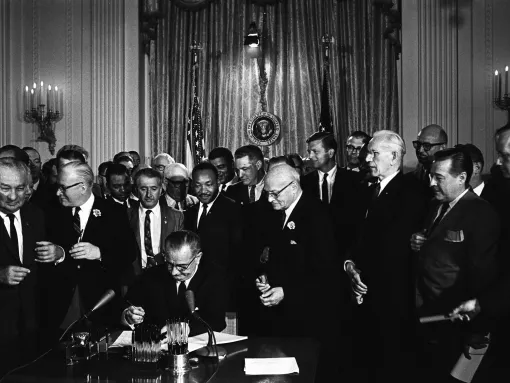
Teach students about the history of discrimination and racism in the U.S., the struggle for civil rights and the Civil Rights Act of 1964.
by: Oren Segal February 26, 2014
It happened again. College students dressed up like members of a “culture” for a stereotyped theme party.
In the most recent example, sorority students at Columbia University were photographed wearing sombreros, thick mustaches, ponchos and holding maracas. They also portrayed other nationalities. What’s worse is that these types of parties are not anomalies, but common occurrences on college campuses.
African-themed…
February 21, 2014 Daniel W. Jones, M.D. Chancellor The University of Mississippi Dear Chancellor Jones:
We are writing to express our deep concern about the recent incident at the University of Mississippi in which two unidentified men placed a noose around the neck of the statue of James Meredith, the school’s first black student. There have reportedly been other recent incidences of troubling acts of homophobia and racism.
College is a unique and special time in a young person…
by: Mark Onofrio February 07, 2014 Criticism of immigrant policy is not an excuse to undermine the humanity of others with the kind of vitriol that dominated the internet, especially Twitter, after the Atlanta-based Coca Cola Company aired a commercial with “America the Beautiful,” sung in different languages and featuring a diversity of people during the Super Bowl.
The term immigrant is a descriptor, not a slur. However, it is often used in a pejorative way. For those who are…
by: Mark Onofrio January 24, 2014 We recently had a reminder of the enduring power of stereotypes in American when an interview by Seattle Seahawks cornerback Richard Sherman prompted a slew of racist remarks on Twitter and a mainstream media commentator referred to him as a “thug” and an “ape.”
While perhaps unintentional on the part of media commentators, the…
by: Mark Onofrio January 13, 2014 Five Tips for Working with Children, Tweens and Teens
As we honor Martin Luther King Jr.’s legacy through the National Day of Service, we encourage teachers, parents and families to provide community service opportunities for children and youth. Below are tips to help make the experience meaningful.
“Everybody can be great...because anybody can serve. You don't have to have a college degree to…
by: Mark Onofrio December 06, 2013
Many educators want to incorporate the passing of significant figures into their classroom discussion. ADL’s Education Division provides resources to educators about contemporary issues and current event topics to help make classroom learning more dynamic forums for critical thinking.
In celebration and memory of the life of Nelson Mandela, this special edition of The Current Events Classroom provides students the opportunity to learn…
by: Mark Onofrio January 11, 2013 Applications for smartphones and tablets have become an emerging segment of the online and entertainment industry. As with videos, blogs and social networking platforms which came before, Apps are now being created that some consider funny, but which actually cross the line from humorous to offensive. Recent examples include two free apps on Google called “Make Me Asian” and “Make Me Indian,” that allow users to edit…
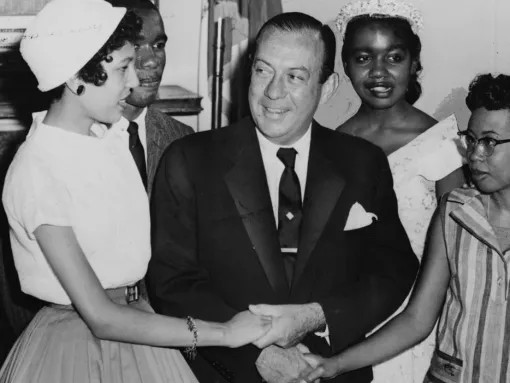
Minnijean Brown, Elizabeth Eckford, Carlotta Walls, Mayor Wagner, Thelma Mothershed, Gloria Ray, Terrance Roberts, Ernest Green, Melba Pattilo, Jefferson Thomas.
On September 23, 1957 in Little Rock, Arkansas, these nine African-American students quietly slipped into Central High School through the side door with the assistance of the city’s police, while an angry white mob numbering 1,000 swarmed the front of the school to await their arrival. Upon learning of their entry, the…

More than sixty-five years after Brown v. Board of Education, the promise of equal access to quality education remains unfulfilled. School expulsions and suspensions are among the best predictors of who will drop out of high school and African American students are three more likely to be suspended or expelled than their white peers.
In January 2014, the Department of Education and Department of Justice issued watershed guidance on school discipline with the intent to …
The Civil Rights Act of 1964 was signed into law by President Lyndon Johnson on July 2, 1964. The Act prohibited discrimination in public places, provided for the integration of schools and other public facilities and made employment discrimination illegal based on race, color, religion, sex or national origin. The document was the most sweeping civil rights legislation since Reconstruction. As we commemorate the anniversary of the Civil Rights Act, we have an opportunity to teach and learn…
From Bloody Sunday to the Voting Rights Act: How One Day Changed the Course of Civil Rights History
March 7, 1965 — a day that would become known as Bloody Sunday — forever changed the course of American history. That day the nation’s attention turned to Selma, Alabama, where state troopers and a sheriff’s posse brutally attacked 575 demonstrators attempting to march peacefully to Montgomery. The marchers had gathered for two purposes: to advocate for voting…