

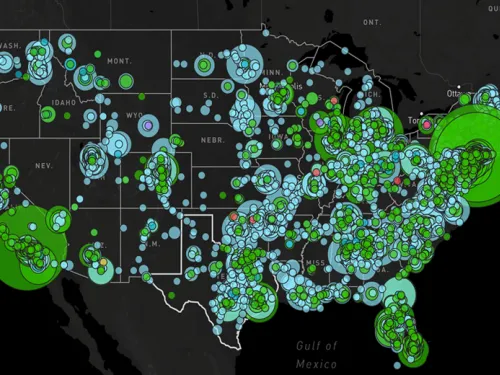
This new annual report from ADL & GLAAD documents extremist and non-extremist incidents of anti-LGBTQ+ hate in the United States.
55 Results
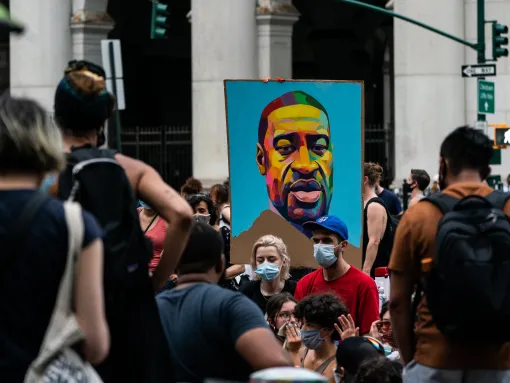
They were ordinary people who lived extraordinary lives – or extraordinary people who put their lives on the line to protect the health and welfare of everyone.
In what has become an annual tradition, as the year comes to a close ADL pauses each December to take stock of the moments and people who shaped the last 12 months – for better, or for worse – with a Top 10 list.
For 2020, we compiled two Top 10 lists: One looking back on the moments of hurt and hate that…
New York, NY, March 6, 2026 ... The Anti-Defamation League's (ADL) Task Force on Middle East Minorities issued the following statement regarding the military conflict in Iran: At this moment of profound uncertainty for Iran, we stand in solidarity with the Iranian people and their tireless struggle for their rights, freedom, and dignity. Iran is not the regime that has controlled it for the last 47 years. For more than two millennia, Iran was one of the world's great…
The ongoing military conflict in Iran has the potential to reshape the country, not least for its diverse range of religious and ethnic minorities. While Iran has a deep and ancient history of religious and ethnic pluralism, the 1979 revolution set in motion almost five-decades of systematic persecution against the country's minority communities and Iranian women in the name of the Islamic Republic. Since 1979, the Islamic Republic has imposed a theocratic order…
The Anti-Defamation League’s Task Force on Middle East Minorities is deeply troubled by the recent sentencing of Remy Rowhani, a respected Qatari Baha’i, to five years in prison. This decision raises concerns about the treatment of religious minorities in Qatar. Mr. Rowhani, a distinguished citizen who has long served his country, appears to have been singled out because of his faith. We urge the Qatari authorities to consider reversing the sentence and take meaningful steps to…
ADL has been closely tracking how states are addressing antisemitism and supporting their Jewish communities. In 2024, ADL tabulated 9,354 antisemitic incidents across the United States – a 5% increase from 2023, a 344% increase over the past five years, and an 893% increase over the past decade. These numbers underscore the urgent need for state-level action. As highlighted in our first-of-its-kind Jewish Policy Index (JPI), our goal is to provide a tool that advocates, educators and…
April 21, 2025 Letters to the Editor Jewish News Syndicate To the Editor: Dr. Andrew Bostom and Morton Klein conflate facts and distort findings in their attempt to reach their preconceived conclusion that ADL is “hiding” data about antisemitism among Muslim communities (“ADL quietly purged data on European Muslim antisemitism,” April 18). Nothing could be further from the truth. Our surveys have always tracked this data, and our aim has always been to be fully…

A guide of best practices for school decision makers in their work to counter antisemitism in K-12 schools.
Use this collection of classroom activities about holidays and observances to enhance students' understanding of our multicultural society and world.
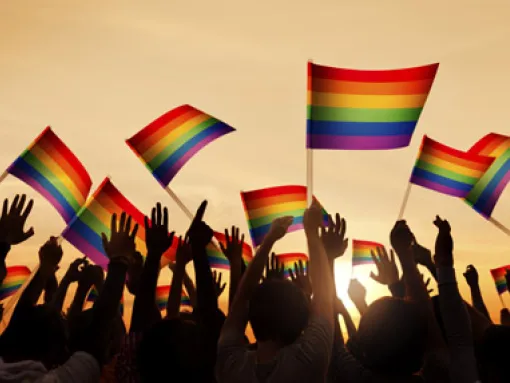
Commemorated each year in the month of June, LGBTQ+ Pride Month honors the 1969 Stonewall uprising in New York City. In June of 1969, patrons and supporters of the Stonewall Inn staged an uprising to resist the police harassment and persecution to which LGBTQ+ Americans were commonly subjected. This uprising marked the beginning of a movement to outlaw discriminatory laws and practices against LGBTQ+ Americans. Today, LGBTQ+ Pride Month celebrations include pride parades, picnics, parties,…
60 percent of children ages 13-17, and 83 percent of adults 18-45, were harassed while participating in online multiplayer games New York, NY, September 15, 2021 … Sixty percent of children ages 13-17 have experienced harassment while playing games online, according to a first-of-its-kind survey of online gaming experiences released today by the ADL (Anti-Defamation League) Center for Technology and Society.
Despite the significant percentage of young adults who reported…
New York, NY, June 17, 2021 … ADL (the Anti-Defamation League) expressed disappointment in response to today’s Supreme Court ruling in favor of Catholic Social Services, which rejected the city of Philadelphia’s argument that it should not have to renew a foster care certification contract with an agency that refuses to serve same-sex couples.
However, the decision was narrow, and it is important to note that the Court focused on the details of the city’s contract…

March 12, 2021 THE WEEK’S BIG 3
Miami Heat center Meyers Leonard was fined $50,000, suspended from the team's facilities and banned from team activities after he uttered an antisemitic slur while playing video games. Israeli society is increasingly divided, with 81 percent of Israelis stating that they believe that their society is increasingly divided, a 12 percent increase since 2017, according to a new ADL. survey. A panel of South Carolina lawmakers stripped explicit protections…
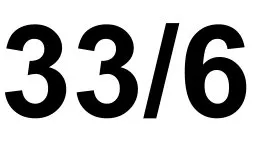
The number 33 is used by Ku Klux Klan adherents to signify the Ku Klux Klan. Since the 11th letter of the alphabet is K, three Ks signify "KKK" or the Ku Klux Klan. When using this reference, Klan members will frequently add the number 6 at the end, as in 33/6, because they think the Klan is currently in its sixth historical "era." Less commonly, some holdouts may still use the numeric code 33/5. Additional Images:
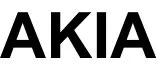
AKIA is Ku Klux Klan shorthand for "A Klansman I Am." It is related to another Klan acronym, AYAK ("Are You A Klansman?"). These are among the many acronyms developed by the Second Ku Klux Klan that emerged in 1915. Although the Second Ku Klux Klan did not survive, much of its terminology and many of its rituals did, and later Klan groups freely used them. Additional Images:
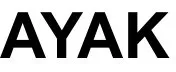
AYAK is Ku Klux Klan shorthand for "Are You A Klansman?" It is related to another Klan acronym, AKIA ("A Klansman I Am"). These are among the many acronyms developed by the Second Ku Klux Klan that emerged in 1915. Although the Second Ku Klux Klan did not survive, much of its terminology and many of its rituals did, and later Klan groups have freely used them. Additional Images:
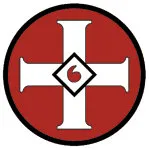
ALTERNATE NAMES: Ku Klux Klan, MIOAKGroup Status: Active (in that there are many active Ku Klux Klan groups)
For the past century, the primary symbol related to Ku Klux Klan groups (other than Klan robes themselves) is what Klan members may call the MIOAK (an acronym for "Mystic Insignia of a Klansman"). It is more commonly referred to as the "Blood Drop" Cross. It appears as a square white cross in black outline against a circular red background. In the middle of the cross is what appears…
ALTERNATE NAMES: Ku Klux Klan, MIOAK
Read more about Blood Drop Cross
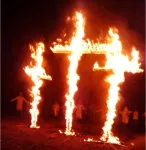
The image of the burning cross is one of the most potent hate symbols in the United States, popularized as a terror image by the Ku Klux Klan since the early 1900s. Cross-burnings (called "cross-lightings" by Ku Klux Klan groups, to make it seem as if they are not destroying a Christian cross) have long been used as a traditional symbol by Klan groups, used both in Klan rituals as well as in attempts to intimidate and terrorize victims of Klan groups. So widely associated with racial…
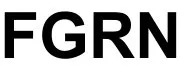
ALTERNATE NAMES: For God, Race and NationFGRN is a Ku Klux Klan acronym for "For God, Race and Nation," a common Klan slogan. It is one of a number of slogans, codes and rituals created by the Second Ku Klux Klan in the early 20th century. That Klan did not survive, but many of its codes and rituals were adopted by later Klan groups. In acronym form, the slogan is used primarily as a Klan identifier, typically appended at the end of on-line messages and postings. Additional Images:
ALTERNATE NAMES: For God, Race and Nation
Read more about FGRN
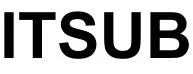
ITSUB is a Ku Klux Klan acronym for "In The Sacred Unfailing Being," a reference to God. It is one of many Klan acronyms created by the Second Ku Klux Klan that emerged in 1915. That Klan did not survive, but subsequent Ku Klux Klan groups continued many of its rituals and codes. Today, ITSUB has no real meaning or particular purpose and is typically used by Klan group members in on-line messages or posts solely as a way to identify themselves with the Ku Klux Klan. This has been the fate of a…