

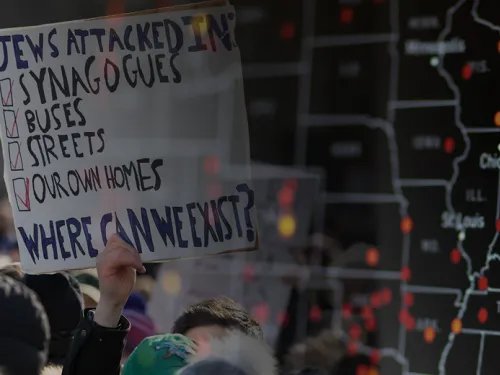



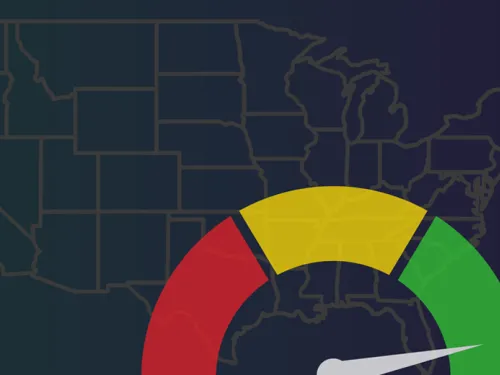

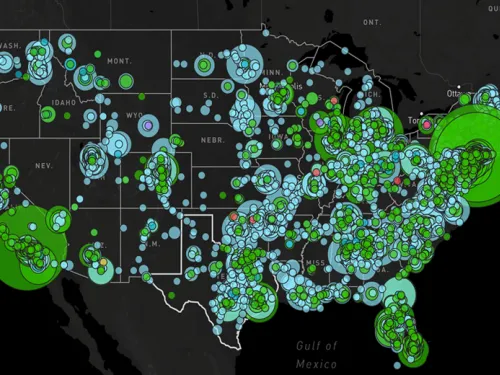

ADL has been closely tracking how states are addressing antisemitism and supporting their Jewish communities. In 2024, ADL tabulated 9,354 antisemitic incidents across the United States – a 5% increase from 2023, a 344% increase over the past five years, and an 893% increase over the past decade. These numbers underscore the urgent need for state-level action. As highlighted in our first-of-its-kind Jewish Policy Index (JPI), our goal is to provide a tool that advocates, educators and…
14 Results

A guide of best practices for school decision makers in their work to counter antisemitism in K-12 schools.
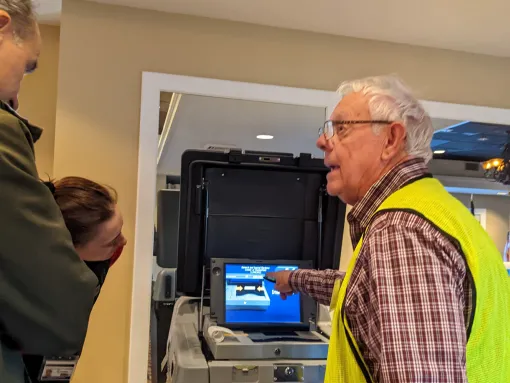
Engage in a family conversation about the role of election poll workers and discuss both the rewards and risks of being an election worker.

Table Talk: Family Conversations about Current EventsYou may have heard about “swatting” because it's been in the news recently. What exactly is swatting? Why do people do it? Because young people are exposed to swatting online, on both mainstream websites and the “dark web” (i.e., hidden websites) and because some swatting incidents begin in online gaming or other digital platforms, it is an important topic to discuss with young people. Swatting is &ldquo…
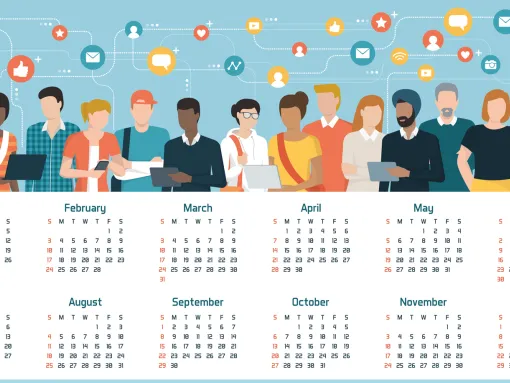
Use this collection of classroom activities about holidays and observances to enhance students' understanding of our multicultural society and world.

What Educators and Family Members Can DoToday, local, national or international tragedies happen so frequently that they can feel almost commonplace. When a hate crime, mass shooting, act of terrorism or other terrible and hate-inspired event occurs, one of the first questions many people ask is, what should we tell the children? How can we explain to them what has happened? Despite our best efforts to protect youth from the details of hate-motivated events, we can never assume that they are…
ADL’s new capacity to support municipalities, and others interested in using the law to deter harm and hold individuals and groups accountable for violent extremist actions. As our democracy as well as vulnerable communities are increasingly at risk of extremist violence and threats, ADL has expanded its capacity to support municipalities, community organizations and others interested in learning more about how to use the law to deter harm and hold individuals and groups responsible for…

Learn helpful approaches educators can use to talk with young people about extremism and how to help young people resist and counter it.
The following is an inventory of known active white supremacist prison gangs, as well as which states they’re active in and examples of various “patches” associated with those prison gangs where available.

An ADL Center on Extremism examination of white supremacist prison gangs’ Facebook activity shows it is the platform of choice for gang members to connect.

Table Talk: Family Conversations About Current EventsWhen there are periods of heightened violence and war in the news, oftentimes one or more marginalized identity groups can become the focus of attention, anger, hostility and bias even far removed from the location of the conflict. In the wake of Hamas’ attack on Israel in October 2023, ADL has tracked an uptick in antisemitic attacks in the U.S. and around the globe, and there have also been incidents of anti-Muslim attacks. As the…

Is your school experiencing a bias or hate incident?Whether it be a racist “joke,” slur, stereotype or some other form of implicit or explicit bias, school community members must be committed to addressing bias-related incidents in schools. Educators and school administrators play vital roles in creating an environment where all students can learn and thrive. Cultivating an equitable and inclusive school community requires ensuring that historically marginalized students are…
What Educators and Family Members Can DoToday, local, national or international tragedies happen so frequently that they can feel almost commonplace. When a hate crime, mass shooting, act of terrorism or other terrible and hate-inspired event occurs, one of the first questions many people ask is, what should we tell the children? How can we explain to them what has happened? Despite our best efforts to protect youth from the details of hate-motivated events, we can never assume that they are…

Young people are exposed to discussions of extremism every day through social media, news and overheard conversations between adults. As an educators, the topic can be challenging to teach because the situation is always changing and evolving and worse--classroom conversations can themselves lead to stereotyping, bias and bigotry when discussing perpetrators, targets and victims. The following resources will help you teach about extremism while ensuring that the…