


The mayor stayed away from the Israel Day Parade. I went because Jewish pride, peoplehood and Israel ties are not up for negotiation. By Jonathan Greenblatt, ADL CEO When Mayor Mamdani announced that he would skip New York City’s annual Israel Day Parade, he broke with a tradition that every mayor has honored since the event began in 1965 – standing shoulder to shoulder with members of the New York Jewish community at a parade celebrating their cultural heritage. His absence wasn…
155 Results
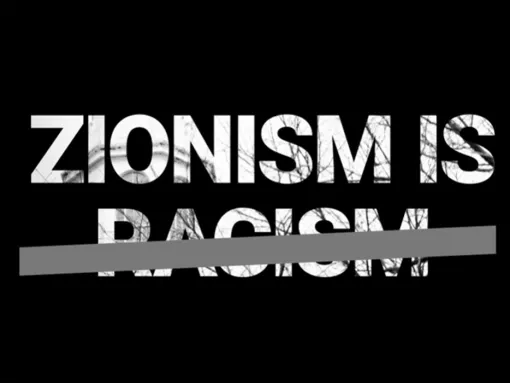
Anti-Israel rhetoric on campus can become antisemitic when it demonizes Zionism, thereby implicitly demonizing many American Jews.
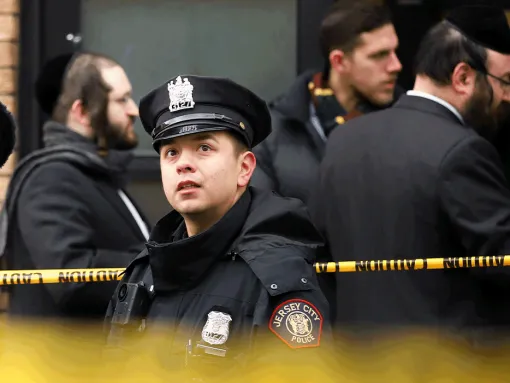
Each year, ADL’s (Anti-Defamation League) Center on Extremism tracks incidents of antisemitic harassment, vandalism and assault in the United States. Since 1979, we have published this information in an annual Audit of Antisemitic Incidents.
In 2019, ADL tabulated 2,107 antisemitic incidents throughout the United States. This is a 12% increase from the 1,879 incidents recorded in 2018 and marks the highest number on record since ADL began tracking antisemitic…
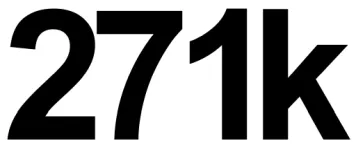
271k is shorthand for a false assertion put forward by Holocaust deniers that only 271,000 Jews died in the Holocaust, rather than 6 million.
Alternate Names: 271,000; 271
271k is an antisemitic shorthand reference to a false claim made by Holocaust deniers that only around 271,000 Jews died during the Holocaust rather than the consensus view, based on exhaustive research, that the Nazis killed approximately six million Jews in their extermination campaign.
The number 271,000 stems from a scanned image of part of a 1979 document often shared by Holocaust deniers. The document originated from what is today known as the Arolsen Archives, based in Germany, one of the largest repositories of records related to victims of Nazi persecution. Often attributed to the Red Cross, which administered the Archives for many years, the document provided then-current statistics on the number of victims at 13 concentration camps that the repository had, upon request, confirmed as dead and issued death certificates for (often needed by next of kin to obtain insurance benefits, pensions, etc.). This number was slightly over 271,000 (Holocaust deniers may also circulate a similar document from 1984 with somewhat higher numbers).
As the Arolsen Archives and others have explained, such documents did not list the total number of Jewish victims at these 13 locations, nor did they include victims from the many other concentration camps, death camps, and slave labor camps operated by the Nazi regime, nor figures for the vast numbers of victims who died in ghettoes or were shot outside of camps, especially in the Soviet Union. Holocaust deniers, however, claim that the 271,000 figure represents the totality of Jews who perished under the Nazi regime; many deniers further assert that most of these victims were not killed by the Nazis but rather died of malnutrition or diseases like typhus because of the chaos and dislocation caused by the Allied strategic bombing of Germany in the final year of the war. In other words, they falsely claim that few Jews died during World War II and that most of the deaths that did occur were the fault of the Allies, not the Nazis.
The 271,000 claim is linked to an older false assertion originating with the West German far right in the 1950s that the Red Cross had ostensibly said Jewish victims of the Nazis had not numbered more than 300,000. The Red Cross has repeatedly refuted that fabricated claim. Holocaust deniers say that Canadian Holocaust denier Ernst Zundel uncovered the “271,000” document in the 1980s and used it (unsuccessfully) to defend himself in Canadian trials over his reprinting of a Holocaust denial pamphlet from Great Britain in the 1970s that repeated the older 300,000 claim. The image of the document was later used by other Holocaust deniers, eventually making its way to the internet, where it spread still further. However, it was not until around 2024 that 271k and 271,000 emerged on social media as popular shorthand references to the false claim and as antisemitic references, generally.
Antisemites often use 271k in response to online posts about the Holocaust or the six million Jews who perished in it. Often it appears in language such as “271k at best,” “271k tops, mostly from typhus” or “271k is the best we can do.” It also frequently appears in Holocaust denial memes designed to suggest that the mass murder of six million Jews in such a short time was impossible. One such meme features a worker in a pizza parlor saying “Six million pizzas? The most we can make is 271k.” Variations replace pizzas with other things, such as tea: “Six million cups in five years? Sorry, the most I can make is 271k.” Other memes feature images from the television show Pawn Stars, depicting pawn shop workers from the show saying, “Best I can do is 271,301.” Some people use it to suggest more Jews should be killed, employing phrases such as “271k is not enough.” Since its introduction, use of 271k as antisemitic shorthand has grown rapidly on social media.
As numbers, 271, 271k and 271,000 may have very different meanings in other contexts; they should always be evaluated carefully in the specific context in which they appear.
Board strengthened with leaders from business, academia and law New York, NY, January 23, 2026 … ADL (the Anti-Defamation League) today announced the election of three new members to its Board of Directors: Stacie Hartman, Partner, Morgan, Lewis & Bockius LLP Rev. Johnnie Moore, PhD, Vice Chancellor and Managing Director of Middle East Studies at Pepperdine UniversityMatthew Segal, Co-Founder and Co-CEO of ATTN:“The…

Terrorgram is a white supremacist network formed to incite violent acts to bring about the collapse of society. It has used several logos, which generally include a Waffen SS shield.
Alternate Names: Terrorgram Collective, Terrorgram Network
Terrorgram emerged in the late 2010s as a loose international network of white supremacist individuals and groups, typically neo-Nazi in nature, seeking to promote violent acts in the service of white supremacist accelerationism. White supremacist accelerationism is a school of thought within the white supremacist movement that argues the only way to create a desired whites-only or white-dominated society is to destabilize and destroy current society through violence and disruption, then build a new society from its ashes. Terrorgram—taking its name from the internet platform Telegram, on which it conducted most of its activities—dedicated itself to accelerationist propaganda, glorifying white supremacist mass killers like Dylann Roof and Brenton Tarrant as “saints” and urging others to follow in their footsteps to commit terrorist attacks and hate crimes against minorities and other targets, such as infrastructure. Their propaganda efforts included producing several lengthy and distinctively illustrated manuals with motivational screeds as well as ostensibly practical advice for would-be terrorists.
In 2024, the U.S. designated Terrorgram as Specially Designated Global Terrorists; later that year, the FBI arrested two key American Terrorgram leaders on a number of charges. The arrests precipitated Terrorgram’s collapse as the network’s remaining members sought to avoid infiltration or identification. However, Terrorgram’s digital publications are still in circulation among accelerationists, meaning that people can still encounter their symbols. Terrorgram logos imitate a Waffen SS divisional shield design, though with their own distinct symbology. One simply features a paper airplane, while a different logo depicts a swastika, an infinity symbol, and a ski mask. A third version features the swastika and ski mask along with part of a Sonnenrad symbol.
The Goyim Defense League is an antisemitic hate group that employs logos with the letters “GDL” or GTV” in designs resembling the Nazi flag.
Blood Tribe is a neo-Nazi group that uses a logo featuring the German word “Blut” (blood) written with runic characters.

The Asatru Folk Assembly is a white supremacist Norse pagan group that uses a logo consisting of three intertwined drinking horns against a blue background.
The American Freedom Network is a white supremacist group that uses a logo featuring a red Waffen SS shield and a Totenkopf skull.
Active Clubs are a network of white supremacist groups that focus on fitness and training. Their logos generally use a Celtic Cross motif.

Lessons and resources for Jewish American Heritage Month

Guide for educators of common questions that may arise when teaching Jewish American Heritage lesson plans.

Engage in a family conversation about the origins of Jewish American Heritage Month and why we celebrate and commemorate it.

Children's books about Jewish people and the Jewish experience
Rabbi Kogan’s murder highlights vital need for UAE to prioritize fight against extremism New York, NY, November 25, 2024 ... The Anti-Defamation League’s (ADL) Task Force on Middle East Minorities condemns the tragic murder of Chabad emissary Rabbi Zvi Kogan in the United Arab Emirates. This horrific act underscores the urgent need to confront rising extremism, antisemitism, and hatred in the Middle East. We appreciate the quick action by UAE authorities to apprehend three…
House committee finds "stunning failures" at several colleges and universities in confronting antisemitism New York, NY, October 30, 2024 … ADL (the Anti-Defamation League) today commended the House Committee on Education and the Workforce for its investigation into the antisemitism that has taken colleges and universities by storm since the Hamas terrorist attacks on October 7, 2023. The committee’s investigation found that the leadership of several institutions failed to…
September 20, 2024 – As antisemitism reaches unprecedented levels in the United States, ADL (Anti-Defamation League), OneTable, and Passages Israel are working to build bridges between the Jewish and Christian communities through shared experiences and dialogue. Their joint initiative, “A Light in the City,” aims to foster friendship and understanding by hosting Shabbat dinners in four key cities. The pilot program, to take place in Atlanta, Chicago, Dallas, New York…
Global Task Force Warns of Surge in Antisemitism Across Seven Countries Post-October 7
Remarks as delivered June 27th, 2024 Thank you- I join you all here this morning on behalf of ADL, the oldest anti-hate organization in the United States, alongside my good friend Marc Morial, President of the National Urban League, and our partners - Assembly members Brian Cunningham, Nily Rozic, Grace Lee, Jennifer Rajkumar and Pastor Johnnie Green. In addition. We are very grateful to Dr. Hazel Dukes of the NY NAACP, an icon of the civil rights movement for lending her strong words of…