

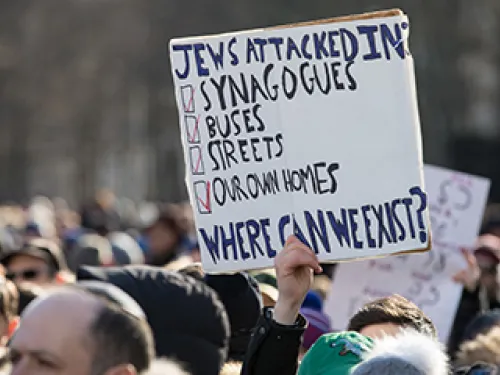




Description of the 2021 Israel-Hamas Conflict
476 Results
Anti-Zionism is opposition to Zionism, the movement for the self-determination and statehood of the Jewish people in their ancestral homeland, the land of Israel. Anti-Zionism is often expressed, explicitly or implicitly in the rejection of Jewish nationhood and the right to self-determination; the vilification of individuals and groups associated with Zionism; and the downplaying or negation of the historic and spiritual Jewish connection to the land of Israel.
Anti-Zionism is…
Some claim Israel is committing “ethnic cleansing” against the Palestinians. While there is no precise definition of ethnic cleansing under international law, the charge suggests that Israel is systematically working to rid its territory of Palestinians, including Israeli Arab citizens, through force or intimidation tactics in order to create a homogeneous society. This is a fundamentally inaccurate accusation.
In recent decades, there have been numerous episodes of ethnic…
Some activists have presented the fight against Israel, and for Palestinians rights, as the same as the fight for racial justice in the United States. While it is understandable to attempt to make sense of international events through the prism of our own domestic context, the specifics of the Israeli-Palestinian conflict do not lend themselves to exact comparisons with the American experience of systemic racial inequality.
Distinct from issues in the United States, the root of the…
It is not uncommon today to see critics of Israel accusing it of being an apartheid state. Whether such a description is being used to describe Israeli policies towards Palestinians in the West Bank and Gaza Strip, or towards Arab citizens of Israel, the label is inaccurate, offensive, and often used to delegitimize and denigrate Israel as a whole. Moreover, the use of this inaccurate and highly charged label is also counterproductive to resolving issues related to injustices…
The term “settler colonialism” conjures historical memories of exploitative white European empires militarily invading lands in the Middle East, Asia and Africa[i], implanting their citizens in colonies through the use of force, subjugating the native and indigenous populations and stealing their natural resources.
Many anti-Israel activists and academics use the term “settler colonialism” to describe the political and demographic changes over the last 150 years in…
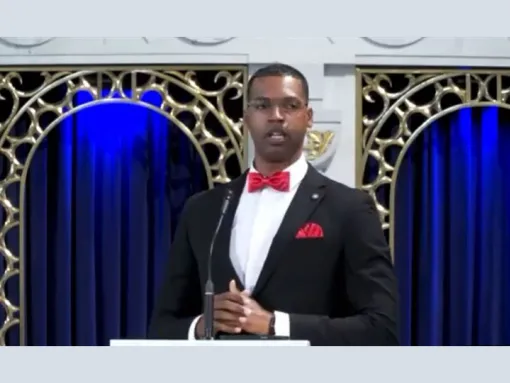
Rizza Islam speaking at the Nation of Islam’s 2021 Saviours’ Day conference at Mosque Maryam in Chicago.
Key Points:
Ronnie Steven “Rizza” Islam is a member of the Nation of Islam
Mr. Islam is also a social media influencer, with more than 500K followers
He regularly posts antisemitic, anti-LGBTQ and anti-vaccine rhetoric
Mr. Islam also espouses a range of conspiracy theories
Background:
Ronnie Steven &ldquo…
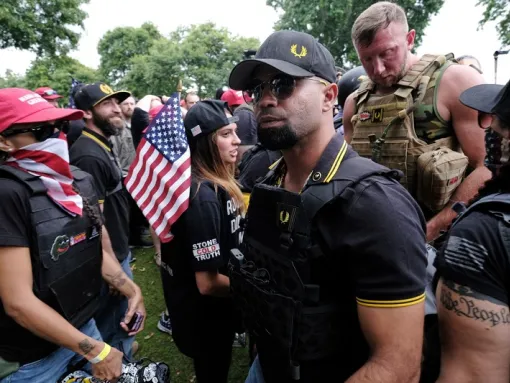
Ideología: Principalmente “alt lite” o nueva derecha: misoginia, islamofobia, transfobia y antiinmigrante. Algunos miembros defienden ideologías antisemitas y de supremacía blanca y/o participan en grupos de supremacismo blanco.
Miembros: Cantidad desconocida, probablemente varios cientos.
Características notables: Los miembros suelen usar camisetas polo Fred Perry negras y amarillas.
Huella global: Los Proud Boys tienen capítulos en la…
QAnon es una teoría de conspiración de gran alcance y popular entre la extrema derecha e incluso algunos partidarios públicos del Presidente Trump.
QAnon surgió en 2017 en 4chan y es fundamentalmente un movimiento de provocación y desinformación en línea. Aunque es difícil medir el tamaño del movimiento, es probable que los partidarios de QAnon sean decenas de miles.
Los partidarios siguen a la anónima Q y creen que…
Key Points
The boogaloo movement is an anti-government extremist movement that formed in 2019. In 2020, boogalooers increasingly engaged in real world activities as well as online activities, showing up at protests and rallies around gun rights, pandemic restrictions and police-related killings.
The term “boogaloo” is a slang reference to a future civil war, a concept boogalooers anticipate and even embrace.
The ideology of the boogaloo movement is still developing but is…
Key Points
Black Hebrew Israelites are not the same as Black Jews or Jews of color.
Not all Black Hebrew Israelite organizations are antisemitic or extremists.
The Black Hebrew Israelite movement is divided into organizations or sects that operate semi-independently across the United States.
Black Hebrew Israelites believe that they are the true Israelites and that the Twelve Tribes of Israel are people of color.
Popular activities include street teachings and public speaking…

Key Points Incels are heterosexual men who blame women and society for their lack of romantic successA subset of the online misogynist “manosphere” that includes Pick Up Artists and Men’s Rights Activists, incels are known for their deep-seated pessimism and profound sense of grievance against womenThe incel ideology is rooted in the belief that women have too much power in the sexual/romantic sphere and ruin incels’ lives by rejecting themIncels are the most…
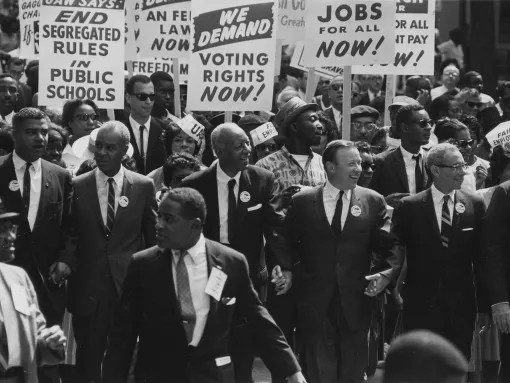
The Civil Rights Movement of the 1950’s and 1960’s came about out of the need and desire for equality and freedom for African Americans and other people of color. Nearly one hundred years after slavery was abolished, there was widespread segregation, discrimination, disenfranchisement and racially motivated violence that permeated all personal and structural aspects of life for black people. “Jim Crow” laws at the local and state levels barred African Americans from…
Key Points: QAnon is a decentralized, far-right political movement rooted in a baseless conspiracy theory that the world is controlled by the “Deep State,” a cabal of Satan-worshipping pedophiles, and that former President Donald Trump is the only person who can defeat it.QAnon emerged on 4chan in 2017, when an anonymous poster known as “Q,” believed by Qanon followers to be a team of U.S. government and military insiders, began posting cryptic messages online about…
The “Oslo Process” refers to the Israeli-Palestinian negotiating process begun in September 1993 which established a framework for resolving the conflict.
In August 1993, it was revealed that secret negotiations in Oslo, Norway between high-level Israelis and Palestinians had led to the first Israeli-Palestinian agreement. The talks, initiated months earlier under the auspices of the Norwegian Foreign Ministry, had begun informally with low level Israeli and Palestinian…
On October 6, 1973, Egypt and Syria attacked Israel in an effort to force Israel to surrender the land gained in the 1967 Six Day War. The attack was on the holiest day of the Jewish calendar, Yom Kippur. Caught by surprise, in the war's initial days, Israel suffered severe losses of life, military equipment, and territory, abruptly shattering the euphoria the country had experienced since its show of strength six years earlier. Following an Egyptian refusal to accept a cease-fire and a Soviet…
The Green Line is a term used to delineate the demarcation line between Israel, Jordan, Egypt and Syria from the period following Israel’s 1948 Independence War until the 1967 Six Day War when Israel captured the West Bank, and East Jerusalem from Jordan, the Gaza Strip from Egypt, and the Golan Heights from Syria. It is reportedly named for the green pen used by officers negotiating the armistice in 1949 to delineate the borders between the countries.
Today, the Green Line refers to…
In May 1967, growing tensions in region led Israel to expect that a potentially destructive catastrophic Arab attack was imminent.
Egyptian President Gamal Abdel Nasser ordered a withdrawal of the U.N. Emergency Forces in the Sinai Peninsula and began amassing massive armies along Israel’s Southern border. On May 22, Nasser announced a blockade of Israeli goods through the Straits of Tiran — the narrow maritime passage through which Israeli shipping accessed international…
The Arab Economic Boycott was initiated in 1946 by the newly formed League of Arab States. The boycott was aimed at preventing the continued growth of the Jewish community in Mandate-era Palestine by boycotting the goods and services produced by Jewish businesses. After Israel’s establishment in 1948, the Arab League used the expanded boycott as another form of warfare against the state in an effort to undermine Israel’s economic viability.
The Arab boycott operated on several…
On May 15, the day after the establishment of the State of Israel, the Arab armies of Egypt, Syria, Jordan, Iraq, and Lebanon invaded the new state (Saudi Arabian forces fought with Egypt). While Arab forces were significantly larger and better equipped than Israel’s, coordination and organization within the Arab armies was lacking and political squabbles over conquered territories strained relations among the Arab allies. Despite its small number, the Israeli army was well-organized,…