


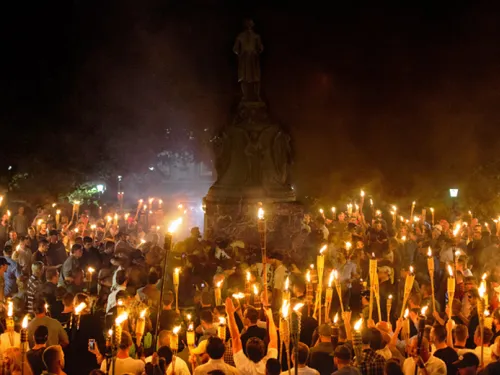




Pledges to Support Increasing Dialogue in the Future New York, NY, January 24, 2016 … The Anti-Defamation League (ADL) today expressed deep sadness about the intimidating disruption of a post-Shabbat services reception at the National LGBTQ Task Force’s “Creating Change” conference. Reception organizer, A Wider Bridge, a pro-Israel LGBT advocacy group, had invited Jerusalem Open House (JOH) to discuss the progress and struggles of the diverse LGBTQ community since the…
51 Results

GRADE LEVEL: High School
COMMON CORE STANDARDS: Reading, Writing, Speaking and Listening Racial Discrimination and Safeguarding the Right to Vote In August 2015, we commemorated the 50th anniversary of the Voting Rights Act which was signed into law by President Lyndon Johnson in 1965. The Voting Rights Act is landmark federal legislation that was enacted during the Civil Rights Movement and was intended to prevent racial discrimination in voting. Prior to that, even though Black…
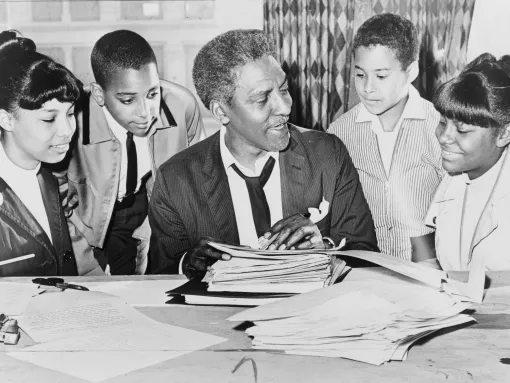
Engage students in activities that get them to think broadly and critically about the Black experience in all of its complexity.
GRADE LEVEL: Elementary School, Middle School, High School
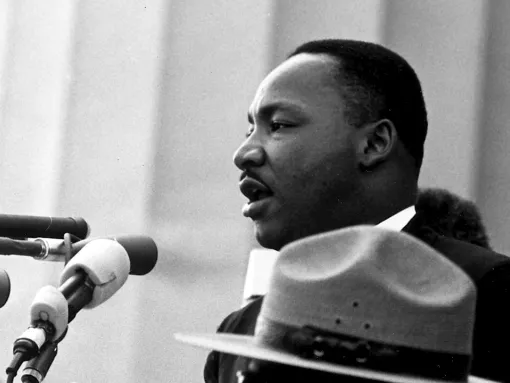
COMMON CORE STANDARDS: Reading, Writing, Speaking and Listening, History/Social Studies In commemoration of Martin Luther King, Jr. Day, this curriculum for grades 3–12 provides grade-specific lessons, resources and extension activities to provide your students opportunities to examine civil rights in the United States past and present. The lessons provide an opportunity for students to delve deeper into Martin Luther King Jr…
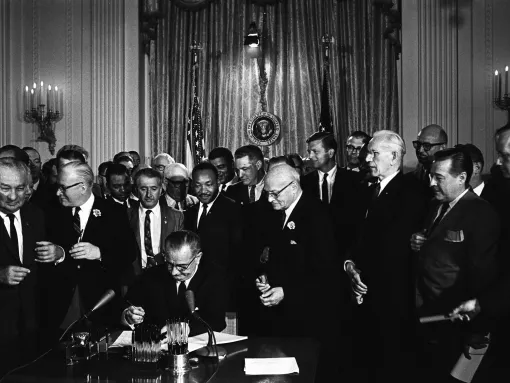
Teach students about the history of discrimination and racism in the U.S., the struggle for civil rights and the Civil Rights Act of 1964.
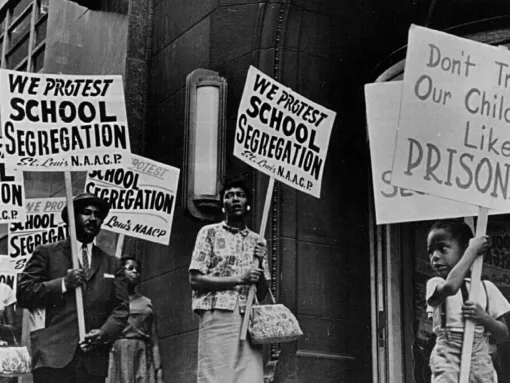
GRADE LEVEL: Middle School, High School COMMON CORE STANDARDS: Reading, Speaking and Listening, Language “We conclude that in the field of public education the doctrine of ‘separate but equal’ has no place. Separate educational facilities are inherently unequal.” These are the words of the landmark Supreme Court decision on May 17, 1954 that declared segregated schools unconstitutional. More than seventy years later, even though much progress has been made, there are…
January 21, 2014
The phrase "that’s so gay" has persisted as a way for students to describe things they do not like, find annoying or generally want to put down, while it is promising that fewer students are hearing homophobic slurs than in previous years.
The phrase is used so commonly that many students no longer recognize it as homophobic because it is “what everyone says.” When educators and other adults intervene, common student responses include “I was just…
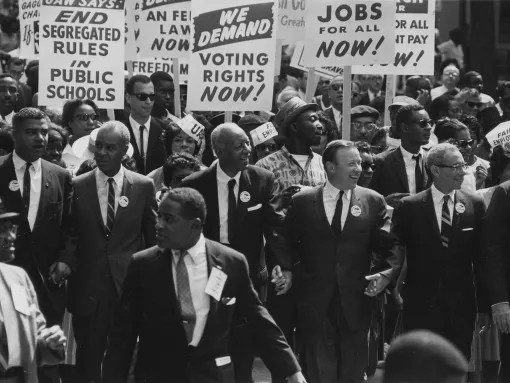
The Civil Rights Movement of the 1950’s and 1960’s came about out of the need and desire for equality and freedom for African Americans and other people of color. Nearly one hundred years after slavery was abolished, there was widespread segregation, discrimination, disenfranchisement and racially motivated violence that permeated all personal and structural aspects of life for black people. “Jim Crow” laws at the local and state levels barred African Americans from…
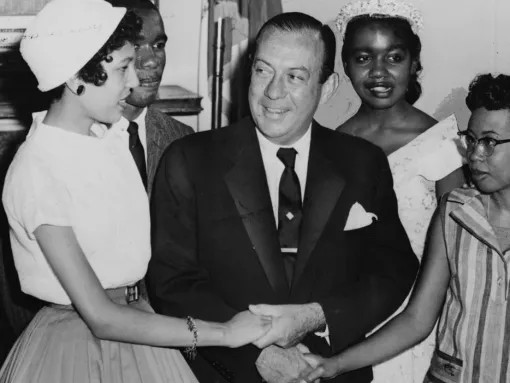
Minnijean Brown, Elizabeth Eckford, Carlotta Walls, Mayor Wagner, Thelma Mothershed, Gloria Ray, Terrance Roberts, Ernest Green, Melba Pattilo, Jefferson Thomas.
On September 23, 1957 in Little Rock, Arkansas, these nine African-American students quietly slipped into Central High School through the side door with the assistance of the city’s police, while an angry white mob numbering 1,000 swarmed the front of the school to await their arrival. Upon learning of their entry, the…
The Civil Rights Act of 1964 was signed into law by President Lyndon Johnson on July 2, 1964. The Act prohibited discrimination in public places, provided for the integration of schools and other public facilities and made employment discrimination illegal based on race, color, religion, sex or national origin. The document was the most sweeping civil rights legislation since Reconstruction. As we commemorate the anniversary of the Civil Rights Act, we have an opportunity to teach and learn…
For Educators | For Law Enforcement | For Parents, Families, and Caregivers
The Anti-Defamation League has a longstanding commitment to protecting civil rights, and has been a key partner in advancing Lesbian, Gay, Bisexual, and Transgender (LGBT) rights. At the federal, state, and local levels, ADL has advocated in support of anti-discrimination statutes, for strong and inclusive hate crime and bullying prevention laws, and for marriage equality. In addition, as one of the nation’s…