





by: Oren Segal December 17, 2014 Malala. Ferguson. Immigration. Ebola. Voter ID Laws. Climate Change. These are just a few of the topics teachers are regularly and actively bringing into their classrooms.
Whether they teach English, Social Studies, Advisory or another subject and whether they have five minutes or decide to do a week- long study, teachers know that topics in the news will engage and interest students in a deep and meaningful way. Research…
72 Results
GRADE LEVEL: Elementary School, Middle School, High School
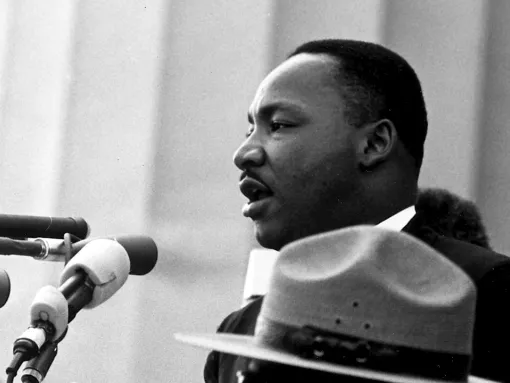
COMMON CORE STANDARDS: Reading, Writing, Speaking and Listening, History/Social Studies In commemoration of Martin Luther King, Jr. Day, this curriculum for grades 3–12 provides grade-specific lessons, resources and extension activities to provide your students opportunities to examine civil rights in the United States past and present. The lessons provide an opportunity for students to delve deeper into Martin Luther King Jr…
by: Oren Segal December 05, 2014 In the wake of two grand jury decisions—in Ferguson, MO and Staten Island, NY—not to indict the police officers who were involved in the killing of black men, the time has come to ask ourselves: Where do we go from here? There are a myriad of ideas and legislation on the table--diversity training for the police, funding to provide body cameras for police officers and legislation to tighten standards on military-style equipment for local police…
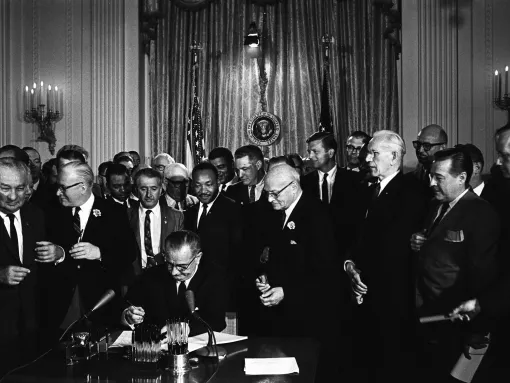
Teach students about the history of discrimination and racism in the U.S., the struggle for civil rights and the Civil Rights Act of 1964.
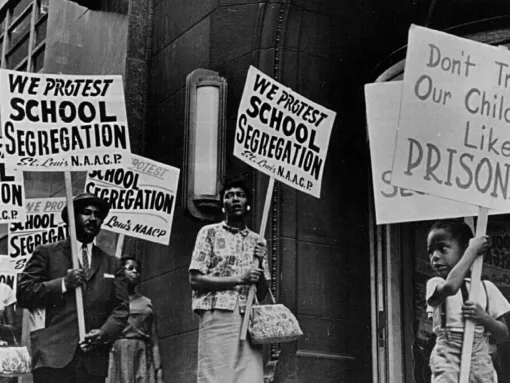
GRADE LEVEL: Middle School, High School COMMON CORE STANDARDS: Reading, Speaking and Listening, Language “We conclude that in the field of public education the doctrine of ‘separate but equal’ has no place. Separate educational facilities are inherently unequal.” These are the words of the landmark Supreme Court decision on May 17, 1954 that declared segregated schools unconstitutional. More than seventy years later, even though much progress has been made, there are…
The slogan “Free Palestine” has long been used at rallies, in chants, on placards, online and graffitied by those advocating on behalf of Palestinian rights. Since October 7th, the slogan has been regularly used by anti-Israel activists and organizations on college campuses and elsewhere, and in numerous instances, it has been directed maliciously at Jews and others. In many ways, the term is similar to slogans advocating for other political causes, including &ldquo…
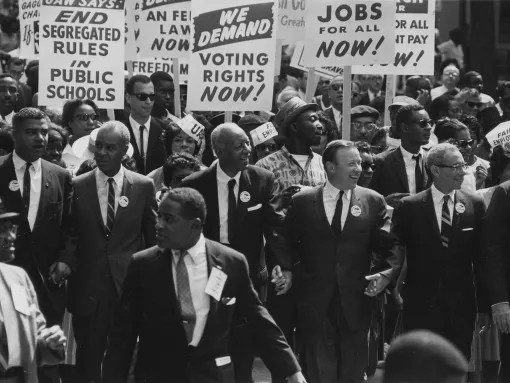
The Civil Rights Movement of the 1950’s and 1960’s came about out of the need and desire for equality and freedom for African Americans and other people of color. Nearly one hundred years after slavery was abolished, there was widespread segregation, discrimination, disenfranchisement and racially motivated violence that permeated all personal and structural aspects of life for black people. “Jim Crow” laws at the local and state levels barred African Americans from…
Op-ed:
A section of a publication that publishes personal opinions
Usually between 750 and 900 words in length
Personal and conversational style — not too verbose
What makes for a good op-ed?
Writing about an issue that affects your daily life, and/or community
A sharp opinion on a current issue that is controversial
A call to action
How to publish an op-ed
Figure out who your audience is — who are you trying to reach? (ex. the…
WHEREAS, the United States has the highest incarceration rate in the world, holding approximately 2.3 million people in prisons and jails on any given day; and
WHEREAS, the number of people incarcerated has increased almost eight times since 1980, largely as a result of the “War on Drugs” and “tough on crime” policies created in the 1970s, 1980s, and 1990s; and
WHEREAS, even after release from prison, collateral consequences make it extremely difficult for…
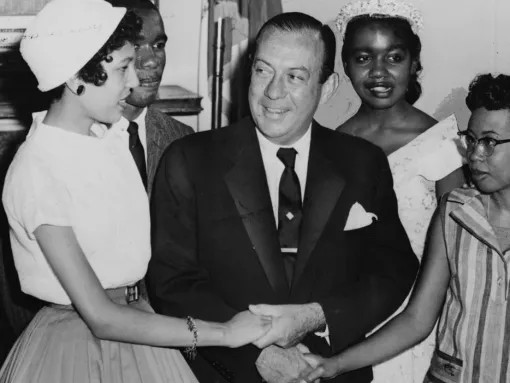
Minnijean Brown, Elizabeth Eckford, Carlotta Walls, Mayor Wagner, Thelma Mothershed, Gloria Ray, Terrance Roberts, Ernest Green, Melba Pattilo, Jefferson Thomas.
On September 23, 1957 in Little Rock, Arkansas, these nine African-American students quietly slipped into Central High School through the side door with the assistance of the city’s police, while an angry white mob numbering 1,000 swarmed the front of the school to await their arrival. Upon learning of their entry, the…

More than sixty-five years after Brown v. Board of Education, the promise of equal access to quality education remains unfulfilled. School expulsions and suspensions are among the best predictors of who will drop out of high school and African American students are three more likely to be suspended or expelled than their white peers.
In January 2014, the Department of Education and Department of Justice issued watershed guidance on school discipline with the intent to …
The Civil Rights Act of 1964 was signed into law by President Lyndon Johnson on July 2, 1964. The Act prohibited discrimination in public places, provided for the integration of schools and other public facilities and made employment discrimination illegal based on race, color, religion, sex or national origin. The document was the most sweeping civil rights legislation since Reconstruction. As we commemorate the anniversary of the Civil Rights Act, we have an opportunity to teach and learn…