





WPWW is a common white supremacist acronym that stands for "White Pride World Wide." The phrase is used as part of the logo for Stormfront, the largest white supremacist website on the Internet, which accounts for its widespread use by white supremacists. Additional Images:

Zyklon B was the name of the sodium-cyanide-based gas used to kill over a million victims, most of them Jews, in the death camps constructed by Nazi Germany during the Holocaust. Because of its association with killing Jews, Zyklon B has been adopted as a symbol by modern-day white supremacists, who often use it to make sick jokes about killing Jews. Additional Images:
Group Status: Active (see below)
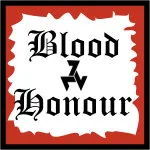
Blood & Honour (the British spelling is typically used, even in the United States) is an international racist skinhead umbrella group started decades ago by British white supremacist and singer Ian Stuart Donaldson. It has chapters or associated groups around the world, primarily in Europe. Several American white supremacist groups proclaim an association with Blood & Honour, as do many individual white supremacists. Because of the latter, use of…
Some white supremacists have adopted the mathematical sign "≠" (Not Equal or Not Equal To) as a white supremacist symbol. The use of this symbol is an attempt to claim that different races are not equal to each other (and to imply that the White race is superior).
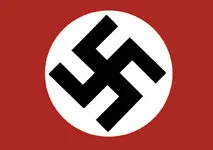
ALTERNATE NAMES: Nazi FlagThe flag of Nazi Germany has become one of the most potent hate symbols worldwide. It consists of a black swastika in a white circle over a red background (the colors are the same as the Imperial German flag). Originally developed as the flag of the Nazi Party in 1920, it also became the flag of Germany itself after the Nazis took power in 1933. Various elements of the Nazi government and Nazi Party developed many variations and forms of the basic Nazi flag.
Since…
by: Libby Otto By mid-September, you’re busy with school, work and fall activities. Constitution Day, on September 17, may slip past you without a thought. So why should this year be any different?
Constitution Day is the anniversary of the day that the Founding Fathers signed the United States Constitution. As you reflect this year on how the current political climate and public policies impact millions of people, continue asking yourself: are you making a positive change to…
Teach students about the U.S. women’s soccer team’s lawsuit against the U.S. Soccer Federation and explore how sexism manifests in a variety of ways in women’s sports.
The Good Fight: Reflections on Two Years Leading ADL
Article
by: Jonathan A. Greenblatt July 26, 2017 Two years ago, full of optimism and energy as I joined ADL as its new CEO, I asked the question: Can a 100-Year-Old Change the Future? But it was a rhetorical question because I believed that I knew the answer. If we remained true to our principles, invested in our people and modernized our systems, the organization would be able to shape the future in a positive way as it had done so many times in the past. But as I looked back to the past to…
8 Ideas for Teaching National Hispanic Heritage Month
Lesson Plan
GRADE LEVEL: Elementary School, Middle School, High School
COMMON CORE STANDARDS: Reading, Writing, Language, Speaking and Listening Commemorating National Hispanic Heritage Month
In commemoration of National Hispanic Heritage Month, we present this resource to help teachers engage students in thinking broadly and critically about the Hispanic American experience in all of its complexity. In highlighting the significant events as well as people that have made a substantial contribution…
GRADE LEVEL: High School
COMMON CORE STANDARDS: Reading, Writing, Speaking and Listening Racial Discrimination and Safeguarding the Right to Vote In August 2015, we commemorated the 50th anniversary of the Voting Rights Act which was signed into law by President Lyndon Johnson in 1965. The Voting Rights Act is landmark federal legislation that was enacted during the Civil Rights Movement and was intended to prevent racial discrimination in voting. Prior to that, even though Black…
Martin Luther King, Jr. and Civil Rights: Relevancy for Today
Lesson Plan
GRADE LEVEL: Elementary School, Middle School, High School
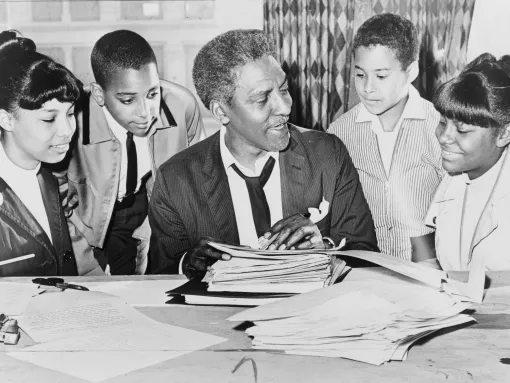
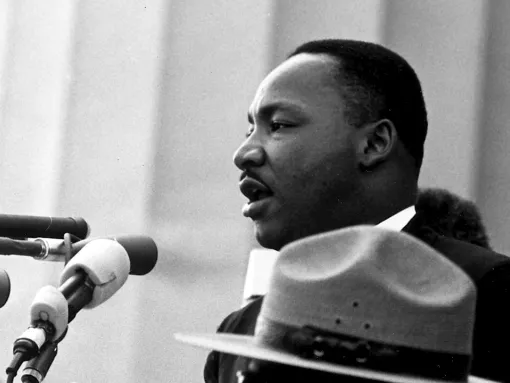
COMMON CORE STANDARDS: Reading, Writing, Speaking and Listening, History/Social Studies In commemoration of Martin Luther King, Jr. Day, this curriculum for grades 3–12 provides grade-specific lessons, resources and extension activities to provide your students opportunities to examine civil rights in the United States past and present. The lessons provide an opportunity for students to delve deeper into Martin Luther King Jr…
70+ Years Later: The Legacy of Brown v. Board of Education
Lesson Plan
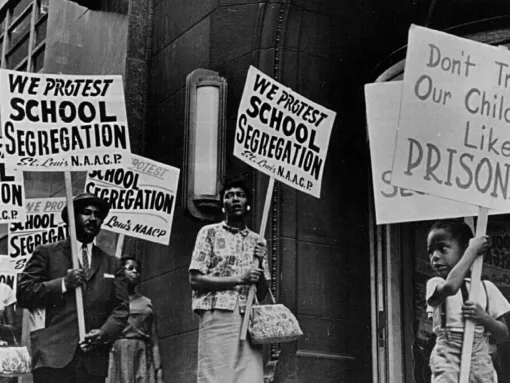
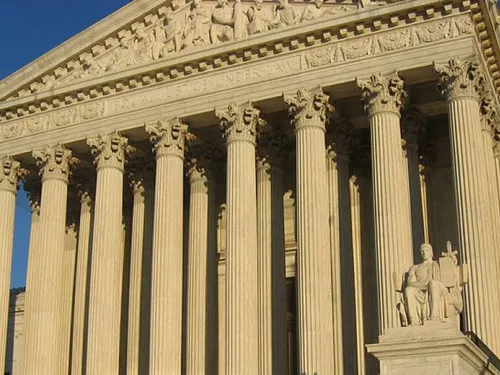
GRADE LEVEL: Middle School, High School COMMON CORE STANDARDS: Reading, Speaking and Listening, Language “We conclude that in the field of public education the doctrine of ‘separate but equal’ has no place. Separate educational facilities are inherently unequal.” These are the words of the landmark Supreme Court decision on May 17, 1954 that declared segregated schools unconstitutional. More than seventy years later, even though much progress has been made, there are…
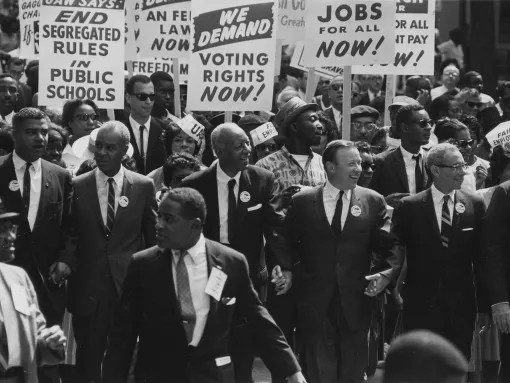
The Civil Rights Movement of the 1950’s and 1960’s came about out of the need and desire for equality and freedom for African Americans and other people of color. Nearly one hundred years after slavery was abolished, there was widespread segregation, discrimination, disenfranchisement and racially motivated violence that permeated all personal and structural aspects of life for black people. “Jim Crow” laws at the local and state levels barred African Americans from…
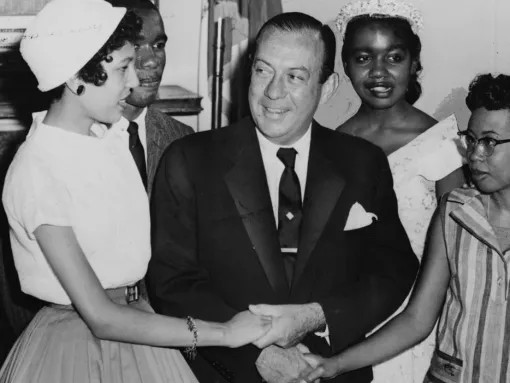
Minnijean Brown, Elizabeth Eckford, Carlotta Walls, Mayor Wagner, Thelma Mothershed, Gloria Ray, Terrance Roberts, Ernest Green, Melba Pattilo, Jefferson Thomas.
On September 23, 1957 in Little Rock, Arkansas, these nine African-American students quietly slipped into Central High School through the side door with the assistance of the city’s police, while an angry white mob numbering 1,000 swarmed the front of the school to await their arrival. Upon learning of their entry, the…
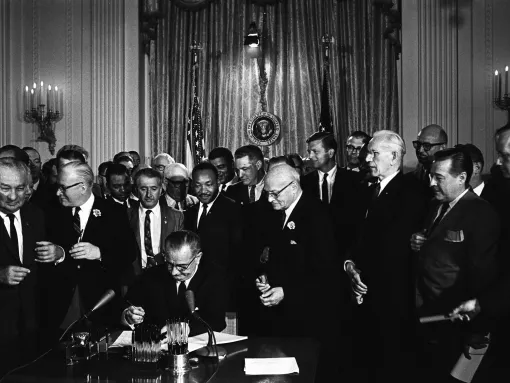
The Civil Rights Act of 1964 was signed into law by President Lyndon Johnson on July 2, 1964. The Act prohibited discrimination in public places, provided for the integration of schools and other public facilities and made employment discrimination illegal based on race, color, religion, sex or national origin. The document was the most sweeping civil rights legislation since Reconstruction. As we commemorate the anniversary of the Civil Rights Act, we have an opportunity to teach and learn…