





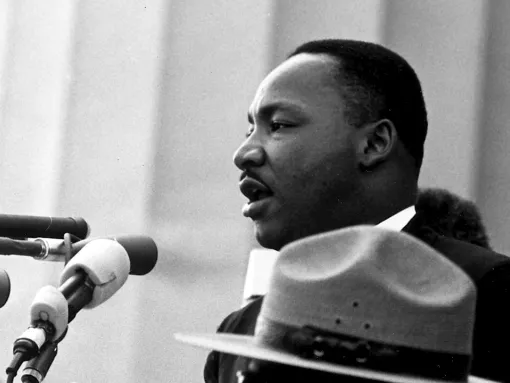
Martin Luther King, Jr. and Civil Rights: Relevancy for Today
Lesson Plan
GRADE LEVEL: Elementary School, Middle School, High School
COMMON CORE STANDARDS: Reading, Writing, Speaking and Listening, History/Social Studies In commemoration of Martin Luther King, Jr. Day, this curriculum for grades 3–12 provides grade-specific lessons, resources and extension activities to provide your students opportunities to examine civil rights in the United States past and present. The lessons provide an opportunity for students to delve deeper into Martin Luther King Jr…
70+ Years Later: The Legacy of Brown v. Board of Education
Lesson Plan
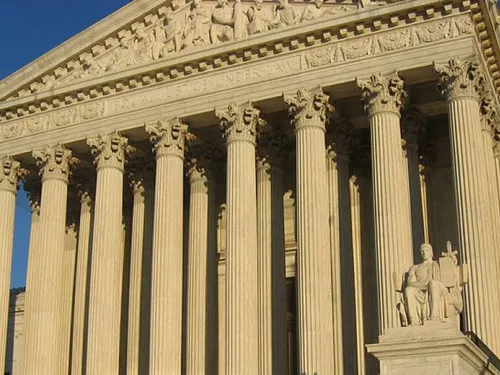
GRADE LEVEL: Middle School, High School COMMON CORE STANDARDS: Reading, Speaking and Listening, Language “We conclude that in the field of public education the doctrine of ‘separate but equal’ has no place. Separate educational facilities are inherently unequal.” These are the words of the landmark Supreme Court decision on May 17, 1954 that declared segregated schools unconstitutional. More than seventy years later, even though much progress has been made, there are…
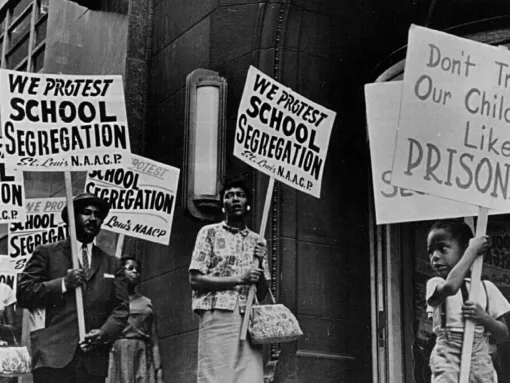
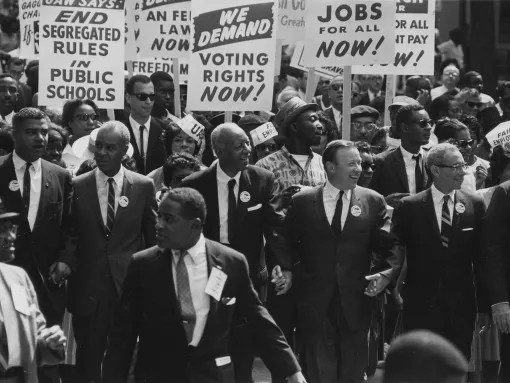
The Civil Rights Movement of the 1950’s and 1960’s came about out of the need and desire for equality and freedom for African Americans and other people of color. Nearly one hundred years after slavery was abolished, there was widespread segregation, discrimination, disenfranchisement and racially motivated violence that permeated all personal and structural aspects of life for black people. “Jim Crow” laws at the local and state levels barred African Americans from…
WHEREAS, the United States has the highest incarceration rate in the world, holding approximately 2.3 million people in prisons and jails on any given day; and
WHEREAS, the number of people incarcerated has increased almost eight times since 1980, largely as a result of the “War on Drugs” and “tough on crime” policies created in the 1970s, 1980s, and 1990s; and
WHEREAS, even after release from prison, collateral consequences make it extremely difficult for…
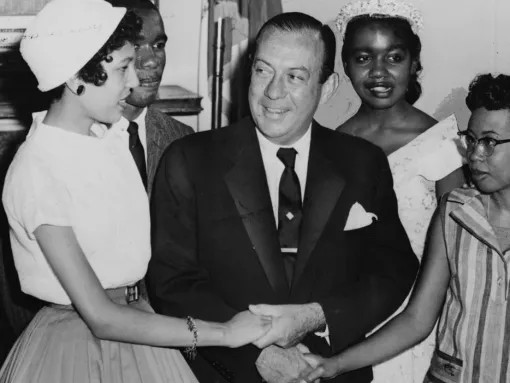
Minnijean Brown, Elizabeth Eckford, Carlotta Walls, Mayor Wagner, Thelma Mothershed, Gloria Ray, Terrance Roberts, Ernest Green, Melba Pattilo, Jefferson Thomas.
On September 23, 1957 in Little Rock, Arkansas, these nine African-American students quietly slipped into Central High School through the side door with the assistance of the city’s police, while an angry white mob numbering 1,000 swarmed the front of the school to await their arrival. Upon learning of their entry, the…
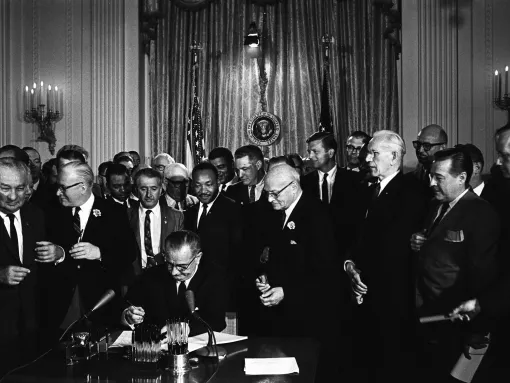
The Civil Rights Act of 1964 was signed into law by President Lyndon Johnson on July 2, 1964. The Act prohibited discrimination in public places, provided for the integration of schools and other public facilities and made employment discrimination illegal based on race, color, religion, sex or national origin. The document was the most sweeping civil rights legislation since Reconstruction. As we commemorate the anniversary of the Civil Rights Act, we have an opportunity to teach and learn…