Back to School is a busy time for all. Explore our resources for both educators and families to support creating classrooms where all students can thrive.
Short Online Experience to Learn about this Core Topic For Educators | Middle School, High School
About the Mini-Lesson
Only a small portion of an iceberg can be seen above the waterline. Similarly, understanding someone's identity is limited by what we see on the surface. This mini lesson explores the concept of identity and the importance of going "below the waterline" to challenge and avoid stereotypes and identity-based bias.
ADL's mini-lessons are short, interactive, online…
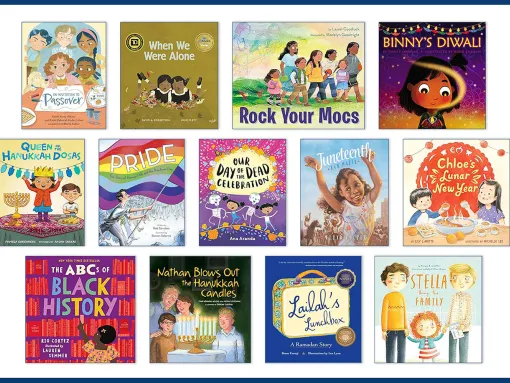
Increase your awareness of religious obligations and ethnic and cultural festivities that may affect students, colleagues and neighbors in your community.
For Educators | For Parents, Families, and Caregivers Most people love a celebration! Adults flutter around busily preparing for the festivities. Children are abuzz with excitement. Special foods are eaten, special heirlooms brought down from the shelf. Traditions are passed down from generation to generation. While children should have an opportunity to learn about and share information about the important holidays and celebrations in their lives, celebrating specific holidays in a school or…
Early Childhood Question Corner For Educators | For Parents, Families, and Caregivers You can help children embrace differences by exposing them to diversity as early as possible. This can be a natural part of everyday living as children develop relationships outside their family. Answer children’s questions about differences openly and honestly as they come up, and if you don't know the answers, seek them out. Another way to ensure diversity in children’s lives is to…
How Can “Looking at Lights” Promote Respect Among Children for Various Holidays, Celebrations and Traditions?
Tools and Strategies
Early Childhood Question Corner
Common themes appear in holidays and celebrations across many cultures. By connecting themes, as suggested in the Question Corner installment "How can I plan inclusive holiday celebrations?" you can show children that holidays and celebrations are an expression of cultural and religious pride, and help them understand the commonality of certain human feelings, celebrations and their meaning. For example, by trying the following activity, Looking…
In 1965, the Second Vatican Council made historic changes to church policies and theology. Among them was Nostra Aetate, Latin for "In Our Time," a document that revolutionized the Catholic Church's approach to Jews and Judaism after nearly 2000 years of pain and sorrow.
Section four of Nostra Aetate repudiates the centuries-old "deicide" charge against all Jews, stresses the religious bond shared by Jews and Catholics, reaffirms the eternal covenant between God and the People of…
Religion in Political Campaigns -- An Interfaith Statement of Principles
Backgrounder
Freedom of religion is one of our nation's most cherished liberties. It is at the very foundation of America. Our nation's Constitution protects religious freedom for all, prohibits religious tests for public office, and mandates separation of church and state. These are essential American ideals and values, which candidates for public office should respect.
Candidates for public office are, of course, free to worship as they choose. And they should feel comfortable explaining their…
The central narrative of Christian theology is the passion, i.e. the trials and crucifixion, and resurrection of Jesus. There are four different accounts of the passion in the gospels of Christian Scriptures, in which Jews play different roles. All these accounts culminate in the death and resurrection of Jesus as revealing God's saving power available to humanity. Good Friday and Easter celebrate respectively the crucifixion and resurrection of Jesus as the high points of Christian creed and…