

New York, NY, January 23, 2025 … ADL (the Anti-Defamation League) today welcomed the introduction of a bill in the New York Legislature designed to bring back and strengthen a law prohibiting masked intimidation. The law will protect New Yorkers from harassment, violence and intimidation by people wearing face coverings, which have been exploited in recent months to subject innocent New Yorkers to threats, violence and intimidation. Sponsored by State Senator James Skoufis (D-Cornwall)…
24 Results

Provides information about antisemitic bullying, how it takes places in schools and among young people and what educators can do.
School District of Philadelphia Agrees to Address Repeated Incidents of Antisemitism New York, NY, December 20, 2024 … The School District of Philadelphia (SDP) has entered into a resolution agreement to take a series of steps to address repeated incidents of antisemitic harassment, bullying and discrimination in response to a federal civil rights complaint filed by ADL (the Anti-Defamation League). Under the terms of the settlement announced yesterday, SDP will undertake a…

Table Talk: Family Conversations about Current EventsAll young people should be able to feel safe, included and respected in their classrooms and schools. Unfortunately, many do not. A recent study of high school students found that nearly four in ten students experienced identity-based bullying or bullying related to an aspect of their identity such as race, religion, sexual orientation, gender identity or physical appearance. How can we listen and learn from young people about…

Andrew Tate is a British-American former kickboxer and reality television star with millions of social media followers – 8.5 million on X (formerly Twitter) alone.

Engage your family in the conversation about tweens and their experiences in digital spaces and with cyberbullying.

Use the short evocative videos and films in this lesson plan to engage young people in conversations about identity, diversity, bias and social justice.

Civics Lesson
GRADE LEVEL: High School What is Bias? What is Implicit Bias?In What Ways Could Bias Have an Impact on Your Civic Participation? The U.S. Constitution embodies ideals of equal opportunity and fair treatment for all and is reinforced by laws like the Civil Rights Act and Title IX. Yet, marginalized people who have experienced discrimination and unfair treatment historically, continue to do so in the present day. The stories in the news and social media seem to…
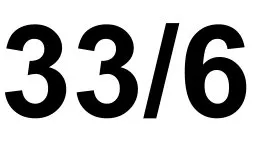
The number 33 is used by Ku Klux Klan adherents to signify the Ku Klux Klan. Since the 11th letter of the alphabet is K, three Ks signify "KKK" or the Ku Klux Klan. When using this reference, Klan members will frequently add the number 6 at the end, as in 33/6, because they think the Klan is currently in its sixth historical "era." Less commonly, some holdouts may still use the numeric code 33/5. Additional Images:
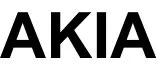
AKIA is Ku Klux Klan shorthand for "A Klansman I Am." It is related to another Klan acronym, AYAK ("Are You A Klansman?"). These are among the many acronyms developed by the Second Ku Klux Klan that emerged in 1915. Although the Second Ku Klux Klan did not survive, much of its terminology and many of its rituals did, and later Klan groups freely used them. Additional Images:
AYAK is Ku Klux Klan shorthand for "Are You A Klansman?" It is related to another Klan acronym, AKIA ("A Klansman I Am"). These are among the many acronyms developed by the Second Ku Klux Klan that emerged in 1915. Although the Second Ku Klux Klan did not survive, much of its terminology and many of its rituals did, and later Klan groups have freely used them. Additional Images:
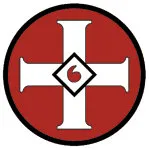
ALTERNATE NAMES: Ku Klux Klan, MIOAKGroup Status: Active (in that there are many active Ku Klux Klan groups)
For the past century, the primary symbol related to Ku Klux Klan groups (other than Klan robes themselves) is what Klan members may call the MIOAK (an acronym for "Mystic Insignia of a Klansman"). It is more commonly referred to as the "Blood Drop" Cross. It appears as a square white cross in black outline against a circular red background. In the middle of the cross is what appears…
ALTERNATE NAMES: Ku Klux Klan, MIOAK
Read more about Blood Drop Cross
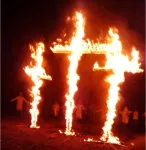
The image of the burning cross is one of the most potent hate symbols in the United States, popularized as a terror image by the Ku Klux Klan since the early 1900s. Cross-burnings (called "cross-lightings" by Ku Klux Klan groups, to make it seem as if they are not destroying a Christian cross) have long been used as a traditional symbol by Klan groups, used both in Klan rituals as well as in attempts to intimidate and terrorize victims of Klan groups. So widely associated with racial…
ALTERNATE NAMES: For God, Race and NationFGRN is a Ku Klux Klan acronym for "For God, Race and Nation," a common Klan slogan. It is one of a number of slogans, codes and rituals created by the Second Ku Klux Klan in the early 20th century. That Klan did not survive, but many of its codes and rituals were adopted by later Klan groups. In acronym form, the slogan is used primarily as a Klan identifier, typically appended at the end of on-line messages and postings. Additional Images:
ALTERNATE NAMES: For God, Race and Nation
Read more about FGRN
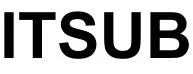
ITSUB is a Ku Klux Klan acronym for "In The Sacred Unfailing Being," a reference to God. It is one of many Klan acronyms created by the Second Ku Klux Klan that emerged in 1915. That Klan did not survive, but subsequent Ku Klux Klan groups continued many of its rituals and codes. Today, ITSUB has no real meaning or particular purpose and is typically used by Klan group members in on-line messages or posts solely as a way to identify themselves with the Ku Klux Klan. This has been the fate of a…
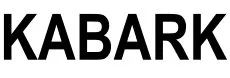
KABARK is a Ku Klux Klan acronym for "Konstantly Applied By All Regular Klansmen." It is one of many acronyms and codes developed by the Second Ku Klux Klan in the early 20th century. The Second Ku Klux Klan did not survive, but later Klan groups continued many of its codes and rituals. Today, KABARK is essentially meaningless and only used as a "sign off" in on-line messages by Klan group members, along with several other similar archaic acronyms. Additional Images:
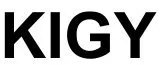
KIGY is Ku Klux Klan shorthand for "Klansman I Greet You." It is one of many acronyms developed by the Second Ku Klux Klan that emerged in 1915. Although the Second Ku Klux Klan did not survive, much of its terminology and many of its rituals did, and later Klan groups freely used them. Additional Images:
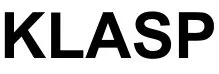
KLASP is a Ku Klux Klan acronym for "Klannish Loyalty, A Sacred Principle." It is one of many Klan acronyms created by the Second Ku Klux Klan that emerged in 1915. That Klan did not survive, but subsequent Ku Klux Klan groups continued many of its rituals and codes. Today, KLASP has no real meaning or particular purpose and is typically used by Klan group members in on-line messages or posts solely as a way to identify themselves with the Ku Klux Klan. This has been the fate of a number of…
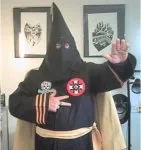
From its beginnings in the 1860s, the Ku Klux Klan has employed a variety of salutes and hand signs both public and private. Most of the hand signs and gestures used by the first and second Ku Klux Klans have fallen by the wayside over the years, except for the Klan salute, which dates back to 1915. It resembles a Nazi salute (which some Klan members will also use), except that it is performed with the left arm. Often Klan members will separate the fingers of their hand when making the salute …
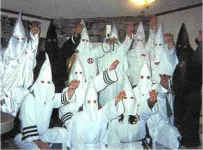
The hood and robes of Ku Klux Klan members are the most visible Klan symbol of all. Read about the history and current meanings behind the Klan’s robes.