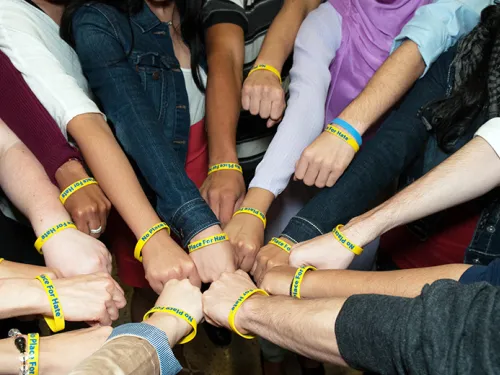



These suggested No Place for Hate® activities are differentiated for elementary, middle and high school students. The activities can be used as a follow-up to watching the webinar, “Connecting Stories and Legacies: A Conversation with Author Gordon Korman and Rachelle Goldstein” which aired on 2/11/25. To make this a NPFH activity towards designation, watch the video, engage students in a discussion using the discussion questions and do one of the additional activities included…
17 Results
New York, NY, January 23, 2025 … ADL (the Anti-Defamation League) today welcomed the introduction of a bill in the New York Legislature designed to bring back and strengthen a law prohibiting masked intimidation. The law will protect New Yorkers from harassment, violence and intimidation by people wearing face coverings, which have been exploited in recent months to subject innocent New Yorkers to threats, violence and intimidation. Sponsored by State Senator James Skoufis (D-Cornwall)…

Provides information about antisemitic bullying, how it takes places in schools and among young people and what educators can do.
School District of Philadelphia Agrees to Address Repeated Incidents of Antisemitism New York, NY, December 20, 2024 … The School District of Philadelphia (SDP) has entered into a resolution agreement to take a series of steps to address repeated incidents of antisemitic harassment, bullying and discrimination in response to a federal civil rights complaint filed by ADL (the Anti-Defamation League). Under the terms of the settlement announced yesterday, SDP will undertake a…

Table Talk: Family Conversations about Current EventsAll young people should be able to feel safe, included and respected in their classrooms and schools. Unfortunately, many do not. A recent study of high school students found that nearly four in ten students experienced identity-based bullying or bullying related to an aspect of their identity such as race, religion, sexual orientation, gender identity or physical appearance. How can we listen and learn from young people about…
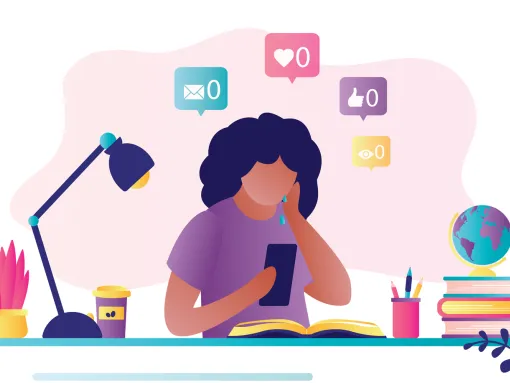
Engage your family in the conversation about tweens and their experiences in digital spaces and with cyberbullying.
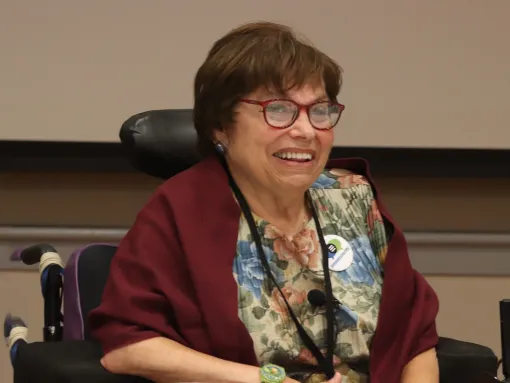
Teach students about disability rights activist Judy Heumann and what work in schools and communities still remains.
Jonathan Greenblatt
CEO and National Director
July 27, 2022
Dear Mr. Agrawal,
I am once again reaching out regarding Iranian Supreme Leader Ali Khamenei’s chronic violations of Twitter’s terms of service on his accounts of Iranian Supreme Leader Ali Khamenei. We ask that you de-platform him for his continued use of Twitter to promote antisemitism, hate, violence and Holocaust denial.
As I wrote in January 2021 to then Twitter CEO Jack Dorsey, Khamenei…
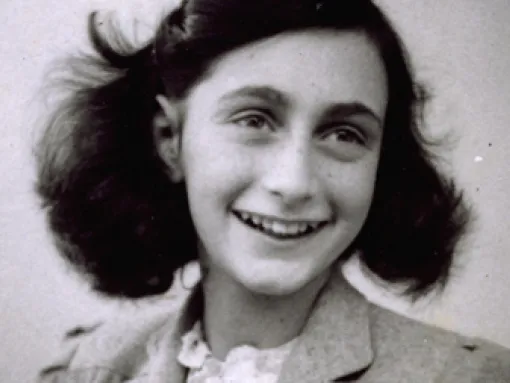
The author and publishers of a new book on Anne Frank's plight have turned one of the few at least partially upbeat stories of Jewish life and thought during the Holocaust into one of Jewish perfidy and treachery. The timing couldn’t be worse: antisemitism is flourishing once again, and Holocaust memory is diminishing.

Use the short evocative videos and films in this lesson plan to engage young people in conversations about identity, diversity, bias and social justice.
Civics Lesson
GRADE LEVEL: High School How Were Youth Involved in the Civil Rights Movement?
Throughout history, young people have stepped up and into leadership roles during different civil rights and social movements. This was never more evident than in the Civil Rights Movement, where young people were on the frontlines of the Montgomery bus boycotts, Freedom Rides and sit-ins. Given that student activism is on the rise again across the U.S., understanding how those young voices…
by: Shaya Lerner Iran’s newest “Holocaust contest” exhibition opened on May 14 in a gallery in Tehran. According to Iranian news reports, the contest received over 864 submissions from participants around the world. Of those, 150 cartoons from 50 countries were accepted, with representation of cartoonists from Brazil, China, Colombia, France, Indonesia, Peru, Syria, Turkey and Yemen, among others. Contest organizer Masoud Shojai Tabatabaei insisted the event was not to…
by: Shaya Lerner On May 14, 2016, the second international Holocaust Cartoon Contest exhibition will open in Iran, with the first place winner – reportedly to be announced in June – receiving a large cash prize. According to reports in the Iranian press, the May 14th date was chosen to coincide with Nakba Day (catastrophe day), the term used by Palestinian to refer to the events surrounding Israel’s independence in 1948. The contest reportedly received over 800…
by: Shaya Lerner Despite the international community’s reengagement with a more “open” and “moderate” Iran, some things in Iranian society haven’t changed, including the prevalence of Holocaust mockery and denial. While President Rouhani hasn’t touted the issue like his predecessor Ahmadinejad had, recent announcements indicate that the questioning of the Holocaust is very much alive and well within Iranian society. In December, the Tehran…
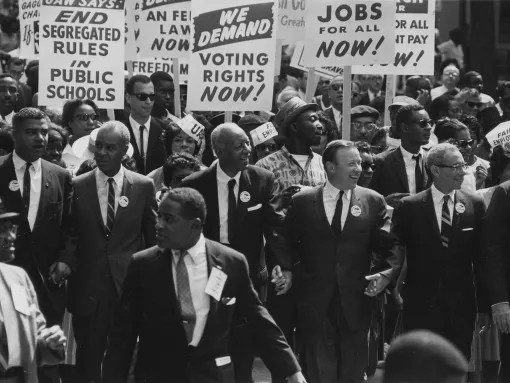
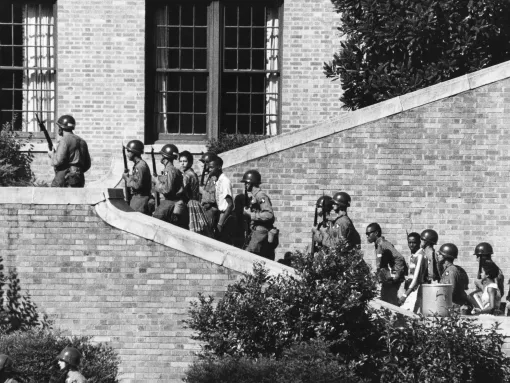
The Civil Rights Movement of the 1950’s and 1960’s came about out of the need and desire for equality and freedom for African Americans and other people of color. Nearly one hundred years after slavery was abolished, there was widespread segregation, discrimination, disenfranchisement and racially motivated violence that permeated all personal and structural aspects of life for black people. “Jim Crow” laws at the local and state levels barred African Americans from…
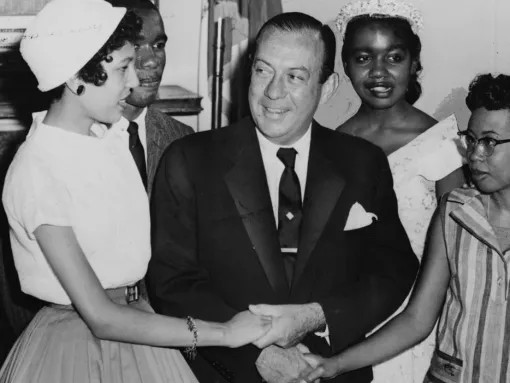
Minnijean Brown, Elizabeth Eckford, Carlotta Walls, Mayor Wagner, Thelma Mothershed, Gloria Ray, Terrance Roberts, Ernest Green, Melba Pattilo, Jefferson Thomas.
On September 23, 1957 in Little Rock, Arkansas, these nine African-American students quietly slipped into Central High School through the side door with the assistance of the city’s police, while an angry white mob numbering 1,000 swarmed the front of the school to await their arrival. Upon learning of their entry, the…
The Civil Rights Act of 1964 was signed into law by President Lyndon Johnson on July 2, 1964. The Act prohibited discrimination in public places, provided for the integration of schools and other public facilities and made employment discrimination illegal based on race, color, religion, sex or national origin. The document was the most sweeping civil rights legislation since Reconstruction. As we commemorate the anniversary of the Civil Rights Act, we have an opportunity to teach and learn…