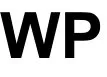
RAHOWA is an acronym for "Racial Holy War," a term created by the Creativity Movement, a white supremacist pseudo-religion, as a rallying cry for the white supremacist cause.
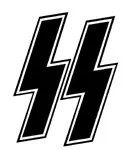
White supremacy and the SS Bolts. Find out the history of the neo-Nazi SS Bolts, and the current usage of one of the most powerful hate symbols in history.
ALTERNATE NAMES: Cracker Bolts, SS Lightning Bolts, Lightning Bolts
ALTERNATE NAMES: Supreme White PowerSWP is an acronym for the white supremacist slogan "Supreme White Power." It seems to have originated on the West Coast, probably in California's prison system, though it has spread from there. Supreme White Power and SWP are both common prison tattoos. One popular version displays the words "Supreme White Power" in a circle around a swastika made up of battle-axes. Usually, below the swastika is a Viking ship. Additional Images:
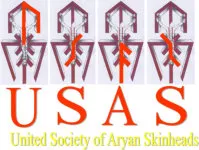
The United Society of Aryan Skinheads (USA) is a white supremacist gang active in the prisons and on the streets. Although it originated in Oregon, it is essentially based in California. USAS members primarily use one or more of three symbols: the white power fist, the Valknot, and bindrunes.
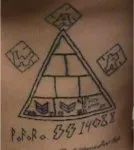
White Aryan Resistance (WAR) is the name of a large, Arkansas-based white supremacist prison gang, who borrowed the name from California white supremacist Tom Metzger. Their main symbol is an elaborate pyramid-shaped tattoo that contains symbols representing rank and other meanings.
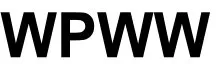
WPWW is a common white supremacist acronym that stands for "White Pride World Wide." The phrase is used as part of the logo for Stormfront, the largest white supremacist website on the Internet, which accounts for its widespread use by white supremacists. Additional Images:
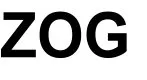
ZOG is a white supremacist acronym for "Zionist Occupied Government," which reflects the common white supremacist belief that the U.S. government is controlled by Jews. This has resulted in white supremacist slogans such as "Smash ZOG," "Kill ZOG, or "Death to ZOG." Additional Images:
by: Shaya Lerner Iran’s newest “Holocaust contest” exhibition opened on May 14 in a gallery in Tehran. According to Iranian news reports, the contest received over 864 submissions from participants around the world. Of those, 150 cartoons from 50 countries were accepted, with representation of cartoonists from Brazil, China, Colombia, France, Indonesia, Peru, Syria, Turkey and Yemen, among others. Contest organizer Masoud Shojai Tabatabaei insisted the event was not to…
Iran's Second International Holocaust Cartoon Exhibition Opens On May 14
Article
by: Shaya Lerner On May 14, 2016, the second international Holocaust Cartoon Contest exhibition will open in Iran, with the first place winner – reportedly to be announced in June – receiving a large cash prize. According to reports in the Iranian press, the May 14th date was chosen to coincide with Nakba Day (catastrophe day), the term used by Palestinian to refer to the events surrounding Israel’s independence in 1948. The contest reportedly received over 800…
In Iran, Holocaust Denial and Mockery are Alive and Well
Article
by: Shaya Lerner Despite the international community’s reengagement with a more “open” and “moderate” Iran, some things in Iranian society haven’t changed, including the prevalence of Holocaust mockery and denial. While President Rouhani hasn’t touted the issue like his predecessor Ahmadinejad had, recent announcements indicate that the questioning of the Holocaust is very much alive and well within Iranian society. In December, the Tehran…