


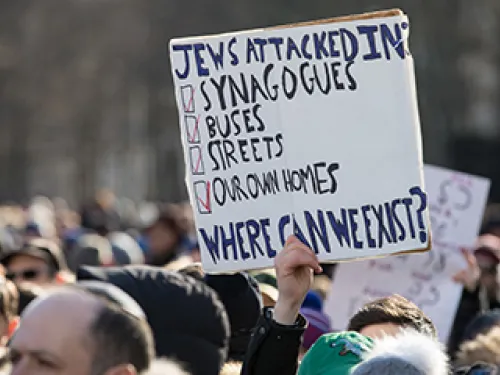
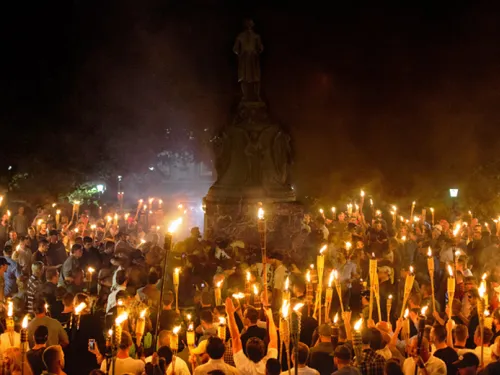




The slogan “Free Palestine” has long been used at rallies, in chants, on placards, online and graffitied by those advocating on behalf of Palestinian rights. Since October 7th, the slogan has been regularly used by anti-Israel activists and organizations on college campuses and elsewhere, and in numerous instances, it has been directed maliciously at Jews and others. In many ways, the term is similar to slogans advocating for other political causes, including &ldquo…
7 Results
Op-ed:
A section of a publication that publishes personal opinions
Usually between 750 and 900 words in length
Personal and conversational style — not too verbose
What makes for a good op-ed?
Writing about an issue that affects your daily life, and/or community
A sharp opinion on a current issue that is controversial
A call to action
How to publish an op-ed
Figure out who your audience is — who are you trying to reach? (ex. the…
WHEREAS, the United States has the highest incarceration rate in the world, holding approximately 2.3 million people in prisons and jails on any given day; and
WHEREAS, the number of people incarcerated has increased almost eight times since 1980, largely as a result of the “War on Drugs” and “tough on crime” policies created in the 1970s, 1980s, and 1990s; and
WHEREAS, even after release from prison, collateral consequences make it extremely difficult for…
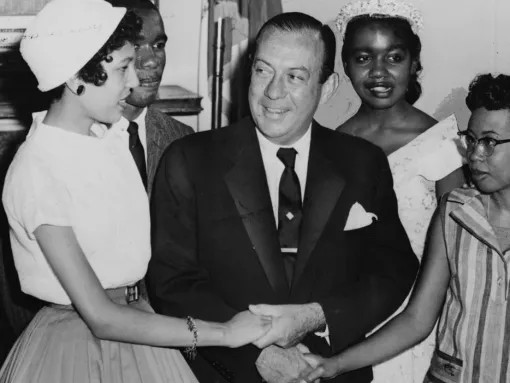
Minnijean Brown, Elizabeth Eckford, Carlotta Walls, Mayor Wagner, Thelma Mothershed, Gloria Ray, Terrance Roberts, Ernest Green, Melba Pattilo, Jefferson Thomas.
On September 23, 1957 in Little Rock, Arkansas, these nine African-American students quietly slipped into Central High School through the side door with the assistance of the city’s police, while an angry white mob numbering 1,000 swarmed the front of the school to await their arrival. Upon learning of their entry, the…

More than sixty-five years after Brown v. Board of Education, the promise of equal access to quality education remains unfulfilled. School expulsions and suspensions are among the best predictors of who will drop out of high school and African American students are three more likely to be suspended or expelled than their white peers.
In January 2014, the Department of Education and Department of Justice issued watershed guidance on school discipline with the intent to …
The Civil Rights Act of 1964 was signed into law by President Lyndon Johnson on July 2, 1964. The Act prohibited discrimination in public places, provided for the integration of schools and other public facilities and made employment discrimination illegal based on race, color, religion, sex or national origin. The document was the most sweeping civil rights legislation since Reconstruction. As we commemorate the anniversary of the Civil Rights Act, we have an opportunity to teach and learn…
From Bloody Sunday to the Voting Rights Act: How One Day Changed the Course of Civil Rights History
March 7, 1965 — a day that would become known as Bloody Sunday — forever changed the course of American history. That day the nation’s attention turned to Selma, Alabama, where state troopers and a sheriff’s posse brutally attacked 575 demonstrators attempting to march peacefully to Montgomery. The marchers had gathered for two purposes: to advocate for voting…