
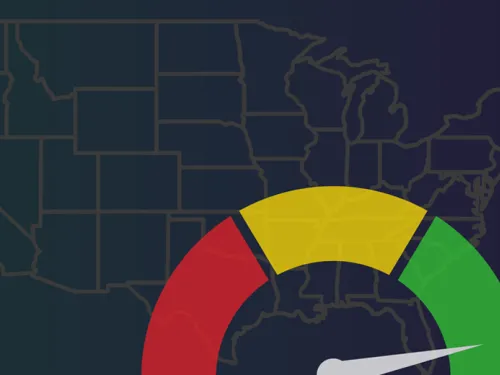

In new report card, Twitter, YouTube, TikTok and Roblox earn a “C” while Facebook barely passes with a “D” New York, NY, January 27, 2021 … ADL (the Anti-Defamation League) today issued a report card grading each of the 10 major digital social platforms for their efforts to effectively address Holocaust denial content on their platforms.
The assessment, released as the world commemorates International Holocaust Remembrance Day, found that Twitch is the most…
341 Results

January 15, 2021 We live more and more in digital spaces, so we have to work harder to distinguish protected online speech from unprotected online conduct. In the wake of the attack at the U.S. Capitol on January 6—an attack that was planned, mobilized and livestreamed online—this work has gained an even greater sense of urgency, especially when it comes to doxing.
Many people define doxing as posting someone’s personal information online. But doxing as a blanket…
January 15, 2021 A livestream video shot by a newly-elected West Virginia lawmaker shows a disturbing gap between what a mob of Trump supporters who attacked the Capitol thought about the events of January 6 and what the rest of the world actually saw.
Derrick Evans, a freshman member of the West Virginia House of Delegates, viewed fellow rioters swarming around him and forcing entry into the Capitol as a celebration. He was visibly giddy. But for horror-struck viewers, it was a violent…
January 13, 2021 The January 6 attack at our nation’s Capitol was deliberate and coordinated. Individuals who broke the law must be held accountable, but we cannot ignore that social media platforms, like Gab, may well bear a measure of criminal responsibility for the attack as well. To the extent Gab intentionally served as a forum for people to plan, coordinate, engage in or otherwise facilitate the criminal activity that took place on January 6, a Department of Justice investigation…
Platform’s CEO encouraged rioters to broadcast their actions New York, NY, January 13, 2021 … The ADL (Anti-Defamation League) today called on the U.S. Department of Justice and the FBI to launch a criminal investigation into Gab and its CEO, Andrew Torba, to determine whether the social media platform intentionally aided or abetted individuals who carried out the January 6 attack on the nation’s Capitol. Gab continues to serve as a forum where white supremacists and…

December 17, 2020 THE WEEK’S BIG 3
The website of a Jewish high school in suburban New York was hacked and defaced with swastikas and antisemitic slurs. A member of a Chabad in Lexington was severely injured when a driver shouting antisemitic slurs dragged and ran over him outside the Jewish Student Center near the University of Kentucky. And the Senate passed a bipartisan bill by unanimous consent upgrading the status of the State Department Special Envoy to Monitor and Combat…
Organizations release new framework on harms in gaming, best practices for addressing Seattle, WA, December 16, 2020 ... The Fair Play Alliance have teamed up with the ADL (Anti-Defamation League) Center for Technology and Society to release the Disruption and Harms in Online Gaming Framework, an unprecedented and comprehensive catalogue of the types, causes, and impacts of antisocial behavior and harassment in gaming. The launch is accompanied by the release of a new set of freely…
December 11, 2020 THE WEEK’S BIG 3
The only Anne Frank memorial in the United States was vandalized Tuesday, a distressing display of hate that has prompted a police investigation. A report into last year's Christchurch mosque attack found that New Zealand security agencies were "almost exclusively" focused on the threat from Islamist terrorism, and police failed to enforce proper checks on firearm licenses. Facebook is embarking on a major overhaul of its algorithms that detect hate…
New York, NY, December 9, 2020 … ADL (the Anti-Defamation League) CEO Jonathan Greenblatt issued the following statement in response to today’s announcement that 48 states and the Federal Trade Commission filed antitrust lawsuits against Facebook:
Earlier this year, Stop Hate for Profit brought together over 1,200 businesses, 120 nonprofits, and global celebrities in a campaign that reached over a billion people. This massive public pressure effort forced Facebook to move…
New York, NY, December 9, 2020 … ADL (the Anti-Defamation League) today commented on the social media platform Twitch’s announcement of their updated Hateful Conduct and Harassment Policy. ADL’s Center on Technology and Society had consulted with the Twitch team as they were considering the update, which goes into effect on January 22 and addresses harassment, hateful conduct, and extremism.
David L. Sifry, VP of ADL’s Center for Technology and…
New York, NY, December 3, 2020 ... ADL (the Anti-Defamation League) CEO and National Director Jonathan A. Greenblatt issued the following statement regarding reports that Facebook is "overhauling" its algorithms that detect hate speech:
For years, ADL has advocated that Facebook pay specific attention to rampant hate and extremism on its platform, including antisemitism, racism, xenophobia and all forms of extremism. For too long, the persistent presence of bigotry and conspiracy…
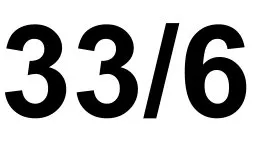
The number 33 is used by Ku Klux Klan adherents to signify the Ku Klux Klan. Since the 11th letter of the alphabet is K, three Ks signify "KKK" or the Ku Klux Klan. When using this reference, Klan members will frequently add the number 6 at the end, as in 33/6, because they think the Klan is currently in its sixth historical "era." Less commonly, some holdouts may still use the numeric code 33/5. Additional Images:
AKIA is Ku Klux Klan shorthand for "A Klansman I Am." It is related to another Klan acronym, AYAK ("Are You A Klansman?"). These are among the many acronyms developed by the Second Ku Klux Klan that emerged in 1915. Although the Second Ku Klux Klan did not survive, much of its terminology and many of its rituals did, and later Klan groups freely used them. Additional Images:

November 24, 2020 UPDATE:
In July 2021, during a investigative radio show and podcast, Alex Mann, an Australian journalist for ABC’s Background Briefing, identified CatboyKami (aka Philip Hedley) as Tor Gustafsson Brookes.
Extremists are constantly adapting and finding ways to reach new audiences, spread and spew their hate and create online content. Their latest tactic involves the use of Omegle, a free online chat service that randomly pairs anonymous users for…
AYAK is Ku Klux Klan shorthand for "Are You A Klansman?" It is related to another Klan acronym, AKIA ("A Klansman I Am"). These are among the many acronyms developed by the Second Ku Klux Klan that emerged in 1915. Although the Second Ku Klux Klan did not survive, much of its terminology and many of its rituals did, and later Klan groups have freely used them. Additional Images:
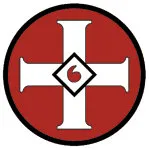
ALTERNATE NAMES: Ku Klux Klan, MIOAKGroup Status: Active (in that there are many active Ku Klux Klan groups)
For the past century, the primary symbol related to Ku Klux Klan groups (other than Klan robes themselves) is what Klan members may call the MIOAK (an acronym for "Mystic Insignia of a Klansman"). It is more commonly referred to as the "Blood Drop" Cross. It appears as a square white cross in black outline against a circular red background. In the middle of the cross is what appears…
ALTERNATE NAMES: Ku Klux Klan, MIOAK
Read more about Blood Drop Cross
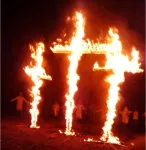
The image of the burning cross is one of the most potent hate symbols in the United States, popularized as a terror image by the Ku Klux Klan since the early 1900s. Cross-burnings (called "cross-lightings" by Ku Klux Klan groups, to make it seem as if they are not destroying a Christian cross) have long been used as a traditional symbol by Klan groups, used both in Klan rituals as well as in attempts to intimidate and terrorize victims of Klan groups. So widely associated with racial…

ALTERNATE NAMES: For God, Race and NationFGRN is a Ku Klux Klan acronym for "For God, Race and Nation," a common Klan slogan. It is one of a number of slogans, codes and rituals created by the Second Ku Klux Klan in the early 20th century. That Klan did not survive, but many of its codes and rituals were adopted by later Klan groups. In acronym form, the slogan is used primarily as a Klan identifier, typically appended at the end of on-line messages and postings. Additional Images:
ALTERNATE NAMES: For God, Race and Nation
Read more about FGRN
November 20, 2020 The latest Facebook Transparency Report, which covers July 2020 to September 2020 (Q3 2020), raises some alarming concerns around the prevalence of hate speech on the platform, leaving ADL with several questions that demand clear answers. ADL published a blog post about the opaque nature of Facebook’s transparency reports in January 2019. Many of the same problems that existed in the 2019 reports continue in Facebook’s most recent transparency efforts.
…
Survey reveals increased harassment on gaming platforms from 2019 New York, November 18, 2020 … Sixty-eight percent of players have experienced severe harassment while playing games online, which includes physical threats, stalking and sustained harassment, while 81 percent of online multiplayer gamers have experienced some form of harassment, according to a survey released today by ADL’s (the Anti-Defamation League) Center for Technology and Society. This represents a…