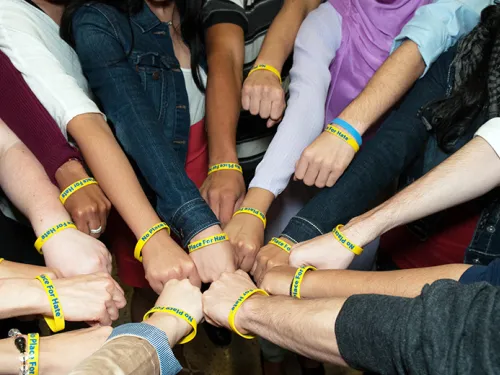


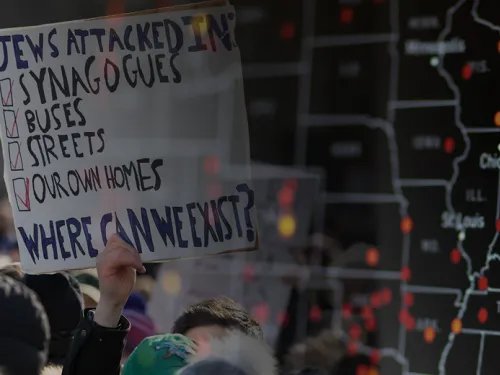

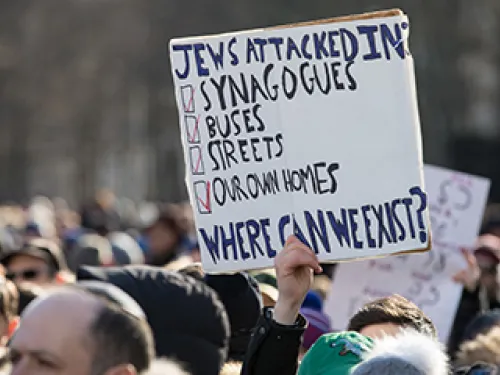
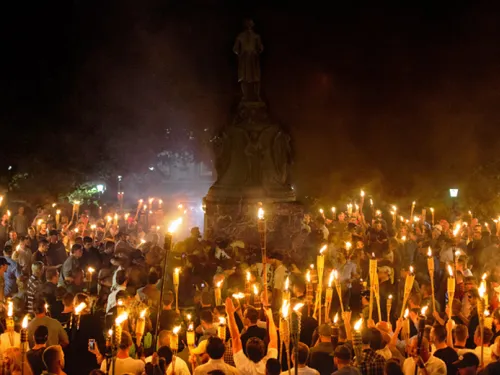




June 07, 2021 Los jóvenes judíos en Europa han experimentado un aumento del antisemitismo, odio y amenazas durante la crisis en Israel y la región. Los incidentes antisemitas en las manifestaciones, la quema de banderas israelíes frente a sinagogas y centros comunitarios judíos, las amenazas violentas y el vandalismo contra instituciones judías han hecho que se cuestionen su seguridad como judíos.
Bini Guttmann, presidente de la Uni…
347 Results
May 21, 2021 By David Andrew Weinberg
In recent days, political cartoons in Middle Eastern publications have understandably focused extensive attention on the conflict between Israel and the Palestinians. Unsurprisingly, some of these cartoons crossed the line from legitimate political satire to trafficking in antisemitic imagery and messages.
Common anti-Jewish tropes applied to Israel’s conduct by some of these cartoons included depictions of Jews being bloodthirsty…
May 20, 2021 In response to the recent conflict in Israel and Gaza, as well as the tensions in Jerusalem that led up to the violence, there have been some prominent voices, including among NGOs and activists, who have engaged in problematic rhetoric about Israel.
The Israeli-Palestinian conflict has always engendered strong passions and differences of opinion. In a crisis, such differences are of course heightened. And while exchanges of views - even harsh disagreements - are…

May 14, 2021 By: David Andrew Weinberg
Less than a year ago, a high-profile sermon at the Grand Mosque in Mecca fueled speculation Saudi Arabia might be prepared to follow some of its neighbors’ footsteps by making peace with Israel. However, clerics at Saudi Arabia’s Grand Mosque in Mecca as well as the Prophet’s Mosque in Medina sent a starkly different series of messages this week, in how they…
May 14, 2021 Young Jews in Europe are experiencing a spike in antisemitism and hate and threats as the crisis in Israel and the region escalates. Antisemitic incidents at demonstrations, the burning of Israeli flags in front of synagogues and Jewish community centers, violent threats and vandalism of Jewish institutions are causing them to question their safety as Jews.
Bini Guttmann, President of the European Union of Jewish Students (EUJS), the umbrella organization…
by: Carole Nuriel | May 14, 2021 The Times of Israel JERUSALEM — The State of Israel and Israeli society are currently in the throes of a major crisis, one of the gravest ever. For several weeks, we have been witnessing events that one after the other have escalated the situation. Now we have reached a point where Israel is engaged in direct warfare with Hamas, a U.S.-designated terrorist organization, along with a dangerous conflagration inside Israel that threatens to shred the…
Updated: June 1, 2021
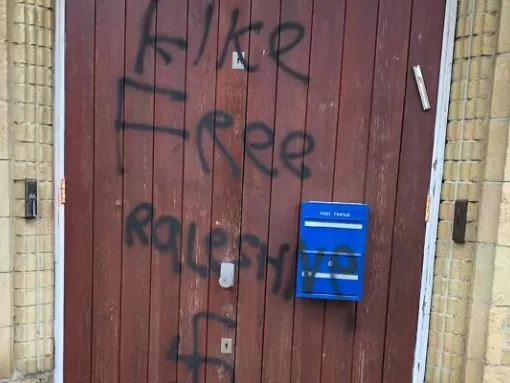
Since the start of the May conflict between Israel and Hamas, there have been numerous antisemitic incidents around the world related to the conflict. The perpetrators of these attacks deliberately targeted Jewish institutions in order to express their anger towards Israel.
Whenever anti-Israel actions target synagogues, Jewish community centers, kosher restaurants, Jewish owned businesses, or individual Jews – in other words, holding Jews…
May 12, 2021 Some at Anti-Israel Protests Express Antisemitism, Support for Terror
Antisemitism and support for terror among a small but vocal segment of protesters at nationwide demonstrations sparked by ongoing violence in Israel and Gaza
Last Update: 5/23/21 10:30 am ET
5/22/21
Philadelphia, PA:
Video from a protest in Philadelphia shows a demonstrator declaring, “Israel controls the media.” Such a claim plays into the…

April 14, 2021 Appearing on a March 31, 2021 webinar organized by University of California-Berkeley lecturer and American Muslims for Palestine (AMP) board chairman Hatem Bazian, Boycott, Divestment and Sanctions (BDS) movement co-founder Omar Barghouti veered into troubling rhetoric, expressing support for what is essentially a litmus test conditioning Jewish participation in interfaith dialogue on condemnation of Israel.
Barghouti stated, “Interfaith dialogue is perfectly fine so…
March 18, 2021 From March 6-12, 2021, anti-Israel groups American Muslims for Palestine (AMP) and UK-based Friends of Al-Aqsa held an all-virtual Aqsa Week, described on AMP’s website as “programs and educational webinars... that focused on Jerusalem, its Islamic significance...the Prophetic connection to Palestine to[sic] the dark era of the Crusades and US/UK policy towards Jerusalem.”
Many events, however, featured speakers who veered into inflammatory rhetoric,…
January 13, 2021 As images of the insurrection at the U.S. Capitol have been shared across social media, activists in the broader anti-Israel movement used photos that showed the appearance of an incongruous Israeli flag among pro-Trump protestors at the rally and outside the Capitol to falsely link Zionism and Israel with the extremism of January 6.
According to photos and reports, other national…
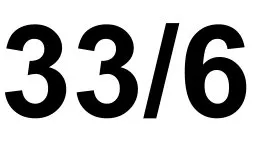
The number 33 is used by Ku Klux Klan adherents to signify the Ku Klux Klan. Since the 11th letter of the alphabet is K, three Ks signify "KKK" or the Ku Klux Klan. When using this reference, Klan members will frequently add the number 6 at the end, as in 33/6, because they think the Klan is currently in its sixth historical "era." Less commonly, some holdouts may still use the numeric code 33/5. Additional Images:
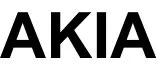
AKIA is Ku Klux Klan shorthand for "A Klansman I Am." It is related to another Klan acronym, AYAK ("Are You A Klansman?"). These are among the many acronyms developed by the Second Ku Klux Klan that emerged in 1915. Although the Second Ku Klux Klan did not survive, much of its terminology and many of its rituals did, and later Klan groups freely used them. Additional Images:
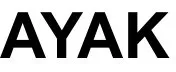
AYAK is Ku Klux Klan shorthand for "Are You A Klansman?" It is related to another Klan acronym, AKIA ("A Klansman I Am"). These are among the many acronyms developed by the Second Ku Klux Klan that emerged in 1915. Although the Second Ku Klux Klan did not survive, much of its terminology and many of its rituals did, and later Klan groups have freely used them. Additional Images:
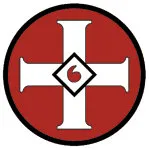
ALTERNATE NAMES: Ku Klux Klan, MIOAKGroup Status: Active (in that there are many active Ku Klux Klan groups)
For the past century, the primary symbol related to Ku Klux Klan groups (other than Klan robes themselves) is what Klan members may call the MIOAK (an acronym for "Mystic Insignia of a Klansman"). It is more commonly referred to as the "Blood Drop" Cross. It appears as a square white cross in black outline against a circular red background. In the middle of the cross is what appears…
ALTERNATE NAMES: Ku Klux Klan, MIOAK
Read more about Blood Drop Cross
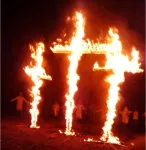
The image of the burning cross is one of the most potent hate symbols in the United States, popularized as a terror image by the Ku Klux Klan since the early 1900s. Cross-burnings (called "cross-lightings" by Ku Klux Klan groups, to make it seem as if they are not destroying a Christian cross) have long been used as a traditional symbol by Klan groups, used both in Klan rituals as well as in attempts to intimidate and terrorize victims of Klan groups. So widely associated with racial…

ALTERNATE NAMES: For God, Race and NationFGRN is a Ku Klux Klan acronym for "For God, Race and Nation," a common Klan slogan. It is one of a number of slogans, codes and rituals created by the Second Ku Klux Klan in the early 20th century. That Klan did not survive, but many of its codes and rituals were adopted by later Klan groups. In acronym form, the slogan is used primarily as a Klan identifier, typically appended at the end of on-line messages and postings. Additional Images:
ALTERNATE NAMES: For God, Race and Nation
Read more about FGRN
November 20, 2020 By David Andrew Weinberg
The Yemeni Embassy in Washington recently released a report featuring primary source documents on the core ideology of the Houthi insurgents who seized Yemen’s capital in 2014. That report, authored by Embassy official Salem Baafi, makes a case that antisemitism and other forms of hate form an essential part of the worldview and motivation of Yemen’s Houthi rebels.
The Houthis’ oft-invoked slogan is itself antisemitic…

ITSUB is a Ku Klux Klan acronym for "In The Sacred Unfailing Being," a reference to God. It is one of many Klan acronyms created by the Second Ku Klux Klan that emerged in 1915. That Klan did not survive, but subsequent Ku Klux Klan groups continued many of its rituals and codes. Today, ITSUB has no real meaning or particular purpose and is typically used by Klan group members in on-line messages or posts solely as a way to identify themselves with the Ku Klux Klan. This has been the fate of a…

KABARK is a Ku Klux Klan acronym for "Konstantly Applied By All Regular Klansmen." It is one of many acronyms and codes developed by the Second Ku Klux Klan in the early 20th century. The Second Ku Klux Klan did not survive, but later Klan groups continued many of its codes and rituals. Today, KABARK is essentially meaningless and only used as a "sign off" in on-line messages by Klan group members, along with several other similar archaic acronyms. Additional Images: