


This ADL/AEN resource provides background information regarding the “scholasticide” charge against Israel, including its origins and recent efforts to promote it.
23 Results
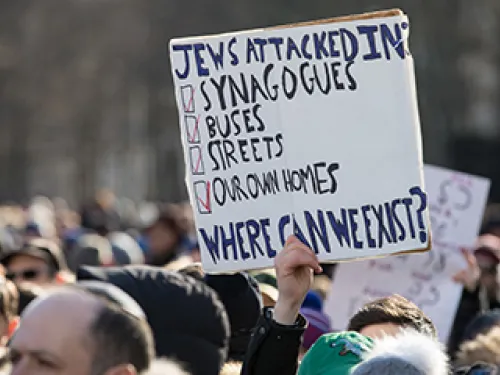
In response to mounting incidents, ADL and the Academic Engagement Network (AEN) have developed this toolkit to help address antisemitism and anti-Israel bias and to foster inclusive academic spaces that welcome diverse perspectives on Israel and the broader Middle East. It is intended for Jewish and Zionist faculty, staff and others experiencing antisemitism and anti-Israel bias in their professional academic associations and scholarly societies. This resource includes real-world…
Definiciones de antisemitismo, antisionismo y prejuicio antiisraelí comúnmente utilizadas y malinterpretadas.
Estrategias para estar preparado ante situaciones antisemitas o antiisraelíes de la vida real a las que podrías enfrentarte y que han ocurrido en campus universitarios.
Si tú u otro estudiante judío es objeto de ataques en el campus, pueden estar preparados. Conoce a quién dirigirte, qué hacer y qué no hacer.
Preguntas frecuentes sobre la libertad de expresión, su protección y las diferencias entre universidades públicas y privadas.
Cómo mantener un debate concienzudo sobre el conflicto palestino-israelí y evitar los errores más comunes que podrían invocar el antisemitismo, el sesgo o la intolerancia.
Medidas proactivas que puedes tomar para disminuir el impacto de la actividad antisraelí en el campus y estar preparado en caso de tener que responder.
Consejos sobre cómo participar y desvincularte en la lucha contra el antisemitismo, los prejuicios contra Israel y el odio en las redes sociales.
Learn tips on how to have conscientious discussions about this complex issue and how to avoid common pitfalls that could invoke antisemitism, bias or bigotry.
ADL has developed resources to help you respond to antisemitic incidents and anti-Israel bias. Explore these tools and learn more.
Definitions of antisemitism, anti-Zionism and anti-Israel bias.
Social media is a hotbed of antisemitism, anti-Israel hate, Holocaust denial and distortion and other conspiracy theories. Check out our tips on how to engage and disengage in the fight against antisemitism, anti-Israel bias, and hate on social media.
Strategies on how to be prepared for antisemitic or anti-Israel situation on campus, based on real life incidents
In the 1930s, the dean of Yale University’s medical school — who was Jewish himself — reportedly advised his admissions team, “Never admit more than five Jews, take only two Italian Catholics, and take no blacks at all.”
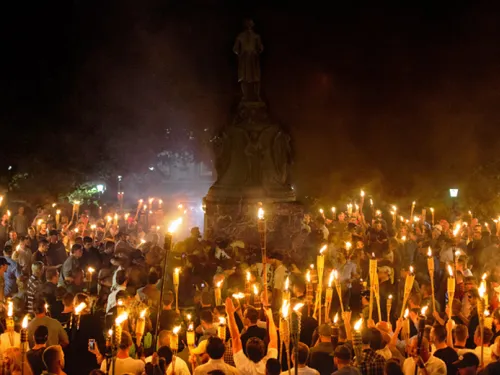
The American college campus has come a long way in the past century. Colleges are more diverse, and there are greater efforts to create inclusive environments whereby all students feel comfortable on campus. But that does not mean you…
What is the source of our free speech rights? Free speech rights emanate from the First Amendment to the U.S. Constitution[1] and from state constitutions. The U.S. Constitution limits the government’s ability to regulate speech based on content and it applies to all public colleges and universities. It serves as a floor, not a ceiling. State constitutions may grant more robust free speech rights than the U.S. Constitution, but never fewer. Is there a distinction between private and…

For Educators | For Parents, Families, and Caregivers Rosh Hashanah and Yom Kippur, the High Holidays, are celebrated by Jewish people all over the world. The High Holidays fall on different days each year. For the specific dates each year, check our Calendar of Observances. These and other Jewish holidays fall on different days in our calendar because they follow the Jewish calendar, which has a different number of days than our calendar. The Jewish calendar is a Soli-lunar calendar. …
For Educators Individuals, including parents, and groups who have no formal relationship to a school (Third Parties) may distribute religious materials, including Bibles, to students outside of school premises. They may also discuss religious matters with students.
Third-party materials or publications of a religious viewpoint may be distributed on- campus to the same extent distribution of third-party secular materials is permitted. However, courts have applied different rules to…
For Educators Release time in the public schools refers to programs in which students are released from school early to attend religious classes off school premises. Participating students must have permission from their parents. Nonparticipating students remain in school. Such programs may be constitutional if the religious classes take place off school grounds, if no public school funds are expended, and if school officials or teachers do not promote program attendance through coercion or…
For Educators Public schools may not teach religion, although teaching about religion in a secular context is permitted.1 The Bible may be taught in a school, but only for its historical, cultural or literary value and never in a devotional, celebratory or doctrinal manner, or in such a way that encourages acceptance of the Bible as a religious document.2
SPECIFIC ISSUES & QUESTIONS
What distinguishes "teaching religion" from "teaching about religion"?
Religion may be presented…