Table Talk: Family Conversations about Current EventsYou may have heard about “swatting” because it's been in the news recently. What exactly is swatting? Why do people do it? Because young people are exposed to swatting online, on both mainstream websites and the “dark web” (i.e., hidden websites) and because some swatting incidents begin in online gaming or other digital platforms, it is an important topic to discuss with young people. Swatting is &ldquo…
Empoderar a los niños y jóvenes tras un evento de odio
Tools and Strategies
What Educators and Family Members Can DoToday, local, national or international tragedies happen so frequently that they can feel almost commonplace. When a hate crime, mass shooting, act of terrorism or other terrible and hate-inspired event occurs, one of the first questions many people ask is, what should we tell the children? How can we explain to them what has happened? Despite our best efforts to protect youth from the details of hate-motivated events, we can never assume that they are…
ADL’s new capacity to support municipalities, and others interested in using the law to deter harm and hold individuals and groups accountable for violent extremist actions. As our democracy as well as vulnerable communities are increasingly at risk of extremist violence and threats, ADL has expanded its capacity to support municipalities, community organizations and others interested in learning more about how to use the law to deter harm and hold individuals and groups responsible for…
The following is an inventory of known active white supremacist prison gangs, as well as which states they’re active in and examples of various “patches” associated with those prison gangs where available.
Facebook: The Platform of Choice for White Supremacist Prison Gangs
Tools and Strategies
An ADL Center on Extremism examination of white supremacist prison gangs’ Facebook activity shows it is the platform of choice for gang members to connect.
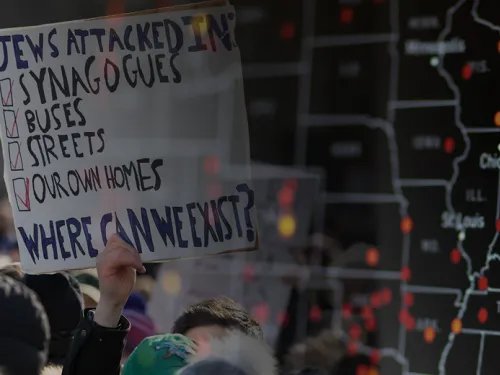
Table Talk: Family Conversations About Current EventsWhen there are periods of heightened violence and war in the news, oftentimes one or more marginalized identity groups can become the focus of attention, anger, hostility and bias even far removed from the location of the conflict. In the wake of Hamas’ attack on Israel in October 2023, ADL has tracked an uptick in antisemitic attacks in the U.S. and around the globe, and there have also been incidents of anti-Muslim attacks. As the…
A Guide for Responding to School-Based Bias Incidents
Tools and Strategies
Is your school experiencing a bias or hate incident?Whether it be a racist “joke,” slur, stereotype or some other form of implicit or explicit bias, school community members must be committed to addressing bias-related incidents in schools. Educators and school administrators play vital roles in creating an environment where all students can learn and thrive. Cultivating an equitable and inclusive school community requires ensuring that historically marginalized students are…
Empowering Young People in the Aftermath of Hate (In English and Español)
Tools and Strategies
What Educators and Family Members Can DoToday, local, national or international tragedies happen so frequently that they can feel almost commonplace. When a hate crime, mass shooting, act of terrorism or other terrible and hate-inspired event occurs, one of the first questions many people ask is, what should we tell the children? How can we explain to them what has happened? Despite our best efforts to protect youth from the details of hate-motivated events, we can never assume that they are…
For Educators | For Parents, Families, and Caregivers Rosh Hashanah and Yom Kippur, the High Holidays, are celebrated by Jewish people all over the world. The High Holidays fall on different days each year. For the specific dates each year, check our Calendar of Observances. These and other Jewish holidays fall on different days in our calendar because they follow the Jewish calendar, which has a different number of days than our calendar. The Jewish calendar is a Soli-lunar calendar. …
Distribution of Religious Materials and Proselytizing by Outside Groups and Individuals
Tools and Strategies
For Educators Individuals, including parents, and groups who have no formal relationship to a school (Third Parties) may distribute religious materials, including Bibles, to students outside of school premises. They may also discuss religious matters with students.
Third-party materials or publications of a religious viewpoint may be distributed on- campus to the same extent distribution of third-party secular materials is permitted. However, courts have applied different rules to…
For Educators Release time in the public schools refers to programs in which students are released from school early to attend religious classes off school premises. Participating students must have permission from their parents. Nonparticipating students remain in school. Such programs may be constitutional if the religious classes take place off school grounds, if no public school funds are expended, and if school officials or teachers do not promote program attendance through coercion or…
For Educators Public schools may not teach religion, although teaching about religion in a secular context is permitted.1 The Bible may be taught in a school, but only for its historical, cultural or literary value and never in a devotional, celebratory or doctrinal manner, or in such a way that encourages acceptance of the Bible as a religious document.2
SPECIFIC ISSUES & QUESTIONS
What distinguishes "teaching religion" from "teaching about religion"?
Religion may be presented…
For Educators | For Parents, Families, and Caregivers Most people love a celebration! Adults flutter around busily preparing for the festivities. Children are abuzz with excitement. Special foods are eaten, special heirlooms brought down from the shelf. Traditions are passed down from generation to generation. While children should have an opportunity to learn about and share information about the important holidays and celebrations in their lives, celebrating specific holidays in a school or…
Finding the Balance: Countering Extremism and Combating Stereotypes
Tools and Strategies
Young people are exposed to discussions of extremism every day through social media, news and overheard conversations between adults. As an educators, the topic can be challenging to teach because the situation is always changing and evolving and worse--classroom conversations can themselves lead to stereotyping, bias and bigotry when discussing perpetrators, targets and victims. The following resources will help you teach about extremism while ensuring that the…
How Can “Looking at Lights” Promote Respect Among Children for Various Holidays, Celebrations and Traditions?
Tools and Strategies
Early Childhood Question Corner
Common themes appear in holidays and celebrations across many cultures. By connecting themes, as suggested in the Question Corner installment "How can I plan inclusive holiday celebrations?" you can show children that holidays and celebrations are an expression of cultural and religious pride, and help them understand the commonality of certain human feelings, celebrations and their meaning. For example, by trying the following activity, Looking…
Winter Holidays: December Dilemma or Teaching Opportunity?
Tools and Strategies
For Educators | For Parents, Families, and Caregivers Winter is a festive time of year because so many holidays are celebrated by people from different religions, cultures and races. We spend time with family and friends, connect with our faith or culture, give and receive gifts and enjoy special foods and treats. However, this time of year—especially in schools and whether it's in-person, online or hybrid—can be a time where some children can feel uncomfortable, excluded, insulted…