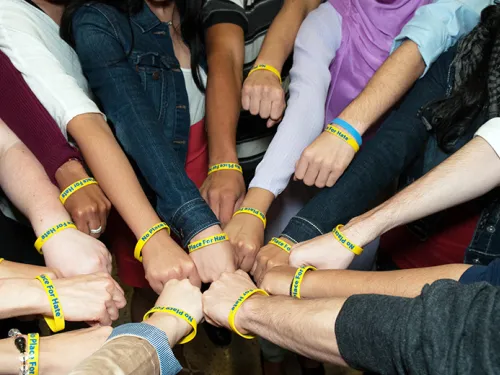






These suggested No Place for Hate® activities are differentiated for elementary, middle and high school students. The activities below can be used as a follow-up to watching the webinar, “Do More with No Place for Hate:” which aired on 10/23/25. To make this a NPFH activity towards designation, watch the video, engage students in a discussion using the discussion questions and do one of the additional activities included below. About the WebinarJoin author Dana Kramaroff for a…
399 Results
To what degree do an author’s objectionable comments, unrelated to their books, matter when being a consumer of those books? J.K. Rowling’s bestselling seven-volume Harry Potter books are cherished by children and adults alike. Rowling has sold more than 500 million copies and the books have inspired movies, theme parks, toys, collectibles, merch and more. According to a U.S. survey, 31% of people have read at least one of Rowling’s books, 18% of people have read all of…

It’s critical that parents, caregivers and educators learn more about social media and how to support young people in their understanding of its power and limitations.

The year 2021 was marked by a series of heart-wrenching setbacks in the fight against hate around the world. From the Capitol insurrection on January 6 to brazen attacks on Jews, Asian Americans, and other marginalized groups in the streets of New York and Los Angeles, these events drew back the curtain on the prevalence of antisemitism and racism, fueled hatred in our communities and fostered division across society.
Fortunately, they did not come without repercussions or a response…

As the year draws to a close, ADL looks back on the moments from 2021 that gave us hope and encouragement that our hundred-plus-year fight against antisemitism and hate is making progress.
And there were plenty of big, inspirational moments to choose from in 2021: A $26 million verdict against the white supremacists responsible for Charlottesville; the launch of a $1.1 billion foundation to help prevent Anti-Asian hate crimes; and meaningful legal victories against racially motivated…
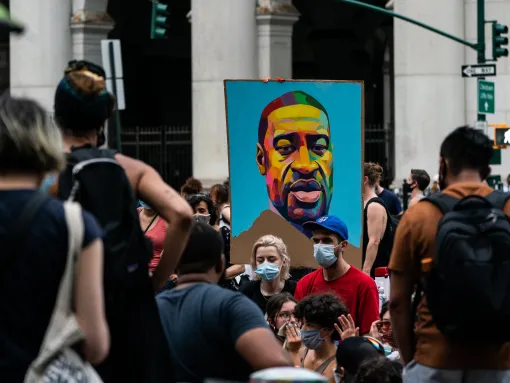
They were ordinary people who lived extraordinary lives – or extraordinary people who put their lives on the line to protect the health and welfare of everyone.
In what has become an annual tradition, as the year comes to a close ADL pauses each December to take stock of the moments and people who shaped the last 12 months – for better, or for worse – with a Top 10 list.
For 2020, we compiled two Top 10 lists: One looking back on the moments of hurt and hate that…
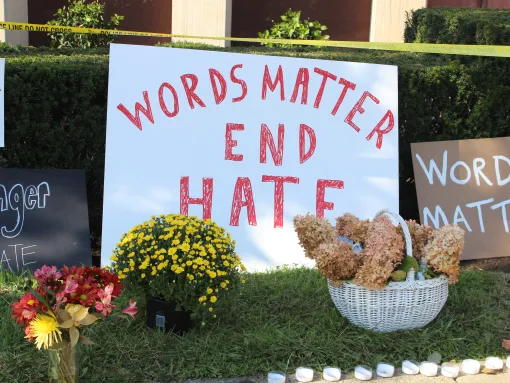
Even in times of tragedy, there are glimmers of humanity. These moments of compassion, of kindness, give us hope for a better future for our children and our children’s children. Building a better world is what has motivated ADL’s work for more than 100 years, and what continues to impel us forward today. With that in mind, ADL’s professionals across the country have selected the decade’s Top 10 Moments of Hope in the United States. It’s hard to fathom how…

From the Boston Marathon Bombing in 2013 to the white supremacist shooting in El Paso earlier this year, from the detention and dehumanization of immigrant children at the border to the largest anti-Semitic attack in United States history last year, this decade was bookended and interspersed by a series of all-too-frequent tragedies, many perpetrated by extremists from across the ideological spectrum and others the result of wrongheaded government policy. Over the past decade, seven of the top…

Hate-fueled mass shootings horrifyingly make up half of our 2019 Top Ten Incidents of Hate List. Three of the shootings took place in houses of worship: two synagogues, and two mosques. One of those shootings was on the holiest day of the year, Yom Kippur. Three perpetrators were white supremacists, two are believed to have ties to an anti-Semitic sect of the Black Hebrew Israelite movement. Two shootings were overseas, three of them spanned both coasts of the U.S. Hate spread across the…
December
Argentina
San Juan: Escuela Modelo de San Juan students reportedly made a Nazi-themed school project parodying Aqua’s “Barbie Girl” song. The school dismissed the teacher and had students study anti-Semitism in response
Canada
Montreal: A Jewish student at McGill University faced pressure to resign from her student government position for accepting Hillel Montreal’s invitation to travel to Israel and the West…
The total number of anti-Semitic incidents in the United States increased by 21 percent in 2014 in a year marked by a violent anti-Semitic shooting attack targeting Jewish community buildings in Kansas and anti-Jewish expressions linked to the war in Gaza.
The Anti-Defamation League’s (ADL) annual Audit of Anti-Semitic Incidents counted a total of 912 anti-Semitic incidents across the U.S. during the 2014 calendar year. This represents a 21 percent increase from the 751 incidents…
In November 1999, an independent external panel was formulated to offer critique of the ADL’s A WORLD OF DIFFERENCE® Institute Anti-Bias Study Guide (Secondary Level). This panel was comprised of secondary level teachers and college-level professors representing California State University at Long Beach, University of California at Berkeley, New York University, Columbia University Teachers’ College, Manassas, Virginia and Philadelphia, Pennsylvania School Districts. Panelists…
For Educators
A 2000 survey conducted by the Anti-Defamation League found that participation in the A WORLD OF DIFFERENCE Institute's Names Can Really Hurt Us Assembly Program allows students open, honest and relevant exploration about diversity and bias in their school communities. More than 600 students and staff from two Southern California High Schools participated in the study.
Evaluations findings that as a result of participation:
47% of students perceived one or more…
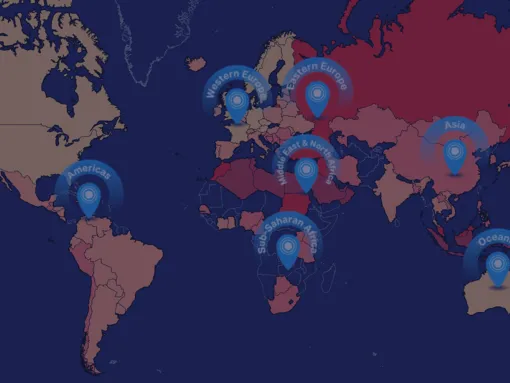
ADL's research and data on antisemitism provides a bridge between history, current events, and students' lived experiences. Explore the Global 100.
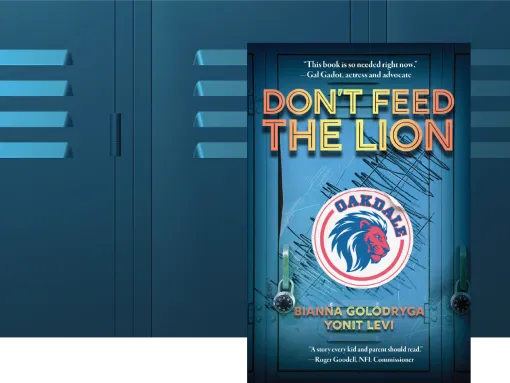
Don’t Feed the Lion: IntroductionDon’t Feed the Lion by Bianna Golodryga and Yonit Levi explores the story of antisemitism growing at Oakdale Middle School. The story begins with Theo Kaplan, a 13-year-old Chicago middle schooler and soccer captain. Theo’s world is turned upside down when his professional soccer idol, Wes Mitchell, makes an antisemitic comment that goes viral. The situation escalates when Theo discovers a swastika…
Innovative educator tool uses AI to assist educators teaching about Holocaust, Jewish themes New York, NY, February 26, 2026 – Today, ADL (the Anti-Defamation League) launched ADL Ora: an AI Assistant to provide educators in K-12 schools with at-your-fingertips access to accurate and pedagogically sound information for teaching students about Jewish identity, antisemitism, and the Holocaust. A trusted source, this closed AI agent offers dynamic capabilities, providing…

Every two years, we watch athletes compete on the world stage—and what captivates us isn't just the competition. It's the stories: the struggles, the triumphs, the personal journeys that help us see ourselves and others more clearly. The Olympics offer us a unique opportunity to explore something deeper: the complexities of identity—individual and national. When we bring these conversations into our classrooms, we're teaching students to see the human stories behind the…

Related ContentBackground Young people are using AI (artificial intelligence) tools every day for homework, curiosity, creativity, and social interaction. While we don’t have exact statistics on daily AI usage yet, recent Pew Research Center findings suggest that AI use begins to rise sharply by early adolescence, with widespread use among teens ages 13–17. While many see AI as a useful and credible source of information, it needs to be utilized critically and thoughtfully,…
Online toolkit empowers parents and educators to identify biased and inaccurate materials on antisemitism, the Holocaust, and Jewish history New York, NY, January 14, 2026 – Today, the Anti-Defamation League (ADL) launched an online toolkit to help parents and educators evaluate whether content on antisemitism, the Holocaust, Jewish identity, and history is accurate and unbiased. In an age of evolving technology, educators are drawing from a variety of sources to create curricula…

Educators should select narratives for their classroom with thought and care—ensuring that history and fact are presented accurately and with as much balance as possible.