

Student Learning For Students | 6 and up
372 Results
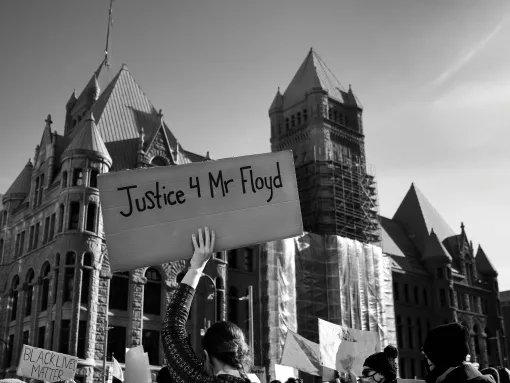
April 21, 2021 The verdict has come down. The jury found former Minneapolis police officer Derek Chauvin guilty of second-degree and third-degree murder and second-degree manslaughter in the killing of George Floyd.
On May 25, 2020, George Floyd, a forty-six-year-old Black man living in Minnesota, was killed while being arrested by the police. Derek Chauvin, a white police officer, pinned Floyd to the ground while he was…
Use ADL's high school civics curriculum to help students explore their civic engagement and examine complex topics through an anti-bias lens.
Civics Lesson
GRADE LEVEL: High School How is Dialogue Different than Debate?
Technology is enabling students to be increasingly aware of news and current events. Along with this increased awareness, we see more and more students becoming actively engaged in conversations around hot-button topics. While students often talk in digital spaces about current events that concern them, they also continue the conversation in person. When disagreements happen in those conversations, what…
April 14, 2021 Don’t talk to strangers. It’s a rule that some parents teach their children from a young age. But there’s one website that encourages users to do just that, and it’s growing increasingly popular among tweens and teens. It is being used in ways that young people and their families should learn more about. Created in 2009, Omegle is a free website that randomly pairs users in one-on-one video chat sessions. The site has seen a resurgence over the past year,…
Mini-Lesson For Students About the Mini-LessonThis mini-lesson will introduce you to the Pyramid of Hate, an ADL concept and activity that demonstrates how the seeds of bias, once planted, can grow quickly from biased ideas to discrimination and acts of violence. ADL's mini-lessons for students are short, interactive, online lessons for you to learn about a core ADL topic, theme or activity. ObjectivesThis self-paced mini-lesson will enable you to understand: What antisemitism is…
Civics Lesson
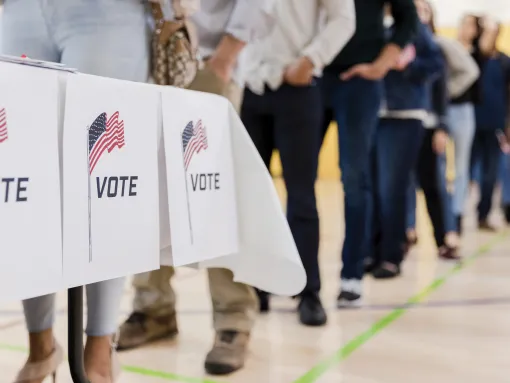
GRADE LEVEL: High School What Needs to Change to Increase Voter Turnout?
After every election, regardless of the outcome, people wonder how many people showed up at the polls to vote. The number is never as high as people would like, especially during midterm elections. In the 2016 Presidential election, 60.1% of the population eligible to vote showed up to the polls. During the midterm elections in 2018, only 50.3% of those eligible voted. While thousands of dollars…
April is National Poetry Month
National Poetry Month provides an opportunity for many schools and classrooms to dedicate time to the study of reading and writing poetry.
Poetry uses vivid and descriptive language, beautiful imagery, unique sounds and rhythms, and diverse voices. It often evokes an emotional and empathetic response and can open doors to people and worlds for which we are unfamiliar. It can touch hearts and minds and motivate action and societal…
New York, NY, March 17, 2021 ... In response to historic increases in anti-Chinese and anti-Asian American and Pacific Islander incidents and assaults, ADL (the Anti-Defamation League), the world’s leading anti-hate organization and Committee of 100, a non-profit U.S. leadership organization of prominent Chinese Americans, issued the following joint statement:
“We are united with all of our Asian American brothers and sisters in standing up against hate, xenophobia and violence…
by: Jesse Tannetta March 04, 2021 Good questions are essential to sound pedagogy and solid teaching. As teachers, we spend countless hours creating questions for exams and structured discussions. We even construct questions spontaneously during dialogue with students, hoping to generate critical thinking and deeper cognition. At Echoes & Reflections, our pedagogy guides us to encourage inquiry-based learning; the best way to do this is to inspire students to create their own questions and…
Wednesday, March 3, 2021
Presenters: Danika Manso-Brown, Associate Education Director, and Caterina Rodriguez, Director of PreK-12 Education Programs, ADL
This webinar will help participants understand how to use ADL's toolkit, "Responding to Bias Incidents in Middle and High Schools: Resources and Best Practices for School Administrators & Educators," to address incidents effectively at their schools. By educating students about the impact of harmful language and behaviors,…
Civics Lesson
GRADE LEVEL: High School What is My Role in Creating and Participating in a Brave Space for Myself and Others?Educators want a welcoming classroom where every student feels appreciated, supported and able to express their ideas. While creating a safe space has been the focus for a long time, we are now calling on educators and students to create “brave spaces.” These are spaces where everyone feels that they can contribute, that they will be heard and they…
February 25, 2021 The idea of dedicating a month to Women’s History came about in 1981 when Congress requested the President proclaim a week in March as “Women’s History Week.” In 1986, the National Women’s History Project played a significant role in expanding the observance to the entire month of March. Women’s History Month recognizes and honors the historical and present-day achievements, milestones and experiences of women. Over time, other countries…
Is your school experiencing a bias or hate incident?Whether it be a racist “joke,” slur, stereotype or some other form of implicit or explicit bias, school community members must be committed to addressing bias-related incidents in schools. Educators and school administrators play vital roles in creating an environment where all students can learn and thrive. Cultivating an equitable and inclusive school community requires ensuring that historically marginalized students are…
Table Talk: Family Conversations about Current EventsOn Wednesday, January 6, 2021, Congress met in the U.S. Capitol to count electoral votes and certify the results of the 2020 Presidential election. This is a formality that takes place every four years under our country’s system for choosing its President and Vice President. While this took place, a violent mob of right-wing extremists and others, who came to Washington, D.C. (and several state capitals) to disrupt and overturn the…
Civics Lesson
GRADE LEVEL: High School Which Form of Government Has the Most Power?
What are the Differences in Power Between Each Form of Government?
Which Form of Government Has the Most Power to Address Equity and Social Justice Issues?
Aside from the separation of powers at the federal level, the U.S. Constitution also describes the power relationships between state and federal governments, how that power will be distributed, and the relationships between the…
Civics Lesson
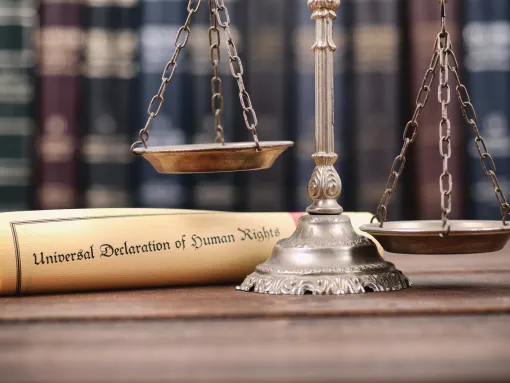
GRADE LEVEL: High School What are Human Rights?
What is the Universal Declaration of Human Rights?
In 1946, in the immediate aftermath of World War II, with hopes of preventing future atrocities, an international committee with varied legal and cultural backgrounds began to draft the Universal Declaration of Human Rights (UDHR). The UDHR was proclaimed by the new United Nations General Assembly in 1948. This document contains 30 Articles that set a standard…
What Educators and Family Members Can DoToday, local, national or international tragedies happen so frequently that they can feel almost commonplace. When a hate crime, mass shooting, act of terrorism or other terrible and hate-inspired event occurs, one of the first questions many people ask is, what should we tell the children? How can we explain to them what has happened? Despite our best efforts to protect youth from the details of hate-motivated events, we can never assume that they are…
November 18, 2020 By: Shaya Lerner
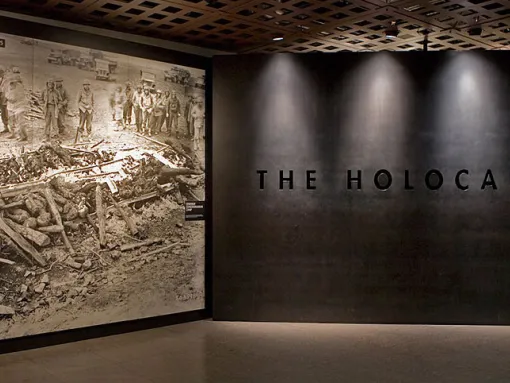
The Holocaust will be forever remembered as one of the most horrific events of the 20th century. The murder of six million Jews and millions of others carried out by the Nazis and their collaborators was the largest recorded genocide in modern history. There is simply no equivalent event, historical or current, that compares with it.
Despite this, over the past few months, both prior to and after the Presidential election, there have been an…
November 10, 2020 How people are portrayed on television – matters. Increasingly diverse storylines, characters and content creators are widely seen as positive, but how is this trend affecting the prevalence of stereotypes in our culture? Is it increasing our ability to empathize and act?
In a recent study, Define American and USC’s Norman Lear Center examined depictions of immigrants on television and the impact of those portrayals. The study examined depictions of 129 unique…