




For Educators In this podcast, Trudy Ludwig talks about Confessions of a Former Bully and why she writes books focused on social aggression and bullying.
Trudy Ludwig is an award-winning author who specializes in writing children's books that explore the colorful and sometimes confusing world of children's social interactions. She has a special focus on addressing relational aggression--the use of relationships to manipulate and hurt others. Trudy wrote her first…
295 Results
January 24, 2017
On Saturday, January 21, 2017, the day after the inauguration of President Donald Trump, 500,000 people gathered in Washington, DC for the Women’s March–to express their unity for women’s issues and to speak out against the demonizing and hateful rhetoric that pervaded the past election cycle. An additional 400,000 marched in New York City , 250,000 in Chicago and according to Women’s March organizers, there were 673 “sister marches&rdquo…

For Educators Our country has a long history of youth-led movements that brought about significant social change. Young people have advocated for child labor laws, voting rights, civil rights, school desegregation, immigration reform and LGBTQ+ rights. Through their actions, the world has changed. Because young people often have the desire, energy and idealism to do something about the injustice they see in the world, they are powerful agents for change. Our work in education helps…

Being able to have respectful and constructive conversations is the bedrock of any relationship—whether those connections take place at home, school, work or in communities. However, when controversy or conflict arises, the discussions can quickly become polarized, heated and personal, making it very difficult to have a conversation where different points of view are aired and discussed. These conversations can be about something controversial like politics, current events, moral…

Teachers may want to engage young people in conversations about presidential and other elections and provide opportunities for students to learn more, ask questions and understand what they see and hear. Below are tips and strategies for engaging in these potentially contentious conversations in the classroom and doing so with a critical thinking and anti-bias lens. These strategies can also be used with other controversial issues that arise in your classroom. It is critical that students…
December 20, 2016
» Follow All Posts On Our Top 10 List
As 2016 draws to a close, the Anti-Defamation League is counting down the major milestones we accomplished this year in the fight against hate. Here’s a look at some highlights from our education division:
Demand for ADL’s education programs and curriculum increased substantially in 2016, as educators, families and community leaders sought ways to help young people feel safe …
December 16, 2016
» Follow All Posts On Our Top 10 List
As 2016 draws to a close, the Anti-Defamation League is counting down the major milestones we accomplished this year in the fight against hate.
In the aftermath of the 2016 presidential campaign, we witnessed a series of disturbing hate crimes targeting Jews, African-Americans, Muslims, members of the LGBTQ community and others following Election Day. This, as white supremacists and those…
December 07, 2016
Something special is happening this year at Oceanside Middle School, located in a small suburb on Long Island, NY—the entire school has committed to reducing the number of bias and bullying incidents at their school.
Oceanside Middle School is one of five schools nationwide to pilot No Place for Hate Plus, a program which aims to take anti-bias and bullying prevention work to another level by working to create an inclusive community where respect is the norm,…
For Educators
In this podcast, she talks about her books, her process for converting big ideas into children's stories and the complex nature of friendship, bullying and standing up.
Kathryn Otoshi is an award winning author/illustrator and speaker best known for her character-building children’s book series, Zero, One and Two. She travels to schools across the country to encourage kids to develop strong character assets and helps teachers find…
Early Childhood Question Corner For Educators | For Parents, Families, and Caregivers The foundation for gender identity formation gets established during the preschool years (Derman-Sparks and Edwards, 2010, 91). By age three, although most children can identify their gender, they are still sorting out the concept of gender (Roberts and Hill, 2003). “The support they get or do not get in their preschool years lays the foundation for the rest of their gender identity formation,”…
For Educators | For Parents, Families, and Caregivers Most people love a celebration! Adults flutter around busily preparing for the festivities. Children are abuzz with excitement. Special foods are eaten, special heirlooms brought down from the shelf. Traditions are passed down from generation to generation. While children should have an opportunity to learn about and share information about the important holidays and celebrations in their lives, celebrating specific holidays in a school or…

In recent years, we have seen alarming images and biased language in schools and universities: name-calling, hate-filled taunts, vandalism, racial slurs and epithets, offensive graffiti on desks and bathroom walls. In addition, many young people—especially those whose identities have been targeted publicly with words and actions—are fearful and worried. Teachers have had to work overtime to console those students and provide resources to get help. Schools must be places where…
Early Childhood Question Corner For Educators | For Parents, Families, and Caregivers You can help children embrace differences by exposing them to diversity as early as possible. This can be a natural part of everyday living as children develop relationships outside their family. Answer children’s questions about differences openly and honestly as they come up, and if you don't know the answers, seek them out. Another way to ensure diversity in children’s lives is to…
by: Jinnie Array November 09, 2016
The outcome of the lengthy, emotional and controversial 2016 presidential election campaign can be difficult to sort out, especially for young people. We know that children and teens were more engaged than ever in the current campaign and they had a lot to say about it. Now, it’s time to support them in processing their feelings, understanding what happened and thinking together about what to do next. Whether you are a…
Early Childhood Question Corner For Educators | For Parents, Families, and Caregivers Incorporating family members into early childhood program’s anti-bias efforts is integral to its success. When children see their teachers value their families’ lives, they develop pride. They also have an opportunity to learn about other children’s families and the diversity inherent in them. Family members can be from various racial and ethnic backgrounds, speak multiple languages and…

July 14, 2016
It has been a rough summer as the topic of guns, violence, police and bias scream across the news headlines and our smart phones.
Still reeling from the June 12 massacre of 49 people at a gay nightclub in Orlando, a few short weeks later we watched on video the back-to-back shooting deaths by police of Alton Sterling in Baton Rouge, LA and Philando Castile in Falcon Heights, MN. Just a day later, as cities across the country engaged in protests over these…
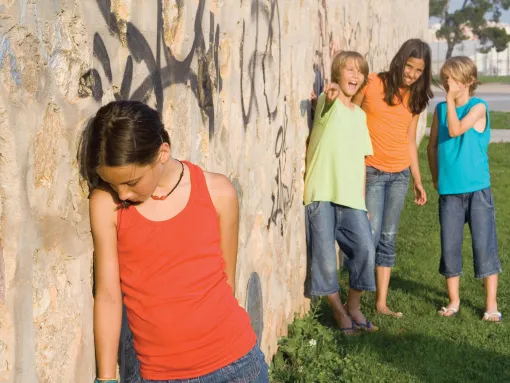
June 20, 2016
This is not the first presidential election where candidates have engaged in name-calling and put-downs. Throughout history, name-calling has been used on the campaign trail to label, define and control the public’s perception of rivals.
However, this year’s campaign is widely regarded as unparalleled in the degree and regularity of the put-downs. From “Low Energy Jeb” to “Crooked Hillary,” “Crazy Bernie,” “Insecure…
by: Jinnie Array June 14, 2016
The unspeakable tragedy that took place at the Pulse Club in Orlando, FL in the early morning of June 12 brings with it a wide range of emotions for people across the country and world. Those feelings include anger, sorrow, loss, hopelessness, horror, fear, rage and also—a sense of powerlessness. It is easy to feel powerless when you think there is nothing you can do: nothing you can do about the hate, the gun violence, the terrorism and the extremist…
by: Jinnie Array June 01, 2016
Beginning on Memorial Day and for four consecutive evenings this week, the History Channel will air its 2016 version of ‘Roots,’ a remake of the 1977 television miniseries based on Alex Haley’s classic novel Roots: The Saga of An American Family. The book is an historical portrait of American slavery based on Haley’s heritage dating back to 1750 in the West African village of Juffure and how his family’s saga unfolded over…

by: Jinnie Spiegler | May 13, 2016 Education Week How is social and emotional learning (SEL)--which is now an established and critical part of the school experience--connected with anti-bias education? If we want to help young people understand bias and work on social justice, what does SEL bring to the table?
According to Collaborative for Academic, Social and Emotional Learning (CASEL), social and emotional learning is "the process through which children and adults acquire…