





April 15, 2016 APRIL 17, 2016, Washington, D.C.
Thank you for that kind introduction, and thank you all for welcoming me here today.
In many ways, I am an unlikely person to be head of ADL…or to be head of a Jewish organization. See, I’ve spent most of my career in business or in government – creating companies, building brands, innovating business models, driving economic value and achieving social benefit, … all this took place far away from the organized…
332 Results
by: Oren Segal April 11, 2016 It’s April 12, 2016 — Equal Pay Day, the symbolic date that women need to work until to catch up with what men had earned by last Dec. 31. The fact is that women who work full time, are paid an average of 79 cents for every dollar paid to men — and on average, African American and Latina women are paid even less. It’s not a day to celebrate, but it is a teachable moment to focus on the needless, costly, and discriminatory gender wage…
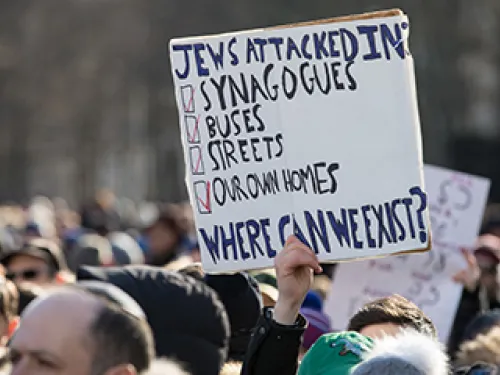
June 10, 2016 What’s it like to be a Jew in Norway? Frankly, it’s complicated.
With a population of less than 2,000 Jews, Norway is a place where “Jew” is a curse used frequently against Jewish schoolchildren. Yet it’s also a society where Jewish life proceeds freely, and the Norwegian government works to end anti-Semitism.
“We’re not finished with anti-Semitism in Norway,” says Rabbi Joav Melchior, rabbi of the Jewish Community of Oslo. …
“They Needed To Be Said” New York, NY, March 24, 2016 … The Anti-Defamation League (ADL) today commended Speaker of the House of Representatives Paul D. Ryan (R-WI), for his leadership call for civility and for raising the level of political discourse.
In his remarks yesterday to a group of House interns, Speaker Ryan stressed the significance of debating civilly without questioning one’s motives. “We don’t shut down on people, and we don’t shut…
by: David Robbins March 11, 2016 Jinnie Spiegler
Director of Curriculum, Anti-Defamation League
This blog originally appeared on Edutopia
Marriage equality, refugees seeking safety in Europe, the Confederate flag, police shootings of black and Latino men, the presidential election, Caitlyn Jenner, ISIS, and immigration are just a few of the news stories that inhabited the headlines this year on our phones, laptops, and newspapers. Unlike 20 years ago when…
by: Lorraine Array January 06, 2016
Last week, over 700 Jewish teens from across the United States and Canada gathered in Baltimore, MD as part of United Synagogue Youth’s International Convention. The Anti-Defamation League participated in the convention as a program partner to educate and empower the students to respond to anti-Semitism. At a time when global anti-Semitism is on the rise, college campuses are rife with anti-Israel bias and Jewish youth regularly hear…
Collection of educational resources for teaching about Black History Month
December 07, 2015 The Killing of Laquan McDonald
In October 2014, Laquan McDonald was shot and skilled by police officer Jason Van Dyke. Thirteen months later, the recorded incident was released to the public. The day before its release, Van Dyke was arrested for first-degree murder.
The disturbing video shows seventeen-year-old McDonald being shot for fifteen seconds—the majority for which he was down on the ground. At the time of the shooting, a spokesperson for Chicago…
Table Talk: Family Conversations About Current Events
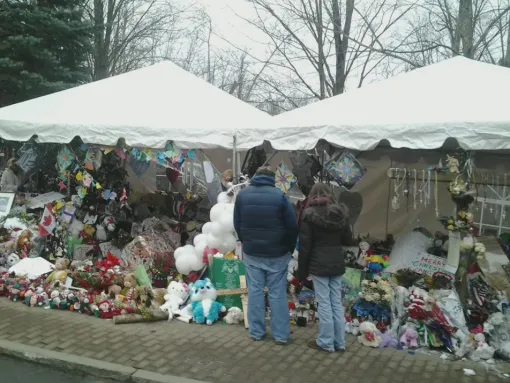
For Parents, Families, and Caregivers | 12 and up Talking with Children about Gun Violence
The issue of gun violence and mass shootings is in the news frequently. Young people are usually aware of what is happening and will want to talk about it. However, it is a sensitive, scary, and potentially painful topic. Before raising the matter with young people, consider your child’s personality. To what extent will the…
November 01, 2015 For many years, a consensus existed in the organized American Jewish community that we should support the democratically-elected government of Israel, whether Labor or Likud, on a non-partisan basis, particularly on matters of Israeli security. The logic was twofold: Moral – Israelis put their lives on the line every day in a dangerous neighborhood and we, sitting in the comfort of America, should respect Israel’s democratic process regarding the safety and…
October 28, 2015 We live in an increasingly pluralistic, multicultural and connected world. In order to prepare students to live, learn and eventually work successfully in society, we need to prepare them. Diversity in the United States is rapidly increasing, especially among young people entering our school system. 2014 was the first school year when more children of color were enrolled in U.S. public schools than white children. However, the diversity of our teaching force is…
by: Jinnie Array September 18, 2015
On Monday, Ahmed Mohamed, a fourteen year old high school freshman with a talent for tinkering and technology, brought a homemade digital clock he constructed to school to show his teachers. His engineering teacher was impressed but later in the day when it beeped during English class, Ahmed’s troubles began. He showed the device to his English teacher who notified school officials who then notified the police. “She thought it was…
Para fomentar escuelas y aulas respetuosas, inclusivas y equitativas, es importante reconocer la lengua que hablan los alumnos y sus familias. Esas lenguas reflejan y afirman su origen étnico, su cultura y su herencia. Según datos recientes del Censo, 63,7 millones de personas (o el 19,1% del total de la población) que viven en Estados Unidos se identifican como hispanos/latinoamericanos. Además, la mayoría de los hispanos (75%) afirman ser capaces de…
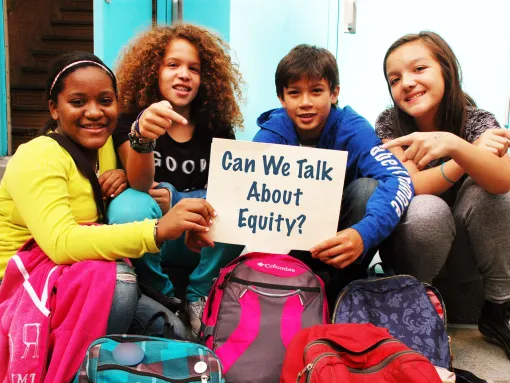
For Educators Because discussions of race and racism are part of our public discourse, educators feel a sense of responsibility to bring these topics into their classrooms—because young people want to be part of the conversation and should be. If handled effectively, these discussions provide opportunities for timely learning. Below are suggestions and strategies for having classroom conversations with young people about race and racism. Prior to these discussions and…
June 22, 2015
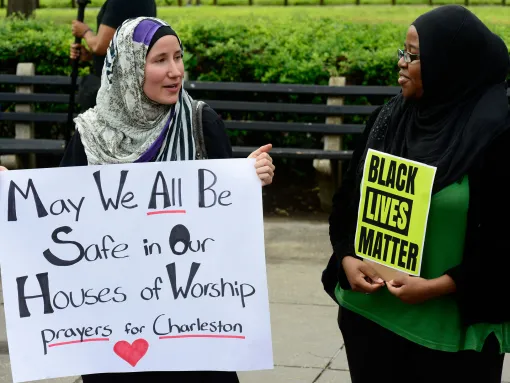
As we grieve, protest and further investigate the horrific murder of nine African American parishioners at the historic Emanuel AME Church in Charleston, SC, many people are asking: What should we tell the children?
Parents, family members and others are sometimes uneasy about discussing issues of violence and injustice with children because they want to protect them from terrible and scary topics. However, it is important that children have a language for…
by: Jinnie Array June 19, 2015
Rachel Dolezal, President of the Spokane, Washington chapter of the NAACP (National Association for the Advancement of Colored People), made headlines and became the top trending item on Twitter last week when it was discovered that she had been posing as Black for many years. In her interview on the Today Show, she continued to assert: “I identify as Black.” These events have sparked strong emotions—anger, confusion, sympathy,…
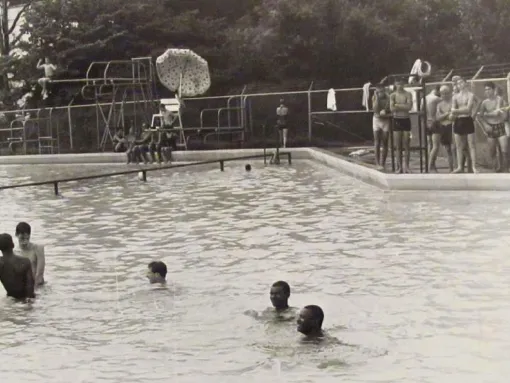
June 15, 2015 In Summer 2015, an incident caught on video captured a police officer outside a community pool who appears to be waving his gun at young partygoers who approached him as he tried to subdue and eventually hold down a teenage girl. She was wearing a bikini because she was at a pool party.
The party was held at the community pool in the Craig Ranch North subdivision, which is predominately white although McKinney, Texas is racially diverse. A group of African American…
Early Childhood Question Corner For Educators | For Parents, Families, and Caregivers Media, such as television, movies, videos, games, apps and websites, can have a powerful influence on your child. Children are drawn to the sights, sounds and colors that appear on the television screen, computer monitor and apps on our phones. Media can provide exciting and unique learning opportunities. Learning from and about media works best when you and your child watch and learn together and talk about…
Early Childhood Question Corner For Educators | For Parents, Families, and Caregivers Young children can be blunt and direct as they notice and talk about the differences they notice among people. That can sometimes make their parent or caregiver feel uncomfortable, especially in public settings. Remember that young children’s initial observations about difference do not intend to be hurtful. Instead, it shows their developing curiosity and awareness of the diversity in the world in…
Early Childhood Question Corner For Educators | For Parents, Families, and Caregivers There is no need to wait until children ask questions about differences to begin conversations. However, these discussions will have the greatest impact when they follow from children’s interests, and when they are appropriate in length, frequency and content relative to children’s intellectual and emotional capacity. Louise Derman-Sparks (1989) writes that awareness of, and talking about,…