

Utility

  • Find Your Local ADL
  • Report an Incident
  • Press

Header Social Links

  • Twitter
  • Facebook
  • LinkedIn
  • Instagram
  • Youtube
  • TikTok
ADL Logo
  • About
    • Mission and History
    • Who We Are
    • Regional Offices
    • ADL Education
    • Partnerships
    • ADL Litigation
    • ADL International
    • ADL and Israel
    • Myths and Facts About ADL
    • Careers
    Our Team
    Who We Are
    U.S. Supreme Court building
    ADL Litigation
  • Centers & Institutes
    • Center on Extremism
    • Center for Technology and Society
    • Center for Antisemitism Research
    • Center to Combat Antisemitism in Education
    • ADL Ratings & Assessments Institute
    Map of antisemitism incidents
    Center on Extremism
    Center for Technology and Society
    Center for Technology and Society
    Center for Antisemitism Research
    Center for Antisemitism Research
  • What We Do
    • Fight Antisemitism
    • Combat Extremism
    • Disrupt Online Hate and Harassment
    • Challenge Bias
    Fighting Antisemitism
    Fight Antisemitism
    Alt Right, Neo Nazis hold torch rally at UVA
    Combat Extremism
  • Resources
    • Research and Analysis
    • Press Center
    • Hate Symbols Database
    • Antisemitism Uncovered
    • ADL Legal Action Network
    • Tools to Track Hate
    • For Families and Educators
    • For Law Enforcement
    ADL's Jewish Policy Index
    Jewish Policy Index
    ADL's Campus Antisemitism Report Card
    Campus Antisemitism Report Card
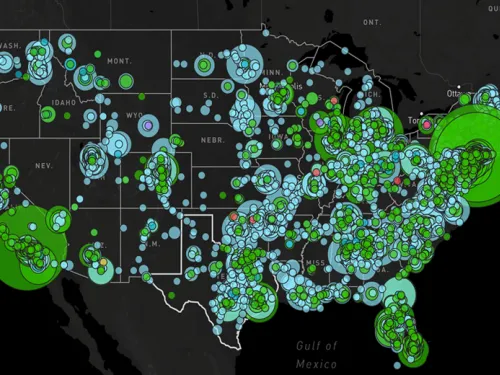
    Map plotting antisemitic incidents throughout the U.S.
    H.E.A.T. Map
  • Take Action
    • Report an Incident
    • Report to ADL Legal Action Network
    • Advocate with ADL
    • Find Ways to Give
    • Attend an Event
    • Shop ADL
    • Bring ADL to Your School or Community
    • Bring ADL to Your Workplace
    • Attend Our Never Is Now Summit
    • Join the Glass Leadership Institute
    Audience of people at ADL's Never is Now 2022
    Attend an Event
Donate
ADL Logo
  • About
    • Mission and History
    • Who We Are
    • Regional Offices
    • ADL Education
    • Partnerships
    • ADL Litigation
    • ADL International
    • ADL and Israel
    • Myths and Facts About ADL
    • Careers
    Our Team
    Who We Are
    U.S. Supreme Court building
    ADL Litigation
  • Centers & Institutes
    • Center on Extremism
    • Center for Technology and Society
    • Center for Antisemitism Research
    • Center to Combat Antisemitism in Education
    • ADL Ratings & Assessments Institute
    Map of antisemitism incidents
    Center on Extremism
    Center for Technology and Society
    Center for Technology and Society
    Center for Antisemitism Research
    Center for Antisemitism Research
  • What We Do
    • Fight Antisemitism
    • Combat Extremism
    • Disrupt Online Hate and Harassment
    • Challenge Bias
    Fighting Antisemitism
    Fight Antisemitism
    Alt Right, Neo Nazis hold torch rally at UVA
    Combat Extremism
  • Resources
    • Research and Analysis
    • Press Center
    • Hate Symbols Database
    • Antisemitism Uncovered
    • ADL Legal Action Network
    • Tools to Track Hate
    • For Families and Educators
    • For Law Enforcement
    ADL's Jewish Policy Index
    Jewish Policy Index
    ADL's Campus Antisemitism Report Card
    Campus Antisemitism Report Card
    Map plotting antisemitic incidents throughout the U.S.
    H.E.A.T. Map
  • Take Action
    • Report an Incident
    • Report to ADL Legal Action Network
    • Advocate with ADL
    • Find Ways to Give
    • Attend an Event
    • Shop ADL
    • Bring ADL to Your School or Community
    • Bring ADL to Your Workplace
    • Attend Our Never Is Now Summit
    • Join the Glass Leadership Institute
    Audience of people at ADL's Never is Now 2022
    Attend an Event
Donate

Utility

  • Find Your Local ADL
  • Report an Incident
  • Press

Social Links

  • Twitter
  • Facebook
  • LinkedIn
  • Instagram
  • Youtube
  • TikTok

Filters

Topic

  • Ability, Disability & Ableism
  • (-) Anti-Bias Education
  • Anti-Israel Activity
  • Antisemitism Globally
  • Antisemitism in the US
  • Bias, Discrimination & Hate
  • Bullying & Cyberbullying Prevention
  • Civil Rights
  • Community Security
  • Criminal Justice Reform
  • Discrimination
  • Education
  • Education Restriction
  • Extremism, Hate or Terrorism
  • Free Speech
  • Gender & Sexism
  • General Hate Symbols
  • Genocide & Holocaust
  • Hate Acronyms/Abbreviations
  • Hate Crimes
  • Hate Group Symbols/Logos
  • Hate Slogans/Slang Terms
  • Immigrant & Refugee Communities
  • Israel
  • Jewish Culture & Antisemitism
  • (-) Ku Klux Klan Symbols
  • Law Enforcement & Security
  • LGBTQ+
  • Neo-Nazi Symbols
  • Numeric Hate Symbols
  • Online Hate & Harassment
  • People & Culture
  • Race & Racism
  • Racial Justice
  • Racist Hand Signs
  • Religion & Religious Bigotry
  • Religious Freedom
  • Social Justice
  • Voting Rights
  • White Supremacist Prison Gang Symbols
  • Women's Equality
  • Women’s Equity

Source

Type

  • Article
  • Backgrounder
  • Hate Symbol
  • Lesson Plan
  • Letter
  • News
  • Podcast
  • Press Release
  • Report
  • Tools and Strategies
  • Webinar

Center

  • ADL Education
  • Center for Technology and Society
  • International Affairs

Date

Filters

Sort

310 Results

The Power of Poetry to Teach about Identity, Bias and Social Justice

Tools and Strategies
A junior high girl presents to her classmates
April is National Poetry Month National Poetry Month provides an opportunity for many schools and classrooms to dedicate time to the study of reading and writing poetry.    Poetry uses vivid and descriptive language, beautiful imagery, unique sounds and rhythms, and diverse voices. It often evokes an emotional and empathetic response and can open doors to people and worlds for which we are unfamiliar. It can touch hearts and minds and motivate action and societal…
April 01, 2021
Read more about The Power of Poetry to Teach about Identity, Bias and Social Justice

Enhancing Holocaust Instruction: 5 Tips to Prioritize Questions in the Classroom

Article
Closeup of student raising hand in classroom. Other students and teacher at front of classroom.
by: Jesse Tannetta March 04, 2021 Good questions are essential to sound pedagogy and solid teaching. As teachers, we spend countless hours creating questions for exams and structured discussions. We even construct questions spontaneously during dialogue with students, hoping to generate critical thinking and deeper cognition. At Echoes & Reflections, our pedagogy guides us to encourage inquiry-based learning; the best way to do this is to inspire students to create their own questions and…
March 04, 2021
Read more about Enhancing Holocaust Instruction: 5 Tips to Prioritize Questions in the Classroom

How to Effectively Respond to Bias Incidents in Your Schools

Webinar
Youth in Discussion
Wednesday, March 3, 2021 Presenters: Danika Manso-Brown, Associate Education Director, and Caterina Rodriguez, Director of PreK-12 Education Programs, ADL This webinar will help participants understand how to use ADL's toolkit, "Responding to Bias Incidents in Middle and High Schools: Resources and Best Practices for School Administrators & Educators," to address incidents effectively at their schools. By educating students about the impact of harmful language and behaviors,…
March 03, 2021
Read more about How to Effectively Respond to Bias Incidents in Your Schools

Creating a Brave Space

Lesson Plan
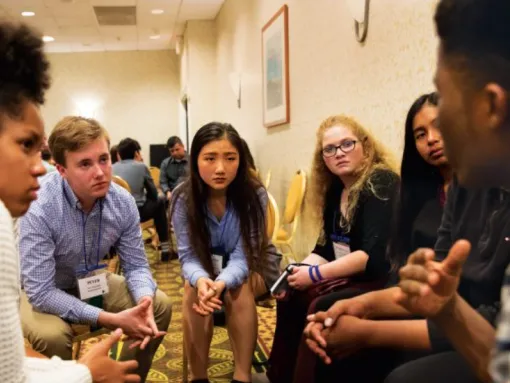
Teenage girl talks during group discussion of a diverse group of teens and adults
Civics Lesson GRADE LEVEL: High School What is My Role in Creating and Participating in a Brave Space for Myself and Others?Educators want a welcoming classroom where every student feels appreciated, supported and able to express their ideas. While creating a safe space has been the focus for a long time, we are now calling on educators and students to create “brave spaces.” These are spaces where everyone feels that they can contribute, that they will be heard and they…
January 28, 2021
Read more about Creating a Brave Space

Teaching Women's History in March and Beyond

Article
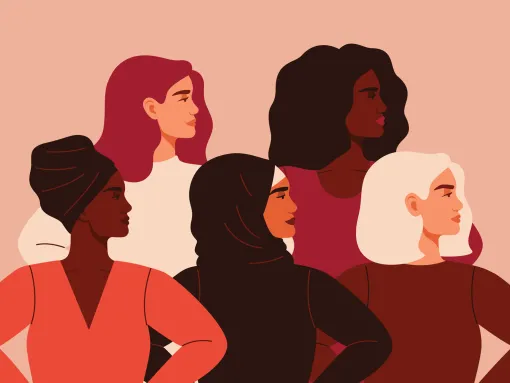
Five women of different nationalities illustration, standing together looking to the right
February 25, 2021 The idea of dedicating a month to Women’s History came about in 1981 when Congress requested the President proclaim a week in March as “Women’s History Week.” In 1986, the National Women’s History Project played a significant role in expanding the observance to the entire month of March. Women’s History Month recognizes and honors the historical and present-day achievements, milestones and experiences of women. Over time, other countries…
February 25, 2021
Read more about Teaching Women's History in March and Beyond

A Guide for Responding to School-Based Bias Incidents

Tools and Strategies
Teenage girl talks in group therapy session
Is your school experiencing a bias or hate incident?Whether it be a racist “joke,” slur, stereotype or some other form of implicit or explicit bias, school community members must be committed to addressing bias-related incidents in schools. Educators and school administrators play vital roles in creating an environment where all students can learn and thrive. Cultivating an equitable and inclusive school community requires ensuring that historically marginalized students are…
January 25, 2021
Read more about A Guide for Responding to School-Based Bias Incidents

The Dangers of Disinformation

Tools and Strategies
Protestor standing in front of U.S. Capitol holding sign that reads "Check Facts Before Posting"
Table Talk: Family Conversations about Current EventsOn Wednesday, January 6, 2021, Congress met in the U.S. Capitol to count electoral votes and certify the results of the 2020 Presidential election. This is a formality that takes place every four years under our country’s system for choosing its President and Vice President. While this took place, a violent mob of right-wing extremists and others, who came to Washington, D.C. (and several state capitals) to disrupt and overturn the…
January 11, 2021
Read more about The Dangers of Disinformation

Powers of Governments

Lesson Plan
Metal wheels interlocking with words written on them such as rules, policies
Civics Lesson GRADE LEVEL: High School Which Form of Government Has the Most Power? What are the Differences in Power Between Each Form of Government? Which Form of Government Has the Most Power to Address Equity and Social Justice Issues?   Aside from the separation of powers at the federal level, the U.S. Constitution also describes the power relationships between state and federal governments, how that power will be distributed, and the relationships between the…
October 29, 2020
Read more about Powers of Governments

Human Rights

Lesson Plan
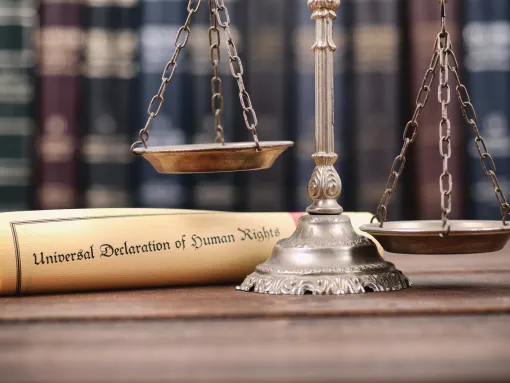
Scales of Justice, Universal declaration of human rights
Civics Lesson GRADE LEVEL: High School What are Human Rights? What is the Universal Declaration of Human Rights?   In 1946, in the immediate aftermath of World War II, with hopes of preventing future atrocities, an international committee with varied legal and cultural backgrounds began to draft the Universal Declaration of Human Rights (UDHR). The UDHR was proclaimed by the new United Nations General Assembly in 1948. This document contains 30 Articles that set a standard…
October 02, 2020
Read more about Human Rights

Empowering Young People in the Aftermath of Hate (In English and Español)

Tools and Strategies
Father Comforts Sad Child
What Educators and Family Members Can DoToday, local, national or international tragedies happen so frequently that they can feel almost commonplace. When a hate crime, mass shooting, act of terrorism or other terrible and hate-inspired event occurs, one of the first questions many people ask is, what should we tell the children? How can we explain to them what has happened? Despite our best efforts to protect youth from the details of hate-motivated events, we can never assume that they are…
May 03, 2022
Read more about Empowering Young People in the Aftermath of Hate (In English and Español)

33/6

Hate Symbol
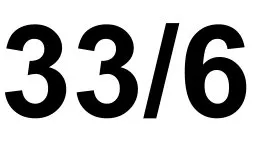
33/6
The number 33 is used by Ku Klux Klan adherents to signify the Ku Klux Klan. Since the 11th letter of the alphabet is K, three Ks signify "KKK" or the Ku Klux Klan. When using this reference, Klan members will frequently add the number 6 at the end, as in 33/6, because they think the Klan is currently in its sixth historical "era." Less commonly, some holdouts may still use the numeric code 33/5. Additional Images:
Read more about 33/6

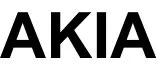
AKIA

Hate Symbol
AKIA
AKIA is Ku Klux Klan shorthand for "A Klansman I Am." It is related to another Klan acronym, AYAK ("Are You A Klansman?"). These are among the many acronyms developed by the Second Ku Klux Klan that emerged in 1915. Although the Second Ku Klux Klan did not survive, much of its terminology and many of its rituals did, and later Klan groups freely used them. Additional Images:
Read more about AKIA

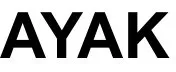
AYAK

Hate Symbol
AYAK
AYAK is Ku Klux Klan shorthand for "Are You A Klansman?" It is related to another Klan acronym, AKIA ("A Klansman I Am"). These are among the many acronyms developed by the Second Ku Klux Klan that emerged in 1915. Although the Second Ku Klux Klan did not survive, much of its terminology and many of its rituals did, and later Klan groups have freely used them. Additional Images:
Read more about AYAK

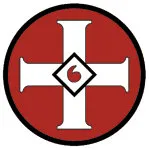
Blood Drop Cross

Hate Symbol
"Blood Drop" Cross
ALTERNATE NAMES: Ku Klux Klan, MIOAKGroup Status: Active (in that there are many active Ku Klux Klan groups) For the past century, the primary symbol related to Ku Klux Klan groups (other than Klan robes themselves) is what Klan members may call the MIOAK (an acronym for "Mystic Insignia of a Klansman"). It is more commonly referred to as the "Blood Drop" Cross. It appears as a square white cross in black outline against a circular red background. In the middle of the cross is what appears…
ALTERNATE NAMES: Ku Klux Klan, MIOAK
Read more about Blood Drop Cross

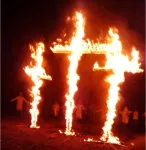
Burning Cross

Hate Symbol
Burning Cross
The image of the burning cross is one of the most potent hate symbols in the United States, popularized as a terror image by the Ku Klux Klan since the early 1900s. Cross-burnings (called "cross-lightings" by Ku Klux Klan groups, to make it seem as if they are not destroying a Christian cross) have long been used as a traditional symbol by Klan groups, used both in Klan rituals as well as in attempts to intimidate and terrorize victims of Klan groups. So widely associated with racial…
Read more about Burning Cross

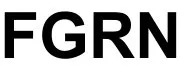
FGRN

Hate Symbol
FGRN
ALTERNATE NAMES: For God, Race and NationFGRN is a Ku Klux Klan acronym for "For God, Race and Nation," a common Klan slogan. It is one of a number of slogans, codes and rituals created by the Second Ku Klux Klan in the early 20th century. That Klan did not survive, but many of its codes and rituals were adopted by later Klan groups. In acronym form, the slogan is used primarily as a Klan identifier, typically appended at the end of on-line messages and postings. Additional Images:
ALTERNATE NAMES: For God, Race and Nation
Read more about FGRN

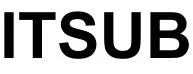
ITSUB

Hate Symbol
ITSUB
ITSUB is a Ku Klux Klan acronym for "In The Sacred Unfailing Being," a reference to God. It is one of many Klan acronyms created by the Second Ku Klux Klan that emerged in 1915. That Klan did not survive, but subsequent Ku Klux Klan groups continued many of its rituals and codes. Today, ITSUB has no real meaning or particular purpose and is typically used by Klan group members in on-line messages or posts solely as a way to identify themselves with the Ku Klux Klan. This has been the fate of a…
Read more about ITSUB

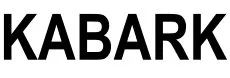
KABARK

Hate Symbol
KABARK
KABARK is a Ku Klux Klan acronym for "Konstantly Applied By All Regular Klansmen." It is one of many acronyms and codes developed by the Second Ku Klux Klan in the early 20th century. The Second Ku Klux Klan did not survive, but later Klan groups continued many of its codes and rituals. Today, KABARK is essentially meaningless and only used as a "sign off" in on-line messages by Klan group members, along with several other similar archaic acronyms. Additional Images:
Read more about KABARK

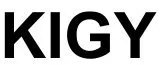
KIGY

Hate Symbol
KIGY
KIGY is Ku Klux Klan shorthand for "Klansman I Greet You." It is one of many acronyms developed by the Second Ku Klux Klan that emerged in 1915. Although the Second Ku Klux Klan did not survive, much of its terminology and many of its rituals did, and later Klan groups freely used them. Additional Images:
Read more about KIGY

KLASP

Hate Symbol
KLASP
KLASP is a Ku Klux Klan acronym for "Klannish Loyalty, A Sacred Principle." It is one of many Klan acronyms created by the Second Ku Klux Klan that emerged in 1915. That Klan did not survive, but subsequent Ku Klux Klan groups continued many of its rituals and codes. Today, KLASP has no real meaning or particular purpose and is typically used by Klan group members in on-line messages or posts solely as a way to identify themselves with the Ku Klux Klan. This has been the fate of a number of…
Read more about KLASP

Pagination

  • Previous page ‹ Previous
  • First page 1
  • …

  • Page 5
  • Current page 6
  • Page 7
  • Page 8
  • …

  • Last page 16
  • Next page Next ›
ADL Logo

Anti-Defamation League


P.O. Box 4495


New York, NY 10163


(212) 885.7700

Footer

  • Financials
  • Contact
  • Newsletter Signup
  • Privacy Policy
  • Terms of Service
  • ADL en Español
  • Events
  • Research & Analysis
  • Find Ways to Give
  • Press Center

Footer Social Links

  • Twitter
  • Facebook
  • LinkedIn
  • Instagram
  • Youtube
  • TikTok

© 2026 Anti-Defamation League. All Rights Reserved.