


December 07, 2017 Updated: December 18, 2017 Editor's Note: Christian Picciolini and ADL's work battling extremism was featured on Sunday, Dec. 17 on 60 Minutes on CBS. As the one-time leader of one of the most infamous white supremacist groups in America, Christian Picciolini was once so immersed in the hate movement that his name appeared prominently in an ADL report on neo-Nazi activity in Illinois. Picciolini had swastika and racist tattoos on his arms and led a small empire…
322 Results
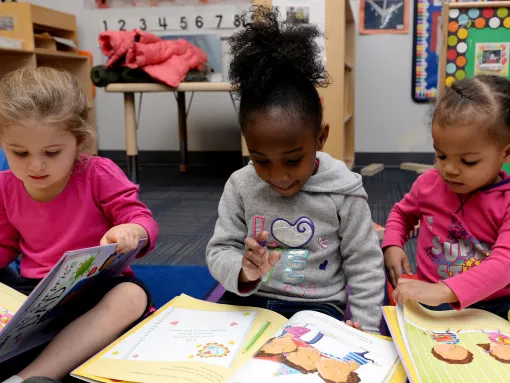
For parents, families and young people Topic SummaryIn recent years, there has been a lot of attention paid to the diversity of children’s books, shining a light on the lack of diversity and amplifying the need for more children’s and young adult literature that reflects our multicultural society. In 2014, an organization named We Need Diverse Books formed, following a regularly trending hashtag with the same name (#WeNeedDiverseBooks) that helped bring attention to the issue. We…
Teach students about the importance of diverse literature and engage them in a study on the diversity of books in their classroom or school library.
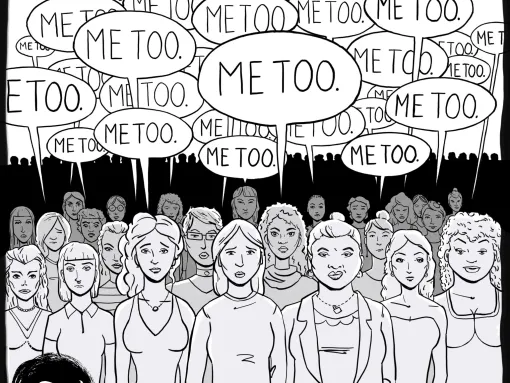
Talk to your family about issues of sexual harassment in the news in the past and currently.
October 03, 2017 In August 2016, then-NFL San Francisco 49ers quarterback Colin Kaepernick decided to take a stand about racial injustice by refusing to stand for the National Anthem at football games. He spent much of the season either sitting or kneeling during the anthem. Fast forward to the 2017 football season where the controversy emerged again when on a Sunday in September, more than 200 NFL players took a knee during the Anthem.
This recent controversy over NFL players and…

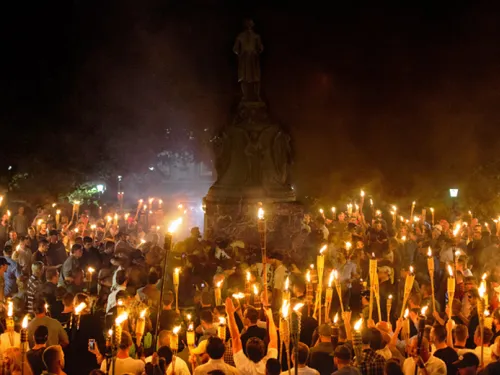
August 29, 2017 Adults and children alike are grappling to make sense of current events. Discussions of racism, anti-Semitism and social injustice have become increasingly contentious as images of white supremacists carrying torches and chanting hateful rhetoric in Charlottesville fill our social media feeds and television screens. Children are attuned to these conversations and disturbing images of violence, hate and incivility, and are seeking comfort and answers from teachers, family…

August 29, 2017 In response to the recent events in Charlottesville, Facing History and Ourselves, Teaching Tolerance, the Anti-Defamation League, the American Federation of Teachers, and EduColor teamed up to support educators as they return to the classroom. Hosted and led by AFT, we asked educators what topics they were most concerned about and addressed them in a co-hosted webinar, “When Hate Is in the Headlines: Resources for K–12 Educators.” Together, we offered…

August 13, 2017 Racial hatred, bias and white supremacy were on full display in Charlottesville, Virginia this weekend.
In the largest and most violent gathering of white supremacists in decades, “Unite the Right” brought together white supremacist groups including the alt-right, neo-Nazis and the Ku Klux Klan. Their stated goal was to save the statue of Confederate General Robert E. Lee, because like other places in the South, there are still monuments there celebrating heroes…
For Educators | For Parents, Families, and Caregivers As part of our ongoing efforts to provide current, relevant and quality educational resources in various formats, ADL offers a free podcast series that you can listen to at your convenience. Each podcast offers a rich and inspiring conversation with a specialist in the field or children's book author. The podcasts assist educators in building inclusive and respectful classrooms and provide timely and important information on curricula…

For Educators | For Parents, Families, and Caregivers Rosh Hashanah and Yom Kippur, the High Holidays, are celebrated by Jewish people all over the world. The High Holidays fall on different days each year. For the specific dates each year, check our Calendar of Observances. These and other Jewish holidays fall on different days in our calendar because they follow the Jewish calendar, which has a different number of days than our calendar. The Jewish calendar is a Soli-lunar calendar. …
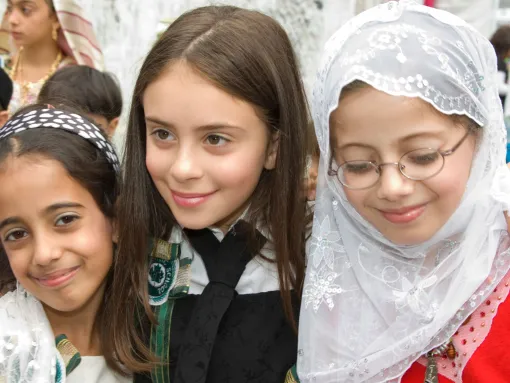
There are 1.8 billion Muslim people worldwide and an estimated 3.45 million Muslims living in the United States. Islam is currently the second largest religion in the world next to Christianity. Despite the fact that there are so many Muslims in the world, in many places there is a lack of understanding about Muslim people and Islam. In addition, the increase in anti-Muslim rhetoric and the unfortunate conflation of terrorism with Muslim people contributes to biased attitudes and…

Table Talk: Family Conversations About Current EventsBullying is a phrase we hear regularly and often: in the media, on TV shows and movies, in schools and in conversations among both adults and children. Parents, students and schools are rightfully worried about bullying. It is a problem and cause for concern but may not be as widespread as many think because the term “bullying” is often used as an umbrella to describe all kinds of mean behavior—from a rude comment to a…
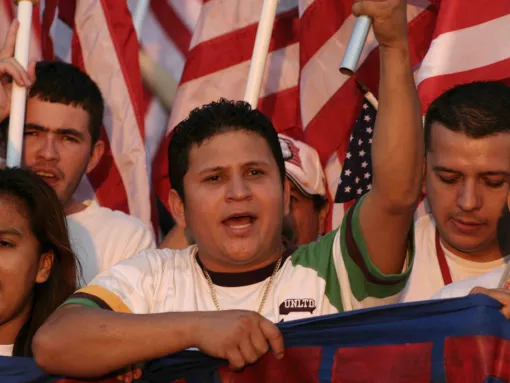
April 04, 2017 The past two years have been challenging for certain groups of people, especially those targeted during the 2016 presidential election campaign with taunts, verbal attacks, name-calling and threats. Now that the election is over, those threats have resulted in proposed policy, legislation and executive orders affecting those very same people. This has left many—especially immigrants and Muslim people—feeling fearful, on edge, marginalized and worried about their…
Early Childhood Question Corner For Educators | For Parents, Families, and Caregivers In Anti-Bias Curriculum, Louise Derman-Sparks (1989, 6), an educator and specialist on child development, explains that many adults assume that young children do not notice color and other differences among people; she claims that children actually do notice and show curiosity about differences. Further, Derman-Sparks asserts that adults need to avoid only talking about similarities among people because while…
Early Childhood Question Corner For Educators | For Parents, Families, and Caregivers Children’s literature can be an effective tool for addressing the growing concerns about physical, verbal, and relational bullying in schools. Though bullying has been traditionally dismissed by some as “just a part of growing up,” most educators today understand that it is a pervasive problem with harmful and damaging effects on all members of the school community. The use of literature to…
Early Childhood Question Corner
For Educators | For Parents, Families, and Caregivers Research shows that bullying can begin in preschool and that adults play an important role in prevention and intervention (Barker, 2008). Bullying is the repeated actions or threats by a person or persons who are perceived to have more power or status than the targeted individuals, with the intent to cause fear, distress or harm. Bullying occurs in various forms among young children including hitting or…
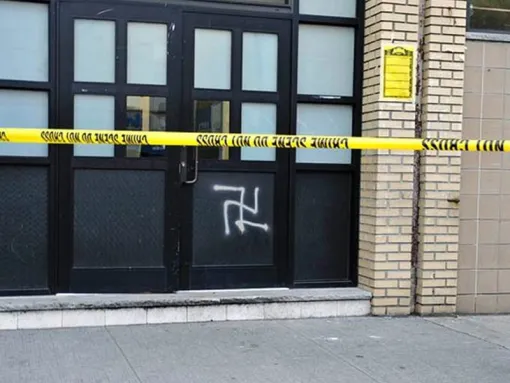
Table Talk: Family Conversations About Current Events For Parents, Families, and Caregivers | 13 and upTopic Summary We see symbols every day in all aspects of our lives. Symbols are used to convey ideas, qualities, emotions, material objects/products, opinions and beliefs. Unfortunately, symbols are also used to convey hate and bias. Lately, we have seen a lot of hate symbol graffiti in public spaces and specifically the swastika, which in most circumstances is understood as an expression…
GRADE LEVEL: High School
COMMON CORE STANDARDS: Reading, Writing, Language We see symbols every day in all aspects of our lives. Symbols are used to convey ideas, qualities, emotions, material objects/products, opinions and beliefs. Unfortunately, symbols are also used to convey hate and bias. Lately, we have seen a lot of hate symbol graffiti in public spaces and specifically the swastika, which in most circumstances is understood as an expression of antisemitism. There has reportedly…
For Educators Public schools may not teach religion, although teaching about religion in a secular context is permitted.1 The Bible may be taught in a school, but only for its historical, cultural or literary value and never in a devotional, celebratory or doctrinal manner, or in such a way that encourages acceptance of the Bible as a religious document.2
SPECIFIC ISSUES & QUESTIONS
What distinguishes "teaching religion" from "teaching about religion"?
Religion may be presented…
Building Respectful School Climates: Empowering Students to Combat Bullying For Educators Examine how the medium of visual history testimony plays an important role in Holocaust education through an exploration of video clips from Echoes and Reflections and IWitness.
Deborah Batiste, ADL and Brandon Haas, USC Shoah Foundation