When Hate Goes Viral: Bias and Antisemitism on Social Media
Tools and Strategies
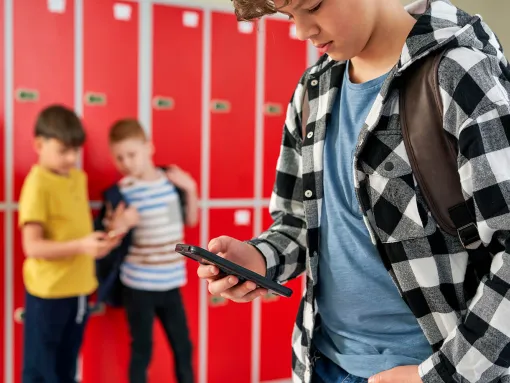
It’s critical that parents, caregivers and educators learn more about social media and how to support young people in their understanding of its power and limitations.
They were ordinary people who lived extraordinary lives – or extraordinary people who put their lives on the line to protect the health and welfare of everyone.
In what has become an annual tradition, as the year comes to a close ADL pauses each December to take stock of the moments and people who shaped the last 12 months – for better, or for worse – with a Top 10 list.
For 2020, we compiled two Top 10 lists: One looking back on the moments of hurt and hate that…
In November 1999, an independent external panel was formulated to offer critique of the ADL’s A WORLD OF DIFFERENCE® Institute Anti-Bias Study Guide (Secondary Level). This panel was comprised of secondary level teachers and college-level professors representing California State University at Long Beach, University of California at Berkeley, New York University, Columbia University Teachers’ College, Manassas, Virginia and Philadelphia, Pennsylvania School Districts. Panelists…
Names Can Really Hurt Us Assembly Program Findings
Report
For Educators
A 2000 survey conducted by the Anti-Defamation League found that participation in the A WORLD OF DIFFERENCE Institute's Names Can Really Hurt Us Assembly Program allows students open, honest and relevant exploration about diversity and bias in their school communities. More than 600 students and staff from two Southern California High Schools participated in the study.
Evaluations findings that as a result of participation:
47% of students perceived one or more…
Artificial Intelligence: What do Parents, Caregivers and Educators Need to Know?
Tools and Strategies
Related ContentBackground Young people are using AI (artificial intelligence) tools every day for homework, curiosity, creativity, and social interaction. While we don’t have exact statistics on daily AI usage yet, recent Pew Research Center findings suggest that AI use begins to rise sharply by early adolescence, with widespread use among teens ages 13–17. While many see AI as a useful and credible source of information, it needs to be utilized critically and thoughtfully,…
Educators should select narratives for their classroom with thought and care—ensuring that history and fact are presented accurately and with as much balance as possible.
Publicly available maps can be inaccurate or misleading; when used as teaching aids, such biased maps can create a distorted sense of events. For this reason, educators should take care when choosing whether and how to use publicly available maps for instructional purposes, especially when covering complex and ongoing topics.
Decode & Disrupt: A Toolkit to Recognizing and Combating Problematic Messages
Tools and Strategies
In recent years, the education landscape has changed dramatically. With the rise of AI platforms like ChatGPT and resource sharing hubs like Teachers Pay Teachers, there are many organizations and resources that claim to offer quality material—often at no cost. The rise of these platforms coincides with a change in trends for educators. According to a report from Education Week, the average teacher uses five supplemental resources and two core curricula sources. The report goes on…
Back to School is a busy time for all. Explore our resources for both educators and families to support creating classrooms where all students can thrive.
National heritage and celebration months are excellent opportunities to explore, celebrate and educate about the many cultures and peoples of the United States.
Championing Change: How Parents and Families Can Address Antisemitism in Schools
Tools and Strategies
This resource assists parents, families and caregivers when an antisemitic incident happens at school. It includes tools and guidance to support the young person and to help make the school safer and more inclusive for Jewish and all children.
ADL is addressing antisemitism through advocacy and education to help Jewish students, teachers and allies feel safe in the classroom. Explore the toolkits now!