


New York, NY, January 11, 2016 … The Anti-Defamation League (ADL) today reiterated its concern over draft Israeli legislation that would require those Israeli non-governmental organizations that receive more than half of their funding from “foreign political entities,” to declare and detail the funding each time they issue a report or meet with a public official. “The strength of Israeli society internally, as well as its international position, has been its bedrock…
352 Results
New York, NY, January 5, 2016 … The Anti-Defamation League (ADL) today welcomed a Department of Education (DoE) letter sent to school districts and colleges and universities across the country which reminded them of their obligations to prohibit discrimination based on actual or perceived race, religion, or national origin.
The “Dear Colleague” letter calls for schools to ensure safe spaces for students especially “at risk” during these times – including…
New York, NY, December 22, 2015 … The Anti-Defamation League (ADL) today expressed disappointment with the Greek Parliament’s approval of a resolution calling on the Greek government to recognize a Palestinian State. On Tuesday, the parliament, with Palestinian President Mahmoud Abbas in attendance, voted on a nonbinding resolution urging the government to “promote appropriate procedures for the recognition of a Palestinian state and every diplomatic effort for the…
New York, NY, December 16, 2015 … The Anti-Defamation League (ADL) was deeply disturbed by a video produced by the Israel-based organization Im Tirtzu, which labels leading Israeli human rights activists as “foreign moles” operated by foreign governments. Im Tirtzu is employing fear tactics to suppress left-leaning Israeli NGOs, the League maintained, and it labeled the video “a form of incitement which crosses the line into hate speech.”
Titled &ldquo…
November 01, 2015 For many years, a consensus existed in the organized American Jewish community that we should support the democratically-elected government of Israel, whether Labor or Likud, on a non-partisan basis, particularly on matters of Israeli security. The logic was twofold: Moral – Israelis put their lives on the line every day in a dangerous neighborhood and we, sitting in the comfort of America, should respect Israel’s democratic process regarding the safety and…
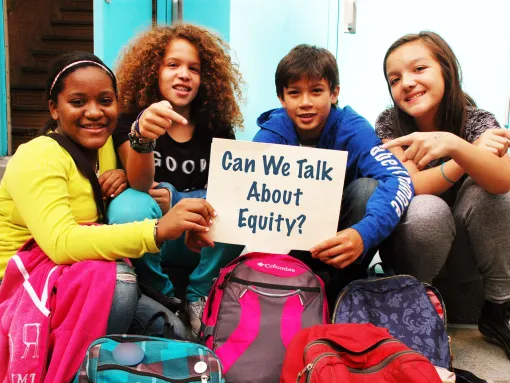
October 28, 2015 We live in an increasingly pluralistic, multicultural and connected world. In order to prepare students to live, learn and eventually work successfully in society, we need to prepare them. Diversity in the United States is rapidly increasing, especially among young people entering our school system. 2014 was the first school year when more children of color were enrolled in U.S. public schools than white children. However, the diversity of our teaching force is…
February 14, 1896
Publication of Theodor Herzl's treatise "The Jewish State"
August 29, 1897
Opening of the First Zionist Congress at Basel, Switzerland
November 2, 1917
Issuing of Boycott (on the Jewish community of Palestine)
July 22, 1946
Irgun bombs King David Hotel
February 14, 1947
Britain gives UN responsibility for Palestine
November 29, 1947
UN Partition Plan approved (Resolution 181)
May 14, 1948
Declaration of the State of Israel
…
Advocating to Elected Officials
Advocating to the Media
Advocating on Campus
Most Americans’ perceptions of the Middle East conflict come from the mass media. Some media – especially large-circulation daily newspapers, network television and wire services – have correspondents based in Israel and continue to devote considerable attention to the Mideast. This is not surprising considering the intensive U.S.involvement in the peace process, America’s substantial interests in the region, and the continuing strong ties between the U…
Flag
The colors blue and white were chosen according to the colors of the ‘Tallit’ – the Jewish prayer shawl. The Star of David appearing in the center of the flag has been a Jewish symbol for hundreds of years.
State Emblem
The official emblem of the State of Israel is the Menorah – a candelabrum, whose shape is derived from the sage plant (Moria). In certain species of the plant, the leaves branch out in a way that resembles the candelabrum that stood in the…
Early Childhood Question Corner For Educators | For Parents, Families, and Caregivers Although children are not born with prejudice, by early childhood they have already acquired stereotypes or negative attitudes toward those that they perceive as “others.” An article in The Buffalo News reports that about 85 percent of the brain develops between ages 3 and 5, and that impressions and ideas formed between ages 2 and 4 are lasting (Lessons in Respect, 2003). Researchers tracking the…

Engage students in exploring the topic bullying in the U.S., using children's literature as a foundation for discussion.
Early Childhood Question Corner For Educators | For Parents, Families, and Caregivers Children’s outdoor play offers many opportunities to teach and reinforce anti-bias behavior. To get you started, incorporate some of the below tips excerpted from Bias-Free Foundations: Early Childhood Activities for Educators (2005, 28): Take advantage of these opportunities by helping children to learn skills such as taking turns, sharing toys and inviting new children to play. For example,…

Engage students in understanding and exploring cyberbullying and the issues raised by online bullying.

GRADE LEVEL: Elementary School, Middle School COMMON CORE STANDARDS: Writing, Speaking & Listening SEL STANDARDS*: Self Awareness, Self-Management, Social Awareness, Relationship Skills, Responsible Decision-Making Bullying is a major problem in our schools. When it targets aspects of a person’s identity, it is called identity-based bullying, and may include bias about appearance, race, culture, gender and gender expression, language, religion, socioeconomic status,…
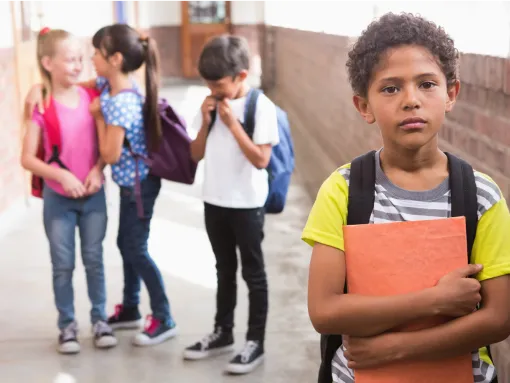
October is National Bullying Prevention Month
National Bullying Prevention Month is an opportunity to reflect on the classroom and school culture and assess the extent to which bullying is part of that culture. It is a time to examine best practices when it comes to creating respectful school environments that foster inclusion and respect. The large body of research on effective responses to name-calling and bullying concurs that schools and other educational institutions can best…
by: Oren Segal July 29, 2014 If you have been reviewing any number of parenting or education blogs lately, you’ll see headlines proclaiming the menace and dangers of technology. Technology, and more specifically, social media and mobile apps are often treated like “monsters” to guard against and the creators of all matter of social ills. Even if technology is scary and daunting to some adults, for youth it is a necessary and positive part of life. In…
by: Mark Onofrio March 17, 2014 A teacher raises his hand in A World of Difference® Institute training and says, "I like to kid around with my students." He says, "I like to have fun in my class so they are more likely to come to me when they need help."
He calls one student his “favorite Mexican,” another student “Dopey” and the only African-American student “MLK” (short for Martin Luther King Jr.) This well-intentioned…

For Educators In many of ADL’s lesson plans and activities, students are challenged to explore and articulate their personal feelings about sensitive topics including segregation, discrimination, and the value of diverse school communities. Talking about themes related to diversity requires that students demonstrate maturity and compassion for others. In conjunction with social justice curricula, it is therefore recommended that teachers use service learning, conflict resolution,…
January 21, 2014
The phrase "that’s so gay" has persisted as a way for students to describe things they do not like, find annoying or generally want to put down, while it is promising that fewer students are hearing homophobic slurs than in previous years.
The phrase is used so commonly that many students no longer recognize it as homophobic because it is “what everyone says.” When educators and other adults intervene, common student responses include “I was just…