






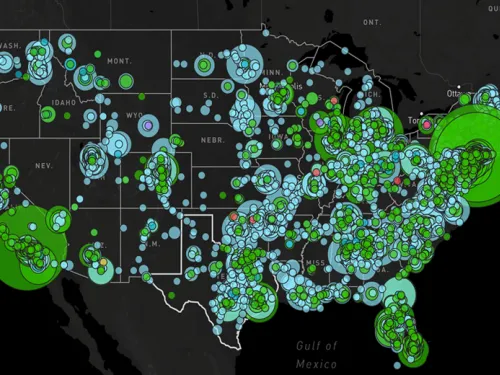

This new annual report from ADL & GLAAD documents extremist and non-extremist incidents of anti-LGBTQ+ hate in the United States.
6 Results

They were ordinary people who lived extraordinary lives – or extraordinary people who put their lives on the line to protect the health and welfare of everyone.
In what has become an annual tradition, as the year comes to a close ADL pauses each December to take stock of the moments and people who shaped the last 12 months – for better, or for worse – with a Top 10 list.
For 2020, we compiled two Top 10 lists: One looking back on the moments of hurt and hate that…

By
Mark Kumleben and Samuel Woolley
Propaganda Research Team
Center for Media Engagement
University of Texas at Austin
Maggie Engler
Global Disinformation Index Much of online speech today occurs on social media platforms like Facebook where a few companies have attained an outsized influence on what is permitted discussion on the internet. The rules and enforcement of the rules around speech on social platforms have far-reaching societal implications -- they can determine…
The following report is an analysis of computational propaganda, the Jewish American community, and the 2018 elections. As part of the wider paper series focused on “humanizing the effects of computational propaganda” this empirical work details the ways in which the Jewish socio-religious population in the U.S. is being disproportionately targeted with disinformation and abuse during this crucial political moment.

Misogyny is a dangerous and underestimated component of extremism, and it shares alarming common ground with white supremacist ideology.
For Educators
A 2000 survey conducted by the Anti-Defamation League found that participation in the A WORLD OF DIFFERENCE Institute's Names Can Really Hurt Us Assembly Program allows students open, honest and relevant exploration about diversity and bias in their school communities. More than 600 students and staff from two Southern California High Schools participated in the study.
Evaluations findings that as a result of participation:
47% of students perceived one or more…