




Early Childhood Question Corner For Educators | For Parents, Families, and Caregivers Many adults think that talking with children about our differences teaches prejudice. In Anti-Bias Curriculum, Louise Derman-Sparks (1989) debunks that myth and writes that talking about differences does not increase prejudice in children. Whether or not adults discuss differences with children, all children begin to notice differences among people as part of their natural development. It is the messages…
1258 Results
Early Childhood Question Corner For Educators | For Parents, Families, and Caregivers Although children are not born with prejudice, by early childhood they have already acquired stereotypes or negative attitudes toward those that they perceive as “others.” An article in The Buffalo News reports that about 85 percent of the brain develops between ages 3 and 5, and that impressions and ideas formed between ages 2 and 4 are lasting (Lessons in Respect, 2003). Researchers tracking the…
by: Oren Segal April 24, 2015
On Thursday, the White House announced that Adam Gadahn, an American spokesman for Al Qaeda, was killed in a January drone strike. Although less visible in recent years, Gadahn was at the forefront of creating English-language terrorist propaganda – an initiative that has evolved into a sophisticated recruitment and radicalization mechanism.
Gadahn’s death comes as English-language propaganda released by terrorist organizations is…

Early Childhood Question Corner
Common themes appear in holidays and celebrations across many cultures. By connecting themes, as suggested in the Question Corner installment "How can I plan inclusive holiday celebrations?" you can show children that holidays and celebrations are an expression of cultural and religious pride, and help them understand the commonality of certain human feelings, celebrations and their meaning. For example, by trying the following activity, Looking…
by: Naomi Mazin April 01, 2015
This week, the world lost a true hero. Dr. Leon Bass, who turned his personal and life-altering experiences with racism and anti-Semitism into opportunities to educate, inspire action in others and bear, in word, deed and character, the mandate of “Never Again,” died on Saturday, March 28th at the age of 90. ADL joins the world in mourning his loss.
As a young man, Leon Bass grew up in a country divided by racial prejudice. He often shared…
by: Lorraine Array March 23, 2015
Recent incidents around the world remind us of the power of hate and vitriol to permeate our religious, cultural and national borders. ISIS continues to expand its alliances and fear-mongering tactics. The world is in many ways paralyzed to see a way forward, and the need for solutions capable of building bridges of understanding and respect has never been greater.
In this spirit, in early 2013, the Anti-Defamation League's (ADL) Connecticut Office…
by: Jinnie Array March 16, 2015
Last week, disturbing video emerged of fraternity brothers from the Sigma Alpha Epsilon (SAE) chapter at the University of Oklahoma laughing while singing a racist chant: “There will never be a ni**** SAE. You can hang him from a tree, but he can never sign with me. There will never be a ni**** SAE.”
The news comes on the heels of the recent findings from a Department of Justice investigation in Ferguson, MO which, among other things,…
Early Childhood Question Corner For Educators | For Parents, Families, and Caregivers In Teacher they called me a ____!, Dr. Debra A. Byrnes defines prejudice as preconceived ideas about people “perceived as being different, due to race, religion, culture, gender, disabilities, appearance, language, sexual orientation, or social status” (1995, 3). She explains that a large body of research (Brown,1972; Byrnes & Kiger, 1992; Milner, 1975; Williams & Orland, 1976)…
Early Childhood Question Corner For Educators | For Parents, Families, and Caregivers Children’s outdoor play offers many opportunities to teach and reinforce anti-bias behavior. To get you started, incorporate some of the below tips excerpted from Bias-Free Foundations: Early Childhood Activities for Educators (2005, 28): Take advantage of these opportunities by helping children to learn skills such as taking turns, sharing toys and inviting new children to play. For example,…
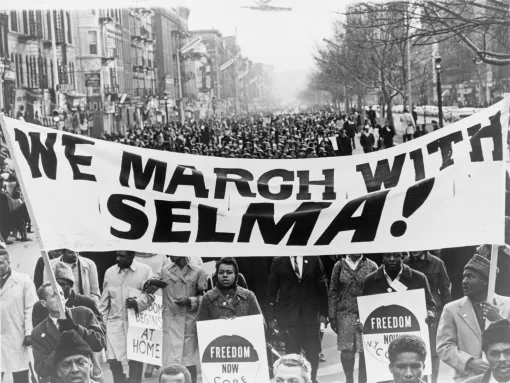
March 02, 2015 What do you know about the events in Selma, Alabama in the 1960’s? What part of that history speaks to you?
This year marks the 50th anniversary of the march from Selma to Montgomery, Alabama. In the history books, we know this as Bloody Sunday, where 600 peaceful protestors were met with brutality. As events unfolded, the media captured photos and film of what would later become the impetus for thousands to become a part of the movement. Dr. King and his followers…
by: Oren Segal February 25, 2015
Missouri has had long experience with white supremacists ranging from neo-Nazis to the Ku Klux Klan, but in recent years a new threat has emerged in the Show Me state: white supremacist prison gangs. Some states have been plagued by such gangs for years, but until recently, Missouri had only a limited experience with them.
Now, however, there are a number of white supremacist gangs active in Missouri, typically emerging in prisons and…
by: Lorraine Array January 22, 2015 "After Auschwitz, the human condition is not the same, nothing will be the same."
- Elie Wiesel
January 27th marks the 70th anniversary of the liberation of Auschwitz Birkenau Concentration Camp by the Russian army at the end of World War II. For those who were able to survive the horrors of Auschwitz, finally hearing the words “We’re free! We’re free!” echoing across the camp barracks must have seemed…
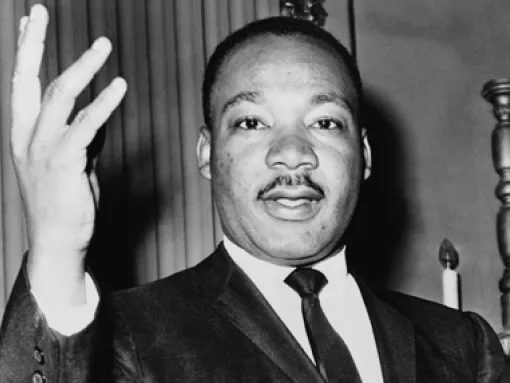
Martin Luther King, Jr. Day is Monday, January 16, and many educators will take the opportunity to teach about King and his enormous contributions to our society. As educators, how we approach the teaching of this holiday makes an impact on how students understand the larger context of the Civil Rights Movement and whether they make a connection between the past struggles to the current day and their own lives. Here are some thoughts about teaching the topic in a meaningful way…
by: Oren Segal December 17, 2014 Malala. Ferguson. Immigration. Ebola. Voter ID Laws. Climate Change. These are just a few of the topics teachers are regularly and actively bringing into their classrooms.
Whether they teach English, Social Studies, Advisory or another subject and whether they have five minutes or decide to do a week- long study, teachers know that topics in the news will engage and interest students in a deep and meaningful way. Research…
by: Oren Segal December 05, 2014 In the wake of two grand jury decisions—in Ferguson, MO and Staten Island, NY—not to indict the police officers who were involved in the killing of black men, the time has come to ask ourselves: Where do we go from here? There are a myriad of ideas and legislation on the table--diversity training for the police, funding to provide body cameras for police officers and legislation to tighten standards on military-style equipment for local police…
Early Childhood Question Corner For Educators | For Parents, Families, and Caregivers The early childhood program environment should look and feel welcoming for all children and should reflect the diverse world in which we live. In addition to being bright, colorful, safe and clean, it should include children’s artwork and show the diversity of the world through the program’s abundant supply of age-appropriate toys, dolls, books, magazines , pictures and musical instruments…
For Educators | For Parents, Families, and Caregivers Winter is a festive time of year because so many holidays are celebrated by people from different religions, cultures and races. We spend time with family and friends, connect with our faith or culture, give and receive gifts and enjoy special foods and treats. However, this time of year—especially in schools and whether it's in-person, online or hybrid—can be a time where some children can feel uncomfortable, excluded, insulted…

October is National Bullying Prevention Month
National Bullying Prevention Month is an opportunity to reflect on the classroom and school culture and assess the extent to which bullying is part of that culture. It is a time to examine best practices when it comes to creating respectful school environments that foster inclusion and respect. The large body of research on effective responses to name-calling and bullying concurs that schools and other educational institutions can best…
by: Oren Segal July 29, 2014 If you have been reviewing any number of parenting or education blogs lately, you’ll see headlines proclaiming the menace and dangers of technology. Technology, and more specifically, social media and mobile apps are often treated like “monsters” to guard against and the creators of all matter of social ills. Even if technology is scary and daunting to some adults, for youth it is a necessary and positive part of life. In…

Teach and commemorate the culture, traditions and history of Asian American and Pacific Islander people in the United States in school, communities and at home.