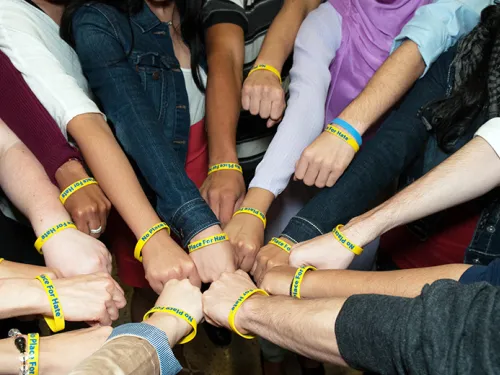

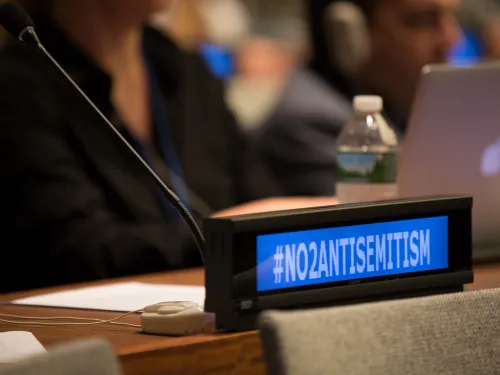
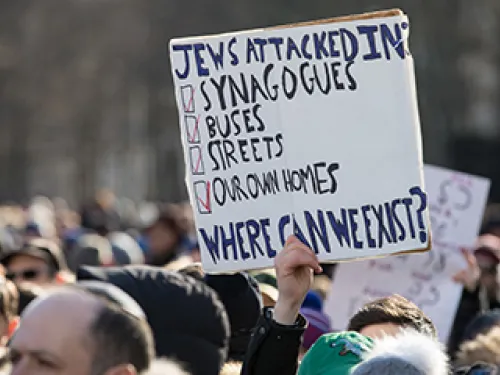
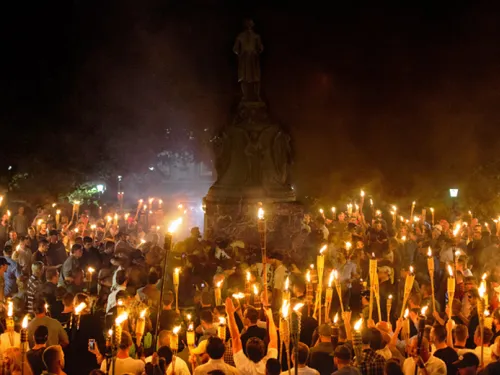



The Pyramid of Hate illustrates the prevalence of bias, hate and oppression in our society. It is organized in escalating levels of attitudes and behavior that grow in complexity from bottom to top. Like a pyramid, the upper levels are supported by the lower levels; unlike a pyramid, the levels are not built consecutively or to demonstrate a ranking of each level. Bias at each level reflects a system of oppression that negatively impacts individuals, institutions and society…
181 Results

November is Native American Heritage Month, which was first declared by President George H.W. Bush in 1990. The month provides an opportunity to commemorate the rich and diverse cultures, traditions and histories and acknowledge the important contributions of Native American/Indigenous people. It is also an important time to educate the general public, as well as young people in schools, about the bias, discrimination and unique challenges faced by Native American/Indigenous people…

Table Talk: Family Conversations about Current Events For Parents, Families, and Caregivers Topic SummaryIt seems like we are seeing more and more news and social media stories about people experiencing bias as they go about their daily lives—riding the subway, shopping in a store, dining in a restaurant and hanging out with friends. Indeed, the surge of such stories makes it seem like racism, sexism, antisemitism and other forms of bias and discrimination are becoming more pervasive…
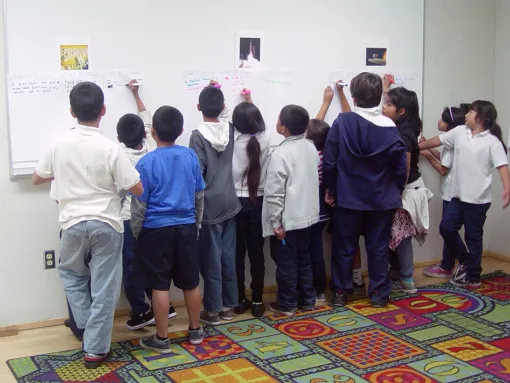
Table Talk: Family Conversations about Current Events For Parents, Families, and Caregivers Topic SummaryIn 1983, a social scientist named David Chambers published a research study on children’s drawings. The study gathered information from the late 1960s and 1970s in which teachers asked 5,000 children (in three different countries) to “draw a scientist.” One pattern appeared strongly: almost all of the scientist drawings depicted men. Through the study, Chambers was able to…
Unheard Voices: Stories of LGBT History For Educators ADL, GLSEN and StoryCorps collaborated to create Unheard Voices, an oral history and curriculum project that will help educators to integrate LGBT history, people and issues into their instructional programs.
David Barr has worked as an AIDs activist for over 25 years. At Storycorps, David talked about how the disease changed the gay community in New York City during the early 1980s, and what it was like to fight a disease that…
For Educators Educators sometimes aim to use simulations or role plays when teaching about historical atrocities in order to engage students more deeply, build empathy and teach the topic in an interactive way.
We frequently hear news stories about a classroom lesson that set out to try to help build empathy for the victims of the Holocaust by having students role play situations of either being “persecuted” or “privileged.” We also hear about teachers who have…
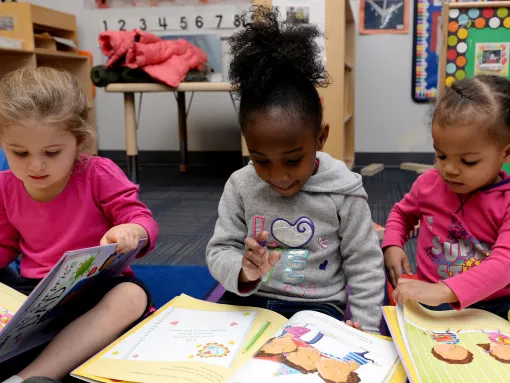
For parents, families and young people Topic SummaryIn recent years, there has been a lot of attention paid to the diversity of children’s books, shining a light on the lack of diversity and amplifying the need for more children’s and young adult literature that reflects our multicultural society. In 2014, an organization named We Need Diverse Books formed, following a regularly trending hashtag with the same name (#WeNeedDiverseBooks) that helped bring attention to the issue. We…
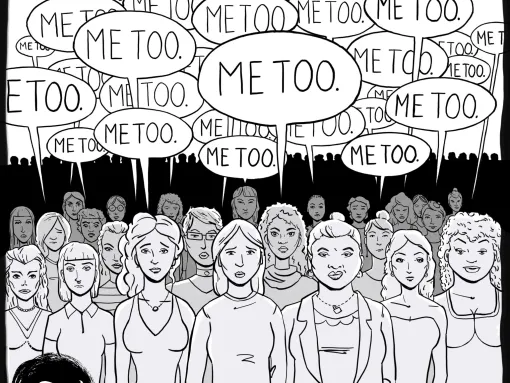
Talk to your family about issues of sexual harassment in the news in the past and currently.
Barbados
St. Michael – March 17, 2017 – Anti-Semitic message were spray painted on the exterior walls of the Nidhe Israel Synagogue.
Brazil
Rio de Janeiro – June 11, 2017 – A swastika was drawn inside a Star of David sign outside the entrance of Clube Israelita Brasileiro, a Jewish community building.
Porto Alegre – March 25, 2017 – A Jewish school was painted with the words “Israel genocide state” and “Free Palestine…
In the 1930s, the dean of Yale University’s medical school — who was Jewish himself — reportedly advised his admissions team, “Never admit more than five Jews, take only two Italian Catholics, and take no blacks at all.”
The American college campus has come a long way in the past century. Colleges are more diverse, and there are greater efforts to create inclusive environments whereby all students feel comfortable on campus. But that does not mean you…
What is the source of our free speech rights? Free speech rights emanate from the First Amendment to the U.S. Constitution[1] and from state constitutions. The U.S. Constitution limits the government’s ability to regulate speech based on content and it applies to all public colleges and universities. It serves as a floor, not a ceiling. State constitutions may grant more robust free speech rights than the U.S. Constitution, but never fewer. Is there a distinction between private and…
For Educators | For Parents, Families, and Caregivers As part of our ongoing efforts to provide current, relevant and quality educational resources in various formats, ADL offers a free podcast series that you can listen to at your convenience. Each podcast offers a rich and inspiring conversation with a specialist in the field or children's book author. The podcasts assist educators in building inclusive and respectful classrooms and provide timely and important information on curricula…

For Educators | For Parents, Families, and Caregivers Rosh Hashanah and Yom Kippur, the High Holidays, are celebrated by Jewish people all over the world. The High Holidays fall on different days each year. For the specific dates each year, check our Calendar of Observances. These and other Jewish holidays fall on different days in our calendar because they follow the Jewish calendar, which has a different number of days than our calendar. The Jewish calendar is a Soli-lunar calendar. …
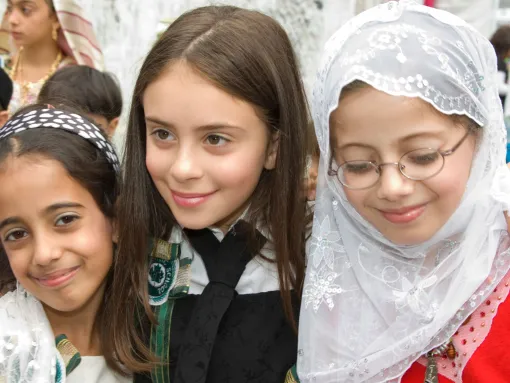
There are 1.8 billion Muslim people worldwide and an estimated 3.45 million Muslims living in the United States. Islam is currently the second largest religion in the world next to Christianity. Despite the fact that there are so many Muslims in the world, in many places there is a lack of understanding about Muslim people and Islam. In addition, the increase in anti-Muslim rhetoric and the unfortunate conflation of terrorism with Muslim people contributes to biased attitudes and…
Following the end of the Six Day War there was great debate within Israel about what to do with the territories gained during the war, which included East Jerusalem, the West Bank, Gaza Strip, the Sinai Peninsula and the Golan Heights.
Some in Israel advocated an immediate withdrawal from the territories. Others supported a withdrawal only in exchange for peace with the surrounding Arab countries. And some, euphoric over the reunification of Jerusalem and control over Judaism’s…
Israel preemptively attacked Egypt on June 5, 1967. After a month of increasing regional tensions escalated by Egypt (spurred on by the Soviets) and failed diplomatic efforts to calm the situation, Israel’s leaders believed they had no choice but to strike first. Within hours, Jordan and Syrian forces attacked Israelis forces.
In May 1967, events in the region led Israel to expect that an Arab attack was imminent. Egyptian President Gamal Abdel Nasser had ordered a withdrawal of the…

Table Talk: Family Conversations About Current EventsBullying is a phrase we hear regularly and often: in the media, on TV shows and movies, in schools and in conversations among both adults and children. Parents, students and schools are rightfully worried about bullying. It is a problem and cause for concern but may not be as widespread as many think because the term “bullying” is often used as an umbrella to describe all kinds of mean behavior—from a rude comment to a…

Rosalind's Classroom Conversations, March 2017 For Educators By Rosalind Wiseman
“I dare you…”
Who doesn’t remember that from adolescence? At Cultures of Dignity, we’ve been thinking a lot about what it means to take a risk because taking one can be a great learning experience. And then a mom asked us these really good questions: I dare you to hold your breath, which can lead to the choking game. I dare you to chug this, take this pill, drink…
Early Childhood Question Corner For Educators | For Parents, Families, and Caregivers In Anti-Bias Curriculum, Louise Derman-Sparks (1989, 6), an educator and specialist on child development, explains that many adults assume that young children do not notice color and other differences among people; she claims that children actually do notice and show curiosity about differences. Further, Derman-Sparks asserts that adults need to avoid only talking about similarities among people because while…
Early Childhood Question Corner For Educators | For Parents, Families, and Caregivers Children’s literature can be an effective tool for addressing the growing concerns about physical, verbal, and relational bullying in schools. Though bullying has been traditionally dismissed by some as “just a part of growing up,” most educators today understand that it is a pervasive problem with harmful and damaging effects on all members of the school community. The use of literature to…