Dos and Don’ts in Responding to Antisemitism on Campus
Tools and Strategies
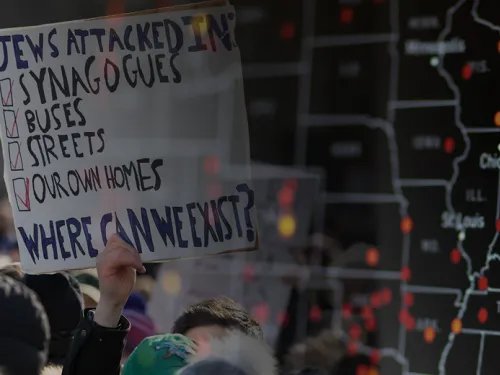
In the 1930s, the dean of Yale University’s medical school — who was Jewish himself — reportedly advised his admissions team, “Never admit more than five Jews, take only two Italian Catholics, and take no blacks at all.”
The American college campus has come a long way in the past century. Colleges are more diverse, and there are greater efforts to create inclusive environments whereby all students feel comfortable on campus. But that does not mean you…
Frequently Asked Questions About Free Speech on Campus
Tools and Strategies
What is the source of our free speech rights? Free speech rights emanate from the First Amendment to the U.S. Constitution[1] and from state constitutions. The U.S. Constitution limits the government’s ability to regulate speech based on content and it applies to all public colleges and universities. It serves as a floor, not a ceiling. State constitutions may grant more robust free speech rights than the U.S. Constitution, but never fewer. Is there a distinction between private and…
For Educators | For Parents, Families, and Caregivers As part of our ongoing efforts to provide current, relevant and quality educational resources in various formats, ADL offers a free podcast series that you can listen to at your convenience. Each podcast offers a rich and inspiring conversation with a specialist in the field or children's book author. The podcasts assist educators in building inclusive and respectful classrooms and provide timely and important information on curricula…
For Educators | For Parents, Families, and Caregivers Rosh Hashanah and Yom Kippur, the High Holidays, are celebrated by Jewish people all over the world. The High Holidays fall on different days each year. For the specific dates each year, check our Calendar of Observances. These and other Jewish holidays fall on different days in our calendar because they follow the Jewish calendar, which has a different number of days than our calendar. The Jewish calendar is a Soli-lunar calendar. …
There are 1.8 billion Muslim people worldwide and an estimated 3.45 million Muslims living in the United States. Islam is currently the second largest religion in the world next to Christianity. Despite the fact that there are so many Muslims in the world, in many places there is a lack of understanding about Muslim people and Islam. In addition, the increase in anti-Muslim rhetoric and the unfortunate conflation of terrorism with Muslim people contributes to biased attitudes and…
What Bullying Is and Is Not (In English and en Español)
Tools and Strategies
Table Talk: Family Conversations About Current EventsBullying is a phrase we hear regularly and often: in the media, on TV shows and movies, in schools and in conversations among both adults and children. Parents, students and schools are rightfully worried about bullying. It is a problem and cause for concern but may not be as widespread as many think because the term “bullying” is often used as an umbrella to describe all kinds of mean behavior—from a rude comment to a…
Rosalind's Classroom Conversations, March 2017 For Educators By Rosalind Wiseman
“I dare you…”
Who doesn’t remember that from adolescence? At Cultures of Dignity, we’ve been thinking a lot about what it means to take a risk because taking one can be a great learning experience. And then a mom asked us these really good questions: I dare you to hold your breath, which can lead to the choking game. I dare you to chug this, take this pill, drink…
Early Childhood Question Corner For Educators | For Parents, Families, and Caregivers In Anti-Bias Curriculum, Louise Derman-Sparks (1989, 6), an educator and specialist on child development, explains that many adults assume that young children do not notice color and other differences among people; she claims that children actually do notice and show curiosity about differences. Further, Derman-Sparks asserts that adults need to avoid only talking about similarities among people because while…
How Can I Use Books to Address Bullying Among Young Children?
Tools and Strategies
Early Childhood Question Corner For Educators | For Parents, Families, and Caregivers Children’s literature can be an effective tool for addressing the growing concerns about physical, verbal, and relational bullying in schools. Though bullying has been traditionally dismissed by some as “just a part of growing up,” most educators today understand that it is a pervasive problem with harmful and damaging effects on all members of the school community. The use of literature to…
What Can I Do About Bullying Among Young Children?
Tools and Strategies
Early Childhood Question Corner
For Educators | For Parents, Families, and Caregivers Research shows that bullying can begin in preschool and that adults play an important role in prevention and intervention (Barker, 2008). Bullying is the repeated actions or threats by a person or persons who are perceived to have more power or status than the targeted individuals, with the intent to cause fear, distress or harm. Bullying occurs in various forms among young children including hitting or…
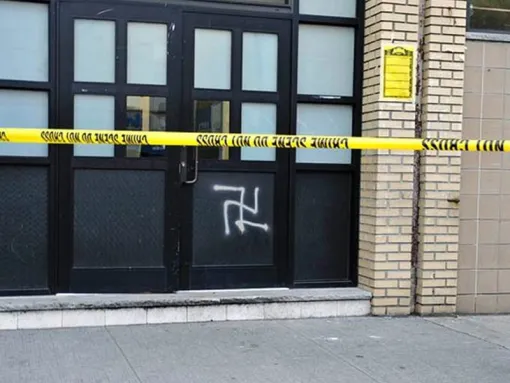
Table Talk: Family Conversations About Current Events For Parents, Families, and Caregivers | 13 and upTopic Summary We see symbols every day in all aspects of our lives. Symbols are used to convey ideas, qualities, emotions, material objects/products, opinions and beliefs. Unfortunately, symbols are also used to convey hate and bias. Lately, we have seen a lot of hate symbol graffiti in public spaces and specifically the swastika, which in most circumstances is understood as an expression…
Distribution of Religious Materials and Proselytizing by Outside Groups and Individuals
Tools and Strategies
For Educators Individuals, including parents, and groups who have no formal relationship to a school (Third Parties) may distribute religious materials, including Bibles, to students outside of school premises. They may also discuss religious matters with students.
Third-party materials or publications of a religious viewpoint may be distributed on- campus to the same extent distribution of third-party secular materials is permitted. However, courts have applied different rules to…
For Educators Release time in the public schools refers to programs in which students are released from school early to attend religious classes off school premises. Participating students must have permission from their parents. Nonparticipating students remain in school. Such programs may be constitutional if the religious classes take place off school grounds, if no public school funds are expended, and if school officials or teachers do not promote program attendance through coercion or…
For Educators Public schools may not teach religion, although teaching about religion in a secular context is permitted.1 The Bible may be taught in a school, but only for its historical, cultural or literary value and never in a devotional, celebratory or doctrinal manner, or in such a way that encourages acceptance of the Bible as a religious document.2
SPECIFIC ISSUES & QUESTIONS
What distinguishes "teaching religion" from "teaching about religion"?
Religion may be presented…
Interview with Rosalind Wiseman, Bullying Prevention Specialist
Podcast
For Educators | For Parents, Families, and Caregivers Rosalind Wiseman talks about raising teenagers in a complex world, the role of social media and gaming, what teachers can do to engage students and how her own parenting informs her work. Rosalind Wiseman is a teacher, thought leader, author and media spokesperson on bullying prevention, ethical leadership, the use of social media and media literacy. She is the author of several books including Queen Bees and Wannabes: Helping Your Daughter…
Interview with Cece Bell, Children's Book Author & Illustrator
Podcast
For Educators | For Parents, Families, and Caregivers In this podcast, Cece Bell talks about what inspired her to write El Deafo, the response she has received about the book from children and adults and why friendship is so central to her books.
Read the transcript of the podcast. Cece Bell is a children's book author and illustrator. El Deafo, her first graphic novel, is a slightly fictionalized memoir about her childhood, her hearing loss, her first crush and her quest for a true…
Interview with Duncan Tonatiuh, Children's Book Author & Illustrator
Podcast
For Educators In this podcast, Duncan Tonatiuh talks about meeting Sylvia Mendez and how that inspired him to write Separate Is Never Equal, his love of art and writing and how his dual citizenship identity shapes what he writes.
Duncan Tonatiuh is an award winning children's book author and illustrator. He was born in Mexico City and grew up in San Miguel de Allende. He graduated from Parsons New School for Design and Eugene Lang College in NYC. Duncan has…
Interview with Ami Polonsky, Children's Book Author
Podcast
For Educators | For Parents, Families, and Caregivers In this podcast, Ami Polonsky talks about why she wrote the book, how parents and teachers can discuss gender and transgender identity with young people and the importance of being an ally.
Ami Polonsky is a children’s book author and teacher. Published in 2014, Gracefully Grayson, a middle grade book, is her debut. Formerly a Chicago Public Schools teacher, Ami spent nine years out of the classroom to…
Interview with Trudy Ludwig, Children's Book Author
Podcast
For Educators In this podcast, Trudy Ludwig talks about Confessions of a Former Bully and why she writes books focused on social aggression and bullying.
Trudy Ludwig is an award-winning author who specializes in writing children's books that explore the colorful and sometimes confusing world of children's social interactions. She has a special focus on addressing relational aggression--the use of relationships to manipulate and hurt others. Trudy wrote her first…