



March 15, 2017 Please note this was last updated on March 21, 2017.
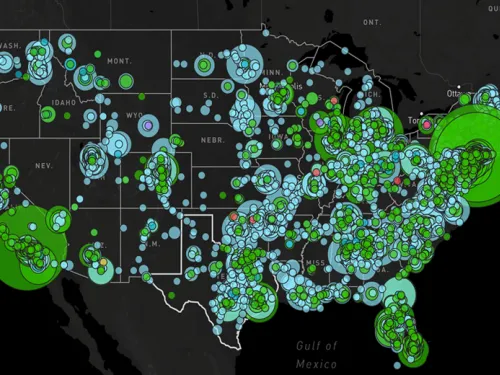
The Anti-Defamation League is tracking bomb threats made to Jewish institutions across the country. Some institutions may share the same space as a community center, Jewish federation or school of some kind. In those instances the institutions are listed together.
The total number of bomb threats made is 167 in 38 states and 3 Canadian provinces.
The total number of institutions targeted is 120.
The total…
653 Results
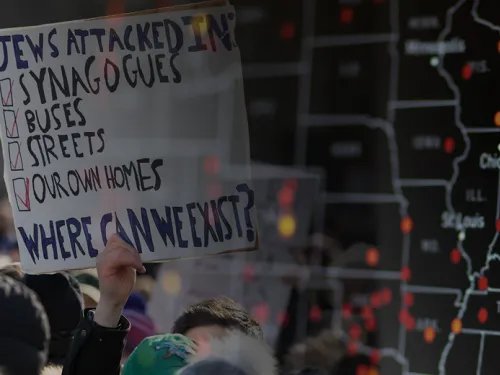
January 01, 1970 Since January, 167 bomb threats have targeted Jewish institutions across the country, including Jewish Community Centers, schools, synagogues and ADL offices in New York, San Francisco, Washington, DC, Atlanta and Boston. To date, one man has been arrested in connection with eight of these threats.
(Note: Use the slider at the bottom of the interactive map to view the progression of incidents, and click on the institution types in the legend to toggle. Map is being…
For Educators Individuals, including parents, and groups who have no formal relationship to a school (Third Parties) may distribute religious materials, including Bibles, to students outside of school premises. They may also discuss religious matters with students.
Third-party materials or publications of a religious viewpoint may be distributed on- campus to the same extent distribution of third-party secular materials is permitted. However, courts have applied different rules to…
For Educators Release time in the public schools refers to programs in which students are released from school early to attend religious classes off school premises. Participating students must have permission from their parents. Nonparticipating students remain in school. Such programs may be constitutional if the religious classes take place off school grounds, if no public school funds are expended, and if school officials or teachers do not promote program attendance through coercion or…
For Educators Public schools may not teach religion, although teaching about religion in a secular context is permitted.1 The Bible may be taught in a school, but only for its historical, cultural or literary value and never in a devotional, celebratory or doctrinal manner, or in such a way that encourages acceptance of the Bible as a religious document.2
SPECIFIC ISSUES & QUESTIONS
What distinguishes "teaching religion" from "teaching about religion"?
Religion may be presented…
by: Jonathan A. Greenblatt | February 09, 2017 Your Holiness,
This week, in synagogues all over the world, Jews will read Shirat Ha-yam, the “Song of the Sea” from the book of Exodus that Miriam, Moses and the Israelites sang after they miraculously passed through the Sea of Reeds on dry land.
As a newly free people, they expressed their thanks to God for their redemption, saying:
Who is like you, o eternal, among the…

For Educators Our country has a long history of youth-led movements that brought about significant social change. Young people have advocated for child labor laws, voting rights, civil rights, school desegregation, immigration reform and LGBTQ+ rights. Through their actions, the world has changed. Because young people often have the desire, energy and idealism to do something about the injustice they see in the world, they are powerful agents for change. Our work in education helps…

Being able to have respectful and constructive conversations is the bedrock of any relationship—whether those connections take place at home, school, work or in communities. However, when controversy or conflict arises, the discussions can quickly become polarized, heated and personal, making it very difficult to have a conversation where different points of view are aired and discussed. These conversations can be about something controversial like politics, current events, moral…

Teachers may want to engage young people in conversations about presidential and other elections and provide opportunities for students to learn more, ask questions and understand what they see and hear. Below are tips and strategies for engaging in these potentially contentious conversations in the classroom and doing so with a critical thinking and anti-bias lens. These strategies can also be used with other controversial issues that arise in your classroom. It is critical that students…
Early Childhood Question Corner For Educators | For Parents, Families, and Caregivers The foundation for gender identity formation gets established during the preschool years (Derman-Sparks and Edwards, 2010, 91). By age three, although most children can identify their gender, they are still sorting out the concept of gender (Roberts and Hill, 2003). “The support they get or do not get in their preschool years lays the foundation for the rest of their gender identity formation,”…
For Educators | For Parents, Families, and Caregivers Most people love a celebration! Adults flutter around busily preparing for the festivities. Children are abuzz with excitement. Special foods are eaten, special heirlooms brought down from the shelf. Traditions are passed down from generation to generation. While children should have an opportunity to learn about and share information about the important holidays and celebrations in their lives, celebrating specific holidays in a school or…

In recent years, we have seen alarming images and biased language in schools and universities: name-calling, hate-filled taunts, vandalism, racial slurs and epithets, offensive graffiti on desks and bathroom walls. In addition, many young people—especially those whose identities have been targeted publicly with words and actions—are fearful and worried. Teachers have had to work overtime to console those students and provide resources to get help. Schools must be places where…
Early Childhood Question Corner For Educators | For Parents, Families, and Caregivers You can help children embrace differences by exposing them to diversity as early as possible. This can be a natural part of everyday living as children develop relationships outside their family. Answer children’s questions about differences openly and honestly as they come up, and if you don't know the answers, seek them out. Another way to ensure diversity in children’s lives is to…
Early Childhood Question Corner For Educators | For Parents, Families, and Caregivers Incorporating family members into early childhood program’s anti-bias efforts is integral to its success. When children see their teachers value their families’ lives, they develop pride. They also have an opportunity to learn about other children’s families and the diversity inherent in them. Family members can be from various racial and ethnic backgrounds, speak multiple languages and…
June 22, 2016 ADL continues to receive a troubling number of complaints about children, adolescents and teenagers engaging in anti-Semitic behavior, both on and off school grounds. These incidents include physical assaults, threats of violence, and verbal and written taunts promoting anti-Semitic stereotypes or evoking disturbing Holocaust themes. The following is a list of selected incidents in 2015 that represent anti-Semitic bullying of children, adolescents and teenagers by their…
June 22, 2016 ADL witnessed an explosion of hate online, especially on social media platforms in 2015. While the audit includes incidents of online anti-Semitism reported to ADL in which an individual or institution is explicitly targeted, it does not count general anti-Semitic expressions online. ADL has been monitoring the recent spike on such harassment, which seems to have corresponded to the political season, with a large amount of this vitriol directed at journalists and other public…
by: Oren Segal | September 29, 2016 The Guardian Pepe the Frog originated as an innocuous cartoon character in 2005. This week, he was added to the Anti-Defamation League’s Center database of hate symbols. At first glance, it may seem more than a little strange that the image of a cartoon frog could end up alongside such infamous symbols as the Blood Drop Cross of the Ku Klux Klan. But the evolution of Pepe the Frog actually illustrates a key aspect of hate symbols:…
by: Jonathan A. Greenblatt | September 23, 2016 JTA Palestinian Authority President Mahmoud Abbas’ statement before the United Nations General Assembly on Thursday revived old hatreds more than it broke new ground. It was little more than a rote diatribe against Israel and a call for international pressure to coerce the Jewish state in place of the hard give and take that happens at the negotiating table. It shed light on why the Israeli-Palestinian conflict has endured so long through…
by: Jonathan A. Greenblatt | September 13, 2016 Foreign Policy If Israeli Prime Minister Benjamin Netanyahu’s purpose was to criticize the Palestinian leadership, there are many issues he could have raised in his latest short video posted on Sept. 9. He could have spoken about their celebration of terrorists, or he could have raised their demonization of Israel through anti-Semitic conspiracy theories or their repeated rejection of any Jewish connection to the Land of Israel. He could…
by: Marilyn Mayo | September 08, 2016 The Forward It’s not often that I get an opportunity to come face-to-face with one of the extremists whose activities, in my work as a research fellow at the Anti-Defamation League, I am charged with following and exposing. But on Wednesday night it happened that one of the most ardent spokespeople for anti-Semitic 9/11 conspiracy theories was appearing in New York City, my hometown.
It was tempting to ignore that Christopher Bollyn was speaking…