







Early Childhood Question Corner For Educators | For Parents, Families, and Caregivers In Teacher they called me a ____!, Dr. Debra A. Byrnes defines prejudice as preconceived ideas about people “perceived as being different, due to race, religion, culture, gender, disabilities, appearance, language, sexual orientation, or social status” (1995, 3). She explains that a large body of research (Brown,1972; Byrnes & Kiger, 1992; Milner, 1975; Williams & Orland, 1976)…
170 Results
Early Childhood Question Corner For Educators | For Parents, Families, and Caregivers Children’s outdoor play offers many opportunities to teach and reinforce anti-bias behavior. To get you started, incorporate some of the below tips excerpted from Bias-Free Foundations: Early Childhood Activities for Educators (2005, 28): Take advantage of these opportunities by helping children to learn skills such as taking turns, sharing toys and inviting new children to play. For example,…
Early Childhood Question Corner For Educators | For Parents, Families, and Caregivers The early childhood program environment should look and feel welcoming for all children and should reflect the diverse world in which we live. In addition to being bright, colorful, safe and clean, it should include children’s artwork and show the diversity of the world through the program’s abundant supply of age-appropriate toys, dolls, books, magazines , pictures and musical instruments…

For Educators | For Parents, Families, and Caregivers Winter is a festive time of year because so many holidays are celebrated by people from different religions, cultures and races. We spend time with family and friends, connect with our faith or culture, give and receive gifts and enjoy special foods and treats. However, this time of year—especially in schools and whether it's in-person, online or hybrid—can be a time where some children can feel uncomfortable, excluded, insulted…
October is National Bullying Prevention Month
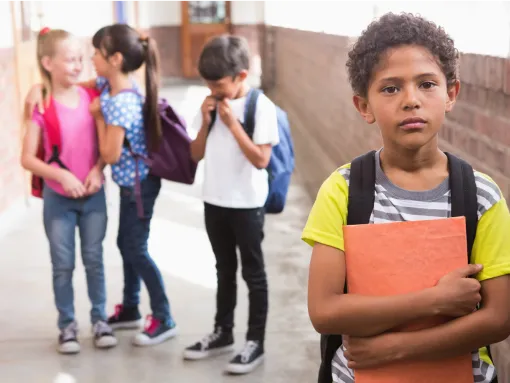
National Bullying Prevention Month is an opportunity to reflect on the classroom and school culture and assess the extent to which bullying is part of that culture. It is a time to examine best practices when it comes to creating respectful school environments that foster inclusion and respect. The large body of research on effective responses to name-calling and bullying concurs that schools and other educational institutions can best…

Teach and commemorate the culture, traditions and history of Asian American and Pacific Islander people in the United States in school, communities and at home.

Use these resources to honor women around the world, explore women’s achievements and struggles throughout history, and acknowledge women’s contributions to our society.

For Educators In many of ADL’s lesson plans and activities, students are challenged to explore and articulate their personal feelings about sensitive topics including segregation, discrimination, and the value of diverse school communities. Talking about themes related to diversity requires that students demonstrate maturity and compassion for others. In conjunction with social justice curricula, it is therefore recommended that teachers use service learning, conflict resolution,…
Literature is a powerful vehicle for helping children understand their homes, communities and the world. Even before young children can read, family members, childcare providers and teachers read them stories about people in faraway places, sometimes from the distant past and sometimes about people whose lives are similar to their own. The impressions and messages contained in these stories can last a lifetime.
Books, at their best, invite children to use their imaginations, expand their…

On a daily basis—in the lunchroom, at the grocery store, in school hallways, in our political rhetoric and even at home—people hear and sometimes use words and phrases that demean, ridicule, offend or show ignorance about people from different groups and backgrounds. Regardless of whether the comments are deliberately malicious, said because the person lacks knowledge, or thought to be "a joke," such words are harmful and not only impact those on the receiving end but also everyone…