

Mini-Lesson For Students About the Mini-LessonThis mini-lesson will introduce you to the Pyramid of Hate, an ADL concept and activity that demonstrates how the seeds of bias, once planted, can grow quickly from biased ideas to discrimination and acts of violence. ADL's mini-lessons for students are short, interactive, online lessons for you to learn about a core ADL topic, theme or activity. ObjectivesThis self-paced mini-lesson will enable you to understand: What antisemitism is…
The Power of Poetry to Teach about Identity, Bias and Social Justice
Tools and Strategies
April is National Poetry Month
National Poetry Month provides an opportunity for many schools and classrooms to dedicate time to the study of reading and writing poetry.
Poetry uses vivid and descriptive language, beautiful imagery, unique sounds and rhythms, and diverse voices. It often evokes an emotional and empathetic response and can open doors to people and worlds for which we are unfamiliar. It can touch hearts and minds and motivate action and societal…
A Guide for Responding to School-Based Bias Incidents
Tools and Strategies
Is your school experiencing a bias or hate incident?Whether it be a racist “joke,” slur, stereotype or some other form of implicit or explicit bias, school community members must be committed to addressing bias-related incidents in schools. Educators and school administrators play vital roles in creating an environment where all students can learn and thrive. Cultivating an equitable and inclusive school community requires ensuring that historically marginalized students are…
Table Talk: Family Conversations about Current EventsOn Wednesday, January 6, 2021, Congress met in the U.S. Capitol to count electoral votes and certify the results of the 2020 Presidential election. This is a formality that takes place every four years under our country’s system for choosing its President and Vice President. While this took place, a violent mob of right-wing extremists and others, who came to Washington, D.C. (and several state capitals) to disrupt and overturn the…

Empowering Young People in the Aftermath of Hate (In English and Español)
Tools and Strategies
What Educators and Family Members Can DoToday, local, national or international tragedies happen so frequently that they can feel almost commonplace. When a hate crime, mass shooting, act of terrorism or other terrible and hate-inspired event occurs, one of the first questions many people ask is, what should we tell the children? How can we explain to them what has happened? Despite our best efforts to protect youth from the details of hate-motivated events, we can never assume that they are…
What is the Electoral College and Why Is it Controversial?
Tools and Strategies
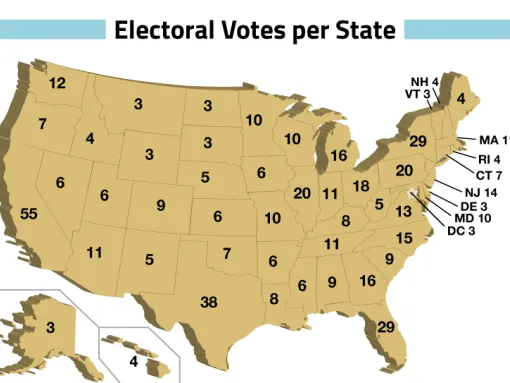
Table Talk: Family Conversations about Current EventsThe Electoral College is an election topic that inspires confusion, controversy and conflict. Many people know that the Electoral College is part of the Presidential election process but may be unsure about its importance and how it works. In the early days of our country’s formation, deciding on the process for electing a U.S. President was a controversial topic. Some suggested that Congress should choose the President. Others…
7 Engaging Picture Books about Voting and Elections
Tools and Strategies
September 17, 2020 Talking with young children about voting and elections can open doors to conversations about fairness, democracy, citizenship and participation. As children grow, it is critical to help them understand how government works, the importance of civic participation and how voting is a key way to make your voice and your opinions heard. These picture books, some fiction and some non-fiction, provide discussion starters about voting, equity, gender, race,…
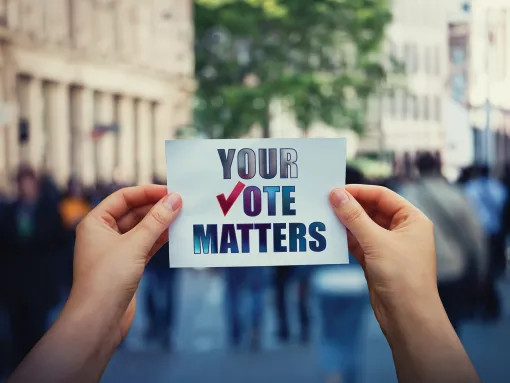
Table Talk: Family Conversations about Current EventsIn its simplest terms, voting is an act of expressing your opinion. Whether you participate in a poll, take an online survey or vote in the Presidential election, you are expressing an opinion or point of view with your vote. Merriam Webster defines voting as “to express one's views in response to a poll” or “to express an opinion.” In political elections, people vote for a variety of offices and laws. This includes…
National Hispanic Heritage Month: Ideas for Educators
Tools and Strategies
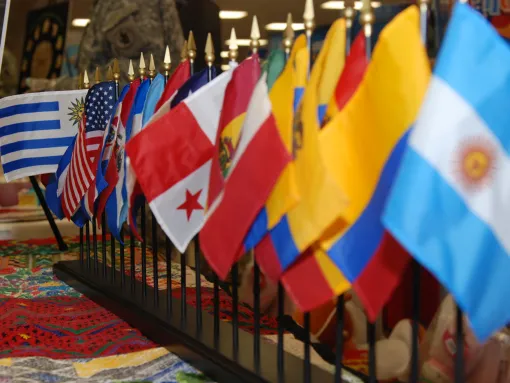
National Hispanic Heritage Month honors the achievements, contributions, culture, and history of Hispanic and Latin American people. The month-long celebration begins on September 15 commemorating the anniversary of independence for five Latin American countries: Costa Rica, El Salvador, Guatemala, Honduras, and Nicaragua. In addition, Mexico and Chile celebrate their independence days on September 16 and September 18, respectively. The 2025 theme for National Hispanic Heritage Month…
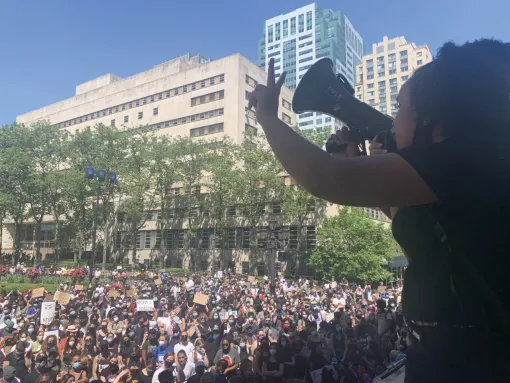
Table Talk: Family Conversations about Current EventsIn the wake of George's Floyd's murder in May 2020 by the police, protests erupted across the United States. The first protest took place in Minneapolis, MN the night after George Floyd was killed. Within days, protests were taking place in all fifty states and more than 140 cities nationwide. Tens of thousands of people also gathered in countries around the world to support the protests and show solidarity. In a…
All Americans have a stake in effective response to violent bigotry. Hate crimes merit a priority response because of their special impact on the victim and the victim's community. Failure to address this unique type of crime could cause an isolated incident to explode into widespread community tension. The damage done by hate crimes cannot be measured solely in terms of physical injury or dollars and cents. These crimes may effectively intimidate other members of the victim's community,…
Important Books to Explore Bullying and Ally Behavior
Tools and Strategies
While bullying is still a problem in schools, the intersection of bias and bullying can be particularly harmful. Identity-based bullying is when a person is targeted based on an essential part of their identity (e.g., race, immigration status, sexual orientation, religion, or gender identity). It is common in schools and not only impacts the targeted person but everyone else around them that shares their identity. Identity-based bullying can leave all students feeling unsafe and fearful that…
Slurs and Biased Language (in English and en español)
Tools and Strategies
Table Talk: Family Conversations about Current Events For Educators | For Parents, Families, and Caregivers Topic SummaryEvery day—from the schoolyard to the workplace—we hear biased, hurtful and offensive language, including slurs, epithets (defined below) and so-called “jokes.” We also see slurs written on walls, buildings, streets and in our social media feeds. Many people, especially those who have children in their lives, wonder what to do when they see and…
Jewish American Heritage Month: Exploring Jewish Identity
Tools and Strategies
Use this collection of resources for educators and families to help teach about and celebrate Jewish American heritage in schools, communities and at home.
Table Talk: Family Conversations about Current Events Topic SummaryOn March 8, 2019 (International Women’s Day), the U.S. women’s soccer team filed a gender discrimination suit against the U.S. Soccer Federation, which governs soccer in the U.S. The soccer team’s complaint alleges pay inequities and inferior support and working conditions. In their statement released by the team, the twenty-eight players described “institutionalized gender discrimination” that…
For Educators In fostering inclusive, equitable and safe schools, we encourage educators to develop group guidelines for respect and safety in the classroom. These classroom guidelines can be created in a variety of ways and the list typically includes recommendations such as: share air time, actively listen, show empathy, respect confidentiality, participate fully, assume good will, be sensitive to feelings, and others. However, there is often a need to go further and frame guidelines around…
Increase your awareness of religious obligations and ethnic and cultural festivities that may affect students, colleagues and neighbors in your community.
The Pyramid of Hate illustrates the prevalence of bias, hate and oppression in our society. It is organized in escalating levels of attitudes and behavior that grow in complexity from bottom to top. Like a pyramid, the upper levels are supported by the lower levels; unlike a pyramid, the levels are not built consecutively or to demonstrate a ranking of each level. Bias at each level reflects a system of oppression that negatively impacts individuals, institutions and society…
November is Native American Heritage Month, which was first declared by President George H.W. Bush in 1990. The month provides an opportunity to commemorate the rich and diverse cultures, traditions and histories and acknowledge the important contributions of Native American/Indigenous people. It is also an important time to educate the general public, as well as young people in schools, about the bias, discrimination and unique challenges faced by Native American/Indigenous people…