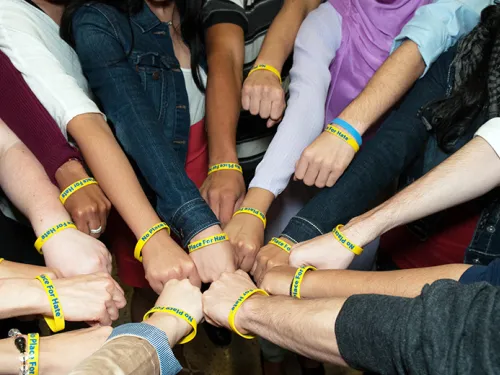
GRADE LEVEL: Elementary School, Middle School COMMON CORE STANDARDS: Writing, Speaking & Listening SEL STANDARDS*: Self Awareness, Self-Management, Social Awareness, Relationship Skills, Responsible Decision-Making Bullying is a major problem in our schools. When it targets aspects of a person’s identity, it is called identity-based bullying, and may include bias about appearance, race, culture, gender and gender expression, language, religion, socioeconomic status,…
October is National Bullying Prevention Month
National Bullying Prevention Month is an opportunity to reflect on the classroom and school culture and assess the extent to which bullying is part of that culture. It is a time to examine best practices when it comes to creating respectful school environments that foster inclusion and respect. The large body of research on effective responses to name-calling and bullying concurs that schools and other educational institutions can best…
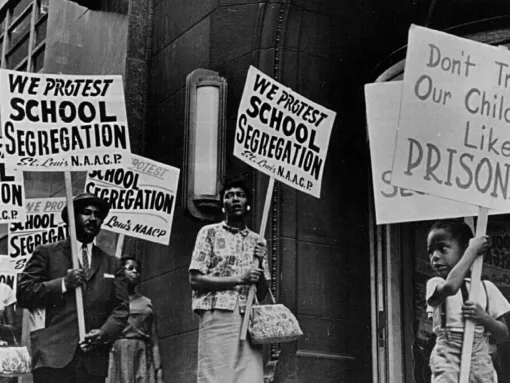
70+ Years Later: The Legacy of Brown v. Board of Education
Lesson Plan
GRADE LEVEL: Middle School, High School COMMON CORE STANDARDS: Reading, Speaking and Listening, Language “We conclude that in the field of public education the doctrine of ‘separate but equal’ has no place. Separate educational facilities are inherently unequal.” These are the words of the landmark Supreme Court decision on May 17, 1954 that declared segregated schools unconstitutional. More than seventy years later, even though much progress has been made, there are…
GRADE LEVEL: Elementary School
COMMON CORE STANDARDS: Reading, Writing, Language Using Poetry to Teach about Identity
Reading and writing poetry can provide an opening for young people to explore the various aspects of their identity, including their name, race and ethnicity, physical characteristics and more.
April is National Poetry Month, a good opportunity to explore poetry with your students. Because poetry does not require strict sentence structure or the usual grammar rules…
Asian American Pacific Islander (AAPI) Heritage Month Resources
Tools and Strategies
Teach and commemorate the culture, traditions and history of Asian American and Pacific Islander people in the United States in school, communities and at home.
Use these resources to honor women around the world, explore women’s achievements and struggles throughout history, and acknowledge women’s contributions to our society.
For Educators In many of ADL’s lesson plans and activities, students are challenged to explore and articulate their personal feelings about sensitive topics including segregation, discrimination, and the value of diverse school communities. Talking about themes related to diversity requires that students demonstrate maturity and compassion for others. In conjunction with social justice curricula, it is therefore recommended that teachers use service learning, conflict resolution,…
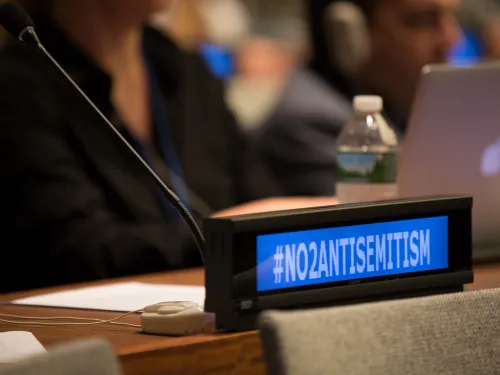
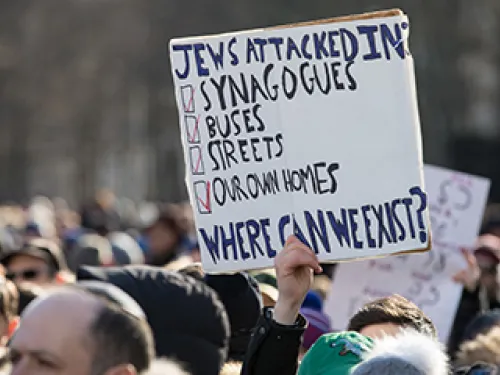
The Resilience of Antisemitism: The Lies of The Protocols of The Elders of Zion
Lesson Plan
GRADE LEVEL: High School
COMMON CORE STANDARDS: Reading, Writing, Speaking and Listening, Language Since its contrivance at the turn of the twentieth century by the Russian secret police, The Protocols of the Learned Elders of Zion (or The Protocols of the Elders of Zion) has taken root in bigoted and uneducated minds around the world. The booklet’s twenty-four sections spell out the alleged confidential plans of a Jewish conclave seeking to attain world domination. They represent…
Literature is a powerful vehicle for helping children understand their homes, communities and the world. Even before young children can read, family members, childcare providers and teachers read them stories about people in faraway places, sometimes from the distant past and sometimes about people whose lives are similar to their own. The impressions and messages contained in these stories can last a lifetime.
Books, at their best, invite children to use their imaginations, expand their…
On a daily basis—in the lunchroom, at the grocery store, in school hallways, in our political rhetoric and even at home—people hear and sometimes use words and phrases that demean, ridicule, offend or show ignorance about people from different groups and backgrounds. Regardless of whether the comments are deliberately malicious, said because the person lacks knowledge, or thought to be "a joke," such words are harmful and not only impact those on the receiving end but also everyone…