

Rosalind's Classroom Conversations, March 2017 For Educators By Rosalind Wiseman
“I dare you…”
Who doesn’t remember that from adolescence? At Cultures of Dignity, we’ve been thinking a lot about what it means to take a risk because taking one can be a great learning experience. And then a mom asked us these really good questions: I dare you to hold your breath, which can lead to the choking game. I dare you to chug this, take this pill, drink…
Early Childhood Question Corner For Educators | For Parents, Families, and Caregivers In Anti-Bias Curriculum, Louise Derman-Sparks (1989, 6), an educator and specialist on child development, explains that many adults assume that young children do not notice color and other differences among people; she claims that children actually do notice and show curiosity about differences. Further, Derman-Sparks asserts that adults need to avoid only talking about similarities among people because while…
How Can I Use Books to Address Bullying Among Young Children?
Tools and Strategies
Early Childhood Question Corner For Educators | For Parents, Families, and Caregivers Children’s literature can be an effective tool for addressing the growing concerns about physical, verbal, and relational bullying in schools. Though bullying has been traditionally dismissed by some as “just a part of growing up,” most educators today understand that it is a pervasive problem with harmful and damaging effects on all members of the school community. The use of literature to…
What Can I Do About Bullying Among Young Children?
Tools and Strategies
Early Childhood Question Corner
For Educators | For Parents, Families, and Caregivers Research shows that bullying can begin in preschool and that adults play an important role in prevention and intervention (Barker, 2008). Bullying is the repeated actions or threats by a person or persons who are perceived to have more power or status than the targeted individuals, with the intent to cause fear, distress or harm. Bullying occurs in various forms among young children including hitting or…
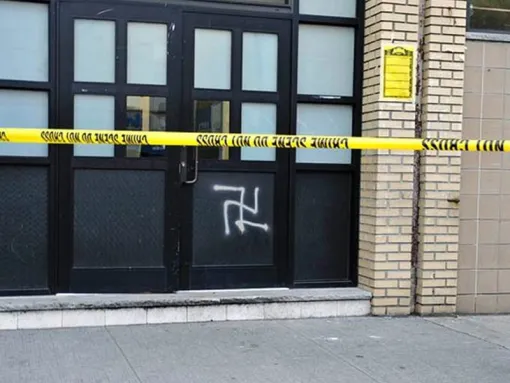
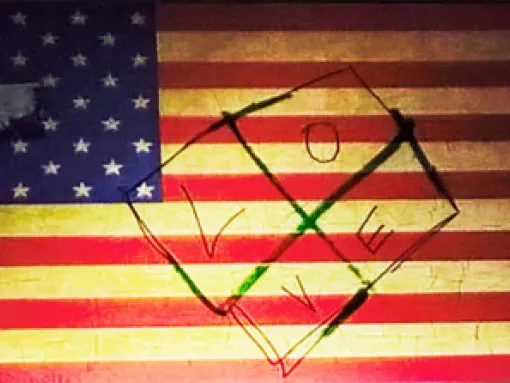
Table Talk: Family Conversations About Current Events For Parents, Families, and Caregivers | 13 and upTopic Summary We see symbols every day in all aspects of our lives. Symbols are used to convey ideas, qualities, emotions, material objects/products, opinions and beliefs. Unfortunately, symbols are also used to convey hate and bias. Lately, we have seen a lot of hate symbol graffiti in public spaces and specifically the swastika, which in most circumstances is understood as an expression…
GRADE LEVEL: High School
COMMON CORE STANDARDS: Reading, Writing, Language We see symbols every day in all aspects of our lives. Symbols are used to convey ideas, qualities, emotions, material objects/products, opinions and beliefs. Unfortunately, symbols are also used to convey hate and bias. Lately, we have seen a lot of hate symbol graffiti in public spaces and specifically the swastika, which in most circumstances is understood as an expression of antisemitism. There has reportedly…
Distribution of Religious Materials and Proselytizing by Outside Groups and Individuals
Tools and Strategies
For Educators Individuals, including parents, and groups who have no formal relationship to a school (Third Parties) may distribute religious materials, including Bibles, to students outside of school premises. They may also discuss religious matters with students.
Third-party materials or publications of a religious viewpoint may be distributed on- campus to the same extent distribution of third-party secular materials is permitted. However, courts have applied different rules to…
For Educators Release time in the public schools refers to programs in which students are released from school early to attend religious classes off school premises. Participating students must have permission from their parents. Nonparticipating students remain in school. Such programs may be constitutional if the religious classes take place off school grounds, if no public school funds are expended, and if school officials or teachers do not promote program attendance through coercion or…
For Educators Public schools may not teach religion, although teaching about religion in a secular context is permitted.1 The Bible may be taught in a school, but only for its historical, cultural or literary value and never in a devotional, celebratory or doctrinal manner, or in such a way that encourages acceptance of the Bible as a religious document.2
SPECIFIC ISSUES & QUESTIONS
What distinguishes "teaching religion" from "teaching about religion"?
Religion may be presented…
Antisemitic Incidents: Being an Ally, Advocate and Activist
Lesson Plan
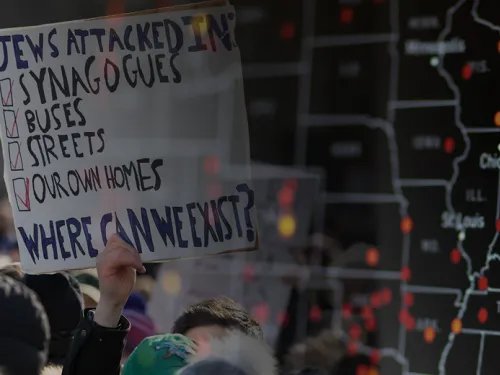
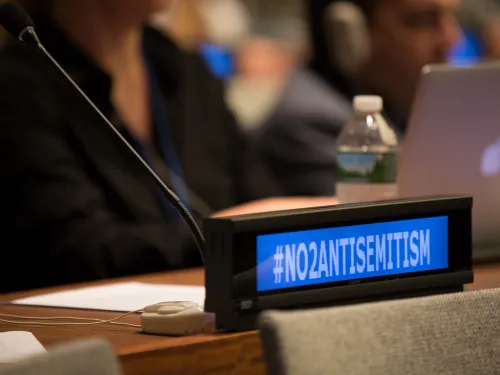
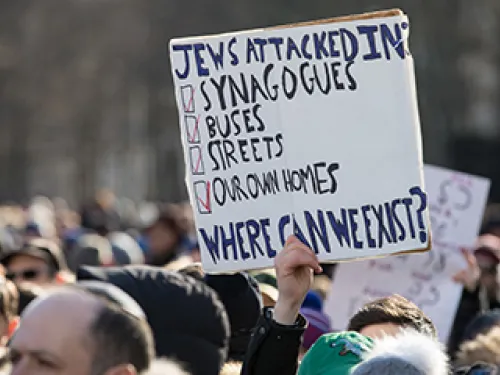
GRADE LEVEL: Middle School, High School COMMON CORE STANDARDS: Speaking and Listening, Language The surge of antisemitic incidents in the United States is alarming to many. Several reported incidents include graffiti using swastikas, bomb threats, vandalism and shootings, bomb threats targeting Jewish Community Centers (JCC) and Jewish institutions across the country. Over the past 10 years, ADL has recorded a record number of antisemitic incidents across the U.S. Since 2015,…
GRADE LEVEL: Elementary School, Middle School, High School
COMMON CORE STANDARDS: Reading, Writing, Language, Speaking and Listening In commemoration of Women’s History Month, this resource helps educators engage students in thinking broadly and critically about the experience of women and gender in all of its complexity. In highlighting the significant events as well as people that have made a substantial contribution to women’s experience, instruction should…
For Educators Our country has a long history of youth-led movements that brought about significant social change. Young people have advocated for child labor laws, voting rights, civil rights, school desegregation, immigration reform and LGBTQ+ rights. Through their actions, the world has changed. Because young people often have the desire, energy and idealism to do something about the injustice they see in the world, they are powerful agents for change. Our work in education helps…
Can We Talk? Tips for Respectful Conversations in Schools, Workplaces and Communities
Tools and Strategies
Being able to have respectful and constructive conversations is the bedrock of any relationship—whether those connections take place at home, school, work or in communities. However, when controversy or conflict arises, the discussions can quickly become polarized, heated and personal, making it very difficult to have a conversation where different points of view are aired and discussed. These conversations can be about something controversial like politics, current events, moral…
Let's Talk Politics: Bias, Dialogue and Critical Thinking
Tools and Strategies
Teachers may want to engage young people in conversations about presidential and other elections and provide opportunities for students to learn more, ask questions and understand what they see and hear. Below are tips and strategies for engaging in these potentially contentious conversations in the classroom and doing so with a critical thinking and anti-bias lens. These strategies can also be used with other controversial issues that arise in your classroom. It is critical that students…
Early Childhood Question Corner For Educators | For Parents, Families, and Caregivers The foundation for gender identity formation gets established during the preschool years (Derman-Sparks and Edwards, 2010, 91). By age three, although most children can identify their gender, they are still sorting out the concept of gender (Roberts and Hill, 2003). “The support they get or do not get in their preschool years lays the foundation for the rest of their gender identity formation,”…
For Educators | For Parents, Families, and Caregivers Most people love a celebration! Adults flutter around busily preparing for the festivities. Children are abuzz with excitement. Special foods are eaten, special heirlooms brought down from the shelf. Traditions are passed down from generation to generation. While children should have an opportunity to learn about and share information about the important holidays and celebrations in their lives, celebrating specific holidays in a school or…
11 Ways Schools Can Help Students Feel Safe in Challenging Times (In English and en Español)
Tools and Strategies
In recent years, we have seen alarming images and biased language in schools and universities: name-calling, hate-filled taunts, vandalism, racial slurs and epithets, offensive graffiti on desks and bathroom walls. In addition, many young people—especially those whose identities have been targeted publicly with words and actions—are fearful and worried. Teachers have had to work overtime to console those students and provide resources to get help. Schools must be places where…
Early Childhood Question Corner For Educators | For Parents, Families, and Caregivers You can help children embrace differences by exposing them to diversity as early as possible. This can be a natural part of everyday living as children develop relationships outside their family. Answer children’s questions about differences openly and honestly as they come up, and if you don't know the answers, seek them out. Another way to ensure diversity in children’s lives is to…
How Can Educators Effectively Involve Families in Anti-Bias Efforts?
Tools and Strategies
Early Childhood Question Corner For Educators | For Parents, Families, and Caregivers Incorporating family members into early childhood program’s anti-bias efforts is integral to its success. When children see their teachers value their families’ lives, they develop pride. They also have an opportunity to learn about other children’s families and the diversity inherent in them. Family members can be from various racial and ethnic backgrounds, speak multiple languages and…