








Letters to the Editor
The Washington Free Beacon
To the Editor:
Adam Kredo’s article, “ADL Pursuit of Meeting with Anti-Israel Activists Proves Fruitless,” (April 26) distorts ADL’s role in responding to a protest last week and misrepresents our offer of dialogue with the left-wing Jewish activist group, IfNotNow, when they held a protest in the lobby of the building where ADL’s offices are located.
Kredo’s portrayal of “entreaties for a…
226 Results
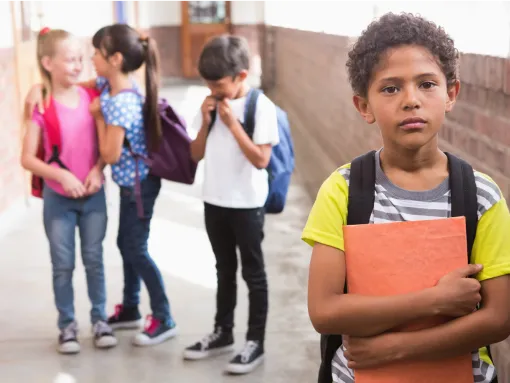
For Educators | For Parents, Families, and Caregivers | For Students Here are some simple things you can do to be an ally to targets of name-calling and bullying. And remember—always think about your safety first when deciding the best way to respond. 1. Support targets, whether you know them or not.Show compassion and encouragement to those who are the targets of bullying behavior by asking if they’re okay, going with them to get help and letting them know you are there for them…
Young people are exposed to discussions of extremism every day through social media, news and overheard conversations between adults. As an educators, the topic can be challenging to teach because the situation is always changing and evolving and worse--classroom conversations can themselves lead to stereotyping, bias and bigotry when discussing perpetrators, targets and victims. The following resources will help you teach about extremism while ensuring that the…
Letters to the Editor
The Salt Lake Tribune
To the Editor:
Derek Monson is incorrect when he asserts that the proposed hate crime legislation (SB 107) would impact Utah's historic compromise on workplace and housing discrimination protections. ("New hate-crimes bill does not reflect spirit of 'Utah Compromise,'" Feb. 6). In fact, by its terms the bill treats all of the listed personal characteristics, such as race and religion, equally. No category is given favorable treatment over…
Collection of educational resources for teaching about Black History Month
Table Talk: Family Conversations About Current Events
For Parents, Families, and Caregivers | 12 and up Talking with Children about Gun Violence
The issue of gun violence and mass shootings is in the news frequently. Young people are usually aware of what is happening and will want to talk about it. However, it is a sensitive, scary, and potentially painful topic. Before raising the matter with young people, consider your child’s personality. To what extent will the…
Para fomentar escuelas y aulas respetuosas, inclusivas y equitativas, es importante reconocer la lengua que hablan los alumnos y sus familias. Esas lenguas reflejan y afirman su origen étnico, su cultura y su herencia. Según datos recientes del Censo, 63,7 millones de personas (o el 19,1% del total de la población) que viven en Estados Unidos se identifican como hispanos/latinoamericanos. Además, la mayoría de los hispanos (75%) afirman ser capaces de…
Advocating to Elected Officials
Advocating to the Media
Advocating on Campus
For Educators Because discussions of race and racism are part of our public discourse, educators feel a sense of responsibility to bring these topics into their classrooms—because young people want to be part of the conversation and should be. If handled effectively, these discussions provide opportunities for timely learning. Below are suggestions and strategies for having classroom conversations with young people about race and racism. Prior to these discussions and…
Most Americans’ perceptions of the Middle East conflict come from the mass media. Some media – especially large-circulation daily newspapers, network television and wire services – have correspondents based in Israel and continue to devote considerable attention to the Mideast. This is not surprising considering the intensive U.S.involvement in the peace process, America’s substantial interests in the region, and the continuing strong ties between the U…
Early Childhood Question Corner For Educators | For Parents, Families, and Caregivers Media, such as television, movies, videos, games, apps and websites, can have a powerful influence on your child. Children are drawn to the sights, sounds and colors that appear on the television screen, computer monitor and apps on our phones. Media can provide exciting and unique learning opportunities. Learning from and about media works best when you and your child watch and learn together and talk about…
Early Childhood Question Corner For Educators | For Parents, Families, and Caregivers Young children can be blunt and direct as they notice and talk about the differences they notice among people. That can sometimes make their parent or caregiver feel uncomfortable, especially in public settings. Remember that young children’s initial observations about difference do not intend to be hurtful. Instead, it shows their developing curiosity and awareness of the diversity in the world in…
Early Childhood Question Corner For Educators | For Parents, Families, and Caregivers There is no need to wait until children ask questions about differences to begin conversations. However, these discussions will have the greatest impact when they follow from children’s interests, and when they are appropriate in length, frequency and content relative to children’s intellectual and emotional capacity. Louise Derman-Sparks (1989) writes that awareness of, and talking about,…
Early Childhood Question Corner For Educators | For Parents, Families, and Caregivers Many adults think that talking with children about our differences teaches prejudice. In Anti-Bias Curriculum, Louise Derman-Sparks (1989) debunks that myth and writes that talking about differences does not increase prejudice in children. Whether or not adults discuss differences with children, all children begin to notice differences among people as part of their natural development. It is the messages…
Early Childhood Question Corner For Educators | For Parents, Families, and Caregivers Although children are not born with prejudice, by early childhood they have already acquired stereotypes or negative attitudes toward those that they perceive as “others.” An article in The Buffalo News reports that about 85 percent of the brain develops between ages 3 and 5, and that impressions and ideas formed between ages 2 and 4 are lasting (Lessons in Respect, 2003). Researchers tracking the…
Early Childhood Question Corner
Common themes appear in holidays and celebrations across many cultures. By connecting themes, as suggested in the Question Corner installment "How can I plan inclusive holiday celebrations?" you can show children that holidays and celebrations are an expression of cultural and religious pride, and help them understand the commonality of certain human feelings, celebrations and their meaning. For example, by trying the following activity, Looking…
Early Childhood Question Corner For Educators | For Parents, Families, and Caregivers In Teacher they called me a ____!, Dr. Debra A. Byrnes defines prejudice as preconceived ideas about people “perceived as being different, due to race, religion, culture, gender, disabilities, appearance, language, sexual orientation, or social status” (1995, 3). She explains that a large body of research (Brown,1972; Byrnes & Kiger, 1992; Milner, 1975; Williams & Orland, 1976)…
Early Childhood Question Corner For Educators | For Parents, Families, and Caregivers Children’s outdoor play offers many opportunities to teach and reinforce anti-bias behavior. To get you started, incorporate some of the below tips excerpted from Bias-Free Foundations: Early Childhood Activities for Educators (2005, 28): Take advantage of these opportunities by helping children to learn skills such as taking turns, sharing toys and inviting new children to play. For example,…
Early Childhood Question Corner For Educators | For Parents, Families, and Caregivers The early childhood program environment should look and feel welcoming for all children and should reflect the diverse world in which we live. In addition to being bright, colorful, safe and clean, it should include children’s artwork and show the diversity of the world through the program’s abundant supply of age-appropriate toys, dolls, books, magazines , pictures and musical instruments…
For Educators | For Parents, Families, and Caregivers Winter is a festive time of year because so many holidays are celebrated by people from different religions, cultures and races. We spend time with family and friends, connect with our faith or culture, give and receive gifts and enjoy special foods and treats. However, this time of year—especially in schools and whether it's in-person, online or hybrid—can be a time where some children can feel uncomfortable, excluded, insulted…