

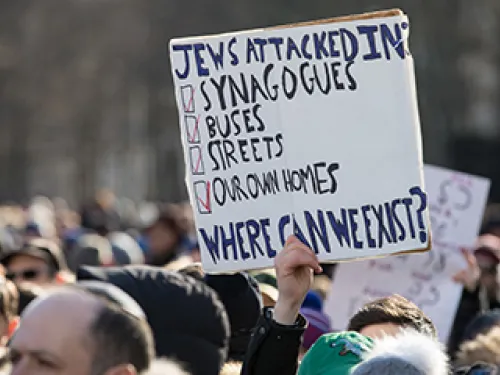
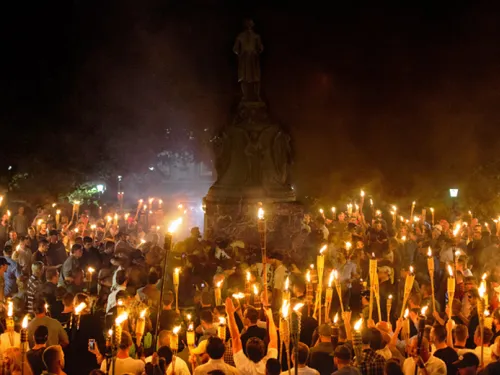




Online toolkit empowers parents and educators to identify biased and inaccurate materials on antisemitism, the Holocaust, and Jewish history New York, NY, January 14, 2026 – Today, the Anti-Defamation League (ADL) launched an online toolkit to help parents and educators evaluate whether content on antisemitism, the Holocaust, Jewish identity, and history is accurate and unbiased. In an age of evolving technology, educators are drawing from a variety of sources to create curricula…
29 Results

Empower parents, caregivers and families of Jewish students with resources to proactively engage with school leaders and enhance student experiences.

ADL Education offers educators guidance on the importance of prioritizing the pronunciation of their students names.

Teach students about strategies for responding to and challenging bias in school, in particular when they are the target.

Table Talk: Family Conversations about Current EventsAll young people should be able to feel safe, included and respected in their classrooms and schools. Unfortunately, many do not. A recent study of high school students found that nearly four in ten students experienced identity-based bullying or bullying related to an aspect of their identity such as race, religion, sexual orientation, gender identity or physical appearance. How can we listen and learn from young people about…

Table Talk: Family Conversations about Current EventsYou may have heard about “swatting” because it's been in the news recently. What exactly is swatting? Why do people do it? Because young people are exposed to swatting online, on both mainstream websites and the “dark web” (i.e., hidden websites) and because some swatting incidents begin in online gaming or other digital platforms, it is an important topic to discuss with young people. Swatting is &ldquo…
Teach students what biased language is and help them reflect on the reasons why people use it and how they can address and challenge biased words and language.

Educators, use this online professional learning experience to help you explore best practices in responding to incidents of bias in schools.

There are many benefits of humor. A good joke can ease tension in a stressful situation. Humor can connect people and bring them together. Jokes can bring levity to a situation that begs for lightheartedness. Being funny can signal to others who you are. Humor can even open a conversation that previously felt closed or off-limits.
However, jokes and humor, when they target social identity groups, can do the opposite. They can make people feel unsafe, disconnected, excluded and…

Build skills to recognize and address antisemitism by exploring Jewish identity and unpacking the
definition of antisemitism.

Learn helpful approaches educators can use to talk with young people about extremism and how to help young people resist and counter it.

Olivia Julianna (who uses only her first and middle name publicly to protect her privacy) has been an activist for several years, advocating voting rights and reproductive-health care. Like many in her generation, she found the political side of TikTok where young people post about important issues facing them. Olivia is involved with Gen-Z for Change, a nonprofit organization leveraging social media to promote civil discourse and political action on a variety of topics including…

Explore the difference and disconnect between intent and impact and why "impact" should be prioritized.

Another mass shooting has taken place, a violent massacre in which the shooter targeted a Black community after posting a white supremacist tract online that espoused virulently antisemitic and racist beliefs.
On May 14, 2022, a gunman entered a supermarket in a largely Black neighborhood in Buffalo, New York and shot thirteen people, killing ten people and injuring at least three others. Almost all of the victims are Black. The gunman was identified by law enforcement as eighteen…

Teach students about the CROWN Act, the need for the bill and have them reflect on real-life examples of hair discrimination.

Short Online Experience to Learn about this Core Topic For Educators and Middle and High School Students About the Mini-LessonThe Pyramid of Hate is a powerful framework for understanding how bias escalates—from biased attitudes and stereotypes to discrimination, violence, and even genocide. Through the lens of antisemitism, this mini-lesson helps middle and high school students and educators explore how prejudice grows and intensifies over time, and provides practical strategies to…

Is your school experiencing a bias or hate incident?Whether it be a racist “joke,” slur, stereotype or some other form of implicit or explicit bias, school community members must be committed to addressing bias-related incidents in schools. Educators and school administrators play vital roles in creating an environment where all students can learn and thrive. Cultivating an equitable and inclusive school community requires ensuring that historically marginalized students are…
September 09, 2020 By David Andrew Weinberg
ADL’s Global 100 survey is one our greatest tools for measuring, assessing and fighting antisemitism. First launched in 2014, this unique study documented levels of public acceptance of antisemitic beliefs in 100 countries around the world, and we have since updated it with follow-up surveys in many of these countries in 2015, 2017, and, most recently, in 2019.
One outcome from the survey that has received particular attention was…

GRADE LEVEL: Elementary School, Middle School
COMMON CORE STANDARDS: Reading, Writing, Speaking and Listening, Language Does Entertainment Represent Our Increasingly Diverse Society?In recent years, we have seen some progress made in terms of the diversity and representation of characters and actors we see in movies and on television. For example, over the last sixteen years, the percentage of Asian characters with speaking roles increased from 3.4% to 15.9%. However, there is still much…
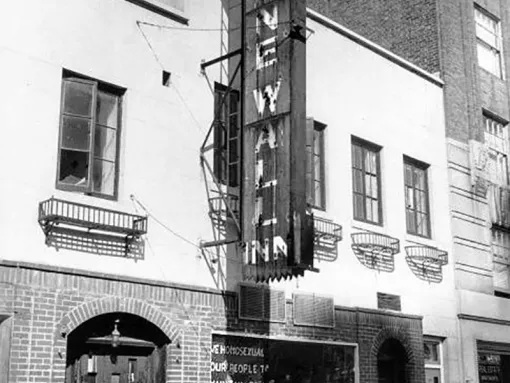
GRADE LEVEL: High School
COMMON CORE STANDARDS: Reading, Writing, Speaking & Listening, Language On June 28, 1969, the Stonewall uprising took place. It began in the early morning at the Stonewall Inn, a gay bar in New York City. As was typical during that time period, police officers entered the bar and arrested employees for selling alcohol without a liquor license, roughed up customers, cleared the bar and arrested customers for not wearing at least three articles of …