







For Educators
In this podcast, she talks about her books, her process for converting big ideas into children's stories and the complex nature of friendship, bullying and standing up.
Kathryn Otoshi is an award winning author/illustrator and speaker best known for her character-building children’s book series, Zero, One and Two. She travels to schools across the country to encourage kids to develop strong character assets and helps teachers find…
44 Results

In recent years, we have seen alarming images and biased language in schools and universities: name-calling, hate-filled taunts, vandalism, racial slurs and epithets, offensive graffiti on desks and bathroom walls. In addition, many young people—especially those whose identities have been targeted publicly with words and actions—are fearful and worried. Teachers have had to work overtime to console those students and provide resources to get help. Schools must be places where…
by: Jinnie Array November 09, 2016
The outcome of the lengthy, emotional and controversial 2016 presidential election campaign can be difficult to sort out, especially for young people. We know that children and teens were more engaged than ever in the current campaign and they had a lot to say about it. Now, it’s time to support them in processing their feelings, understanding what happened and thinking together about what to do next. Whether you are a…
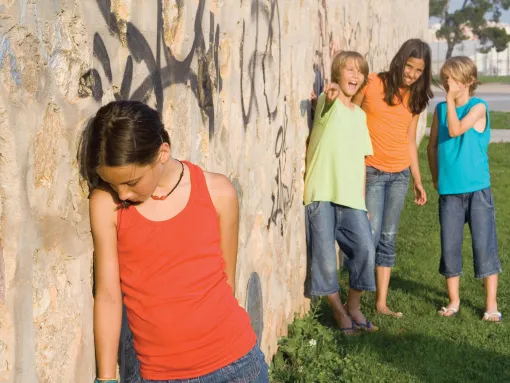
June 20, 2016
This is not the first presidential election where candidates have engaged in name-calling and put-downs. Throughout history, name-calling has been used on the campaign trail to label, define and control the public’s perception of rivals.
However, this year’s campaign is widely regarded as unparalleled in the degree and regularity of the put-downs. From “Low Energy Jeb” to “Crooked Hillary,” “Crazy Bernie,” “Insecure…
by: David Robbins May 11, 2016
Ed Blumenthal is fighting anti-Semitism and hate with everything he’s got—including his legs.
His late father, Ernie Blumenthal, escaped from Nazi Vienna in 1938, but luckily found a home in Philadelphia. His grandfather barely escaped some time later.
To honor the memory of his father, who died recently from pancreatic cancer, and to raise awareness of that illness and of anti-Semitism and hate, Ed rode his bike from Pittsburgh to Philadelphia, a…

May 03, 2016 With 22% of students ages 12 – 18 years old currently reporting having been a target of bullying, concerns about bullying in schools have motivated hundreds of books to be written and a wide variety of programs to be designed and implemented with the goal of turning the tide of bullying. Many of these books and programs aim to change the behavior of “bullies.” And herein lies one of the problems that makes it so challenging to change the dynamic of bullying.
…
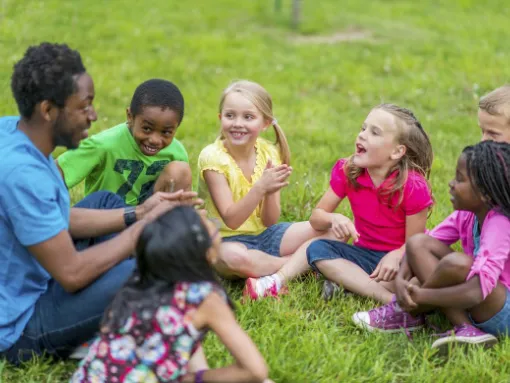
A Guide for Counselors and Camp Administrators For Educators | For Parents, Families, and Caregivers Summer camp is a wonderful time in children’s lives when they get to spend time outdoors, meet new people, have novel experiences and gain insight into themselves. There are about 12,000 day and resident camps in the U.S. and each year more than 11 million children and adults attend camp. According to an American Camp Association (ACA) report, parents cite the following reasons as the…
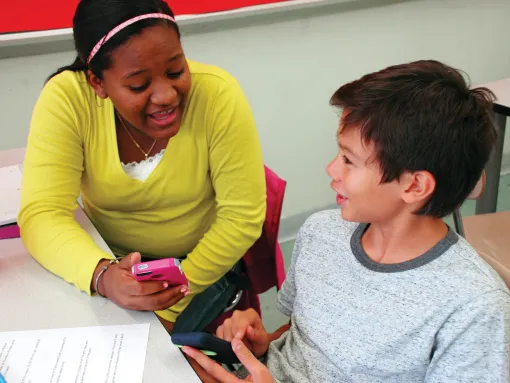
For Educators | For Parents, Families, and Caregivers | For Students Here are some simple things you can do to be an ally to targets of name-calling and bullying. And remember—always think about your safety first when deciding the best way to respond. 1. Support targets, whether you know them or not.Show compassion and encouragement to those who are the targets of bullying behavior by asking if they’re okay, going with them to get help and letting them know you are there for them…

Young people are exposed to discussions of extremism every day through social media, news and overheard conversations between adults. As an educators, the topic can be challenging to teach because the situation is always changing and evolving and worse--classroom conversations can themselves lead to stereotyping, bias and bigotry when discussing perpetrators, targets and victims. The following resources will help you teach about extremism while ensuring that the…
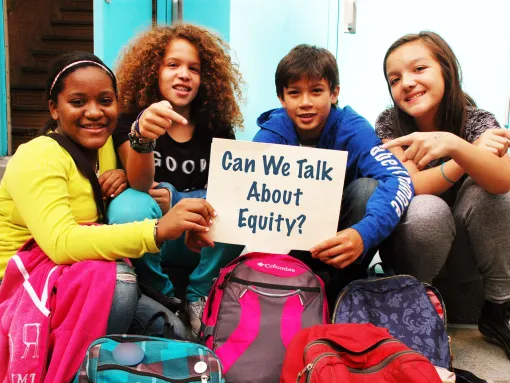
October 28, 2015 We live in an increasingly pluralistic, multicultural and connected world. In order to prepare students to live, learn and eventually work successfully in society, we need to prepare them. Diversity in the United States is rapidly increasing, especially among young people entering our school system. 2014 was the first school year when more children of color were enrolled in U.S. public schools than white children. However, the diversity of our teaching force is…
Early Childhood Question Corner For Educators | For Parents, Families, and Caregivers Although children are not born with prejudice, by early childhood they have already acquired stereotypes or negative attitudes toward those that they perceive as “others.” An article in The Buffalo News reports that about 85 percent of the brain develops between ages 3 and 5, and that impressions and ideas formed between ages 2 and 4 are lasting (Lessons in Respect, 2003). Researchers tracking the…

Engage students in exploring the topic bullying in the U.S., using children's literature as a foundation for discussion.
Early Childhood Question Corner For Educators | For Parents, Families, and Caregivers Children’s outdoor play offers many opportunities to teach and reinforce anti-bias behavior. To get you started, incorporate some of the below tips excerpted from Bias-Free Foundations: Early Childhood Activities for Educators (2005, 28): Take advantage of these opportunities by helping children to learn skills such as taking turns, sharing toys and inviting new children to play. For example,…

Engage students in understanding and exploring cyberbullying and the issues raised by online bullying.

October is National Bullying Prevention Month
National Bullying Prevention Month is an opportunity to reflect on the classroom and school culture and assess the extent to which bullying is part of that culture. It is a time to examine best practices when it comes to creating respectful school environments that foster inclusion and respect. The large body of research on effective responses to name-calling and bullying concurs that schools and other educational institutions can best…
by: Oren Segal July 29, 2014 If you have been reviewing any number of parenting or education blogs lately, you’ll see headlines proclaiming the menace and dangers of technology. Technology, and more specifically, social media and mobile apps are often treated like “monsters” to guard against and the creators of all matter of social ills. Even if technology is scary and daunting to some adults, for youth it is a necessary and positive part of life. In…
by: Mark Onofrio March 17, 2014 A teacher raises his hand in A World of Difference® Institute training and says, "I like to kid around with my students." He says, "I like to have fun in my class so they are more likely to come to me when they need help."
He calls one student his “favorite Mexican,” another student “Dopey” and the only African-American student “MLK” (short for Martin Luther King Jr.) This well-intentioned…

For Educators In many of ADL’s lesson plans and activities, students are challenged to explore and articulate their personal feelings about sensitive topics including segregation, discrimination, and the value of diverse school communities. Talking about themes related to diversity requires that students demonstrate maturity and compassion for others. In conjunction with social justice curricula, it is therefore recommended that teachers use service learning, conflict resolution,…
January 21, 2014
The phrase "that’s so gay" has persisted as a way for students to describe things they do not like, find annoying or generally want to put down, while it is promising that fewer students are hearing homophobic slurs than in previous years.
The phrase is used so commonly that many students no longer recognize it as homophobic because it is “what everyone says.” When educators and other adults intervene, common student responses include “I was just…
by: Mark Onofrio January 07, 2014 Youth are the real experts on what is happening in bullying on school campuses, and yet their voices, perspectives and leadership are rarely integrated into bullying prevention programs.
“Just ask the kids” is the tagline for a new book highlighting research from the Youth Voice Project, the first large-scale research project on bullying and peer mistreatment that did exactly that—ask the kids (more than 13,000 teens in 31 schools). …