





ProgramsUniversities increasingly rely on trainings for students, staff, faculty and administrators to address antisemitism and related forms of bias on campus. Whether a program is developed internally or delivered by an external provider, institutions benefit from taking a thoughtful, structured approach to reviewing content, pedagogy, and alignment with institutional values. The questions below are designed to support universities in evaluating whether a training is factually accurate,…
73 Results
A new NY law makes it a crime to block, intimidate or threaten people entering a synagogue, religious school, Jewish community center or place of worship.
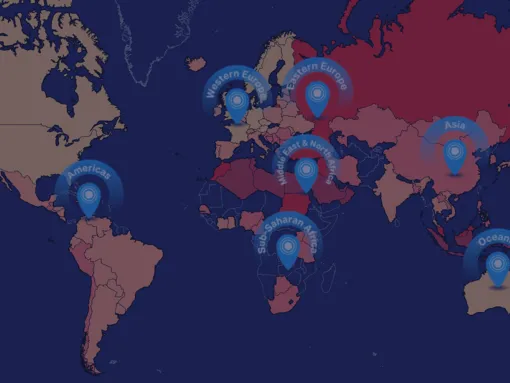
ADL's research and data on antisemitism provides a bridge between history, current events, and students' lived experiences. Explore the Global 100.

This guide outlines expectations for faculty conduct regarding antisemitic discrimination and harassment, provides practical strategies for maintaining inclusive classroom and research environments, and supports faculty in understanding both their legal obligations and their role in fostering a respectful academic community. Context and RationaleAntisemitism has become a growing challenge across higher education, affecting classroom dynamics, departmental culture, and the overall sense of…

In a world that is increasingly connected through social media, educators often incorporate current events into instruction. While this is an important tool for educators to make learning feel relevant and current for students, it also must be done with thought and care. Many curriculum offerings claim to offer educators resources and guidance on integrating complex current events into their classrooms, like the Israeli-Palestinian conflict. Sometimes these offerings, while claiming to provide…

Teach for Liberation: Ida in the Middle UnitThrough books, educators are able to support students’ exploration of different points of view, experiences, places, time periods, etc. These are vital offerings in classroom instruction. Sometimes, however, unit plans that purport to offer educators guidance and nuance in presenting materials in their classrooms instead have inaccuracies, bias and misinformation. The guidance below demonstrates how unbalanced unit guides can be problematic…

Educators surveyed in a 2025 RAND study said that after school curricula and U.S. Holocaust Memorial Museum materials, YouTube is their most-used supplement for teaching the Holocaust and related Jewish topics. Although its videos are free and visually engaging, their quality varies; for example, Vox’s “The Israel-Palestine Conflict: A Brief, Simple History” can appear more reliable than it is. Vox itself is an American news and opinion website that leans towards the…

In recent years, the education landscape has changed dramatically. With the rise of AI platforms like ChatGPT and resource sharing hubs like Teachers Pay Teachers, there are many organizations and resources that claim to offer quality material—often at no cost. The rise of these platforms coincides with a change in trends for educators. According to a report from Education Week, the average teacher uses five supplemental resources and two core curricula sources. The report goes on…

Resources to facilitate thoughtful conversations with your students about antisemitism, current events and violence, and how we build more communities that stand up to hate.
This resource provides guidance for a coordinated, campus-wide framework for responding to antisemitic incidents. It is designed to support colleges and universities in building clear, consistent, and legally compliant response systems that protect students and employees, foster trust and uphold institutional values. Antisemitism manifests across multiple domains of campus life – classrooms, residence halls, digital platforms, events, and administrative processes. An effective response…
Empower K-12 educators to advocate against antisemitism from colleagues, unions, or students. Create safe, inclusive school climates through direct advocacy.
Empower advocacy for Jewish union members and union integrity with guidance and strategies from the ADL Union Toolkit. Ensure Jewish voices are heard and valued.
Support safety and well-being advocacy for Jewish students with this guide for early childhood centers and K-8 schools, enhancing connections with K-12 institutions.
Explore key questions for Jewish students applying to K-12 independent schools to ensure selection of a school committed to safe, inclusive environments.

A resource for alumni and donors to know how to address antisemitism and foster Jewish inclusion in their schools.Understanding the Urgency: Antisemitism in Independent K-12 SchoolsRecent data from ADL’s report on antisemitism and Jewish inclusion in U.S. independent/private K-12 schools underscores the critical need for donor and alumni advocacy: 45.3% of surveyed independent school parents said their children had experienced or witnessed some form of antisemitism in school since…

Antisemitic incidents in K-12 schools harm more than Jewish students – they erode safety, belonging, and trust for everyone in the school community. When any form of hate takes root, it normalizes intolerance, distracts from learning, and signals to students that some peers are less worthy of dignity and respect. This resource is for parents, caregivers and community members who want to counter antisemitism in their schools or districts but aren’t sure where to start, or how to be…
Antisemitism on college campuses has reached crisis levels, with ADL recording 1,694 incidents in 2024 – an 84% increase from the previous year and representing 18% of all antisemitic incidents nationwide. More than 83% of Jewish college students have experienced or witnessed antisemitism since October 2023, and their sense of safety has plummeted from 67% feeling physically safe before October 7, 2023, to only 46% feeling safe afterward. This advocacy toolkit equips students, parents,…

The ADL University Staff Action Network provides university staff with resources and support to address rising antisemitism on campus.

Empower parents, caregivers and families of Jewish students with resources to proactively engage with school leaders and enhance student experiences.
ADL has been closely tracking how states are addressing antisemitism and supporting their Jewish communities. In 2024, ADL tabulated 9,354 antisemitic incidents across the United States – a 5% increase from 2023, a 344% increase over the past five years, and an 893% increase over the past decade. These numbers underscore the urgent need for state-level action. As highlighted in our first-of-its-kind Jewish Policy Index (JPI), our goal is to provide a tool that advocates, educators and…